LinkedIn – Do I have a Deal for YOU!

Dear LinkedIn, I am a big fan of your product and I have a deal which I think will make both of us fantastically RICH! Okay, it might make you slightly better off and it will save me some time… which in today’s world is the equivalent of getting rich.

I noticed today that you have the ability for members to add courses, great! I have yet to come up with a good way to track my courses. In addition, I have an obligation to my accounting designation to complete professional development. As a soon to be CPA, this will become even more important.  My idea, why not add a few fields next to the course information? They may be things like:

  1. Is this course in support of a professional designation(s)?
  2. How many professional hours was this?
  3. Send to your profession(s) as part of the yearly reporting?

With this functionality, as I take courses throughout the year, I will add them to my profile. They will be appended to my LinkedIn resume information. Then, when it is time to pay my professional dues, I press a button and – BAM – LinkedIn will send the course information to my professional association.  When I took it, hours, where, certification, perhaps even a scan of the certificate (insert details about privacy, membership number, yada, yada, yada – here).

Value Proposition

  • Everyone is happy here.  I am a happy LinkedIn user because you have just solved a major pain in the ASSETS for me – tracking my courses.
  • My profession(s) are happy because they get a consistent and timely reporting of their member’s professional development.
  • You are happy because you just gave me one more reason to not jump to the next big social media thing. Heck, I might even be willing to pay for that feature (if the price is right).

So there you go LinkedIn my idea.  As an aside, I would suggest piloting this with the new CPA designation here in Canada.  The chapters are starting on the ground floor and are looking for innovative ways to show the value of the merger of the legacy designations.

There you go – my idea.  So, can my people call your people about it….

The Propensity to Mediocrity

First some dictionary definitions of the components of the expression:

  • Propensity: n … An innate inclination; a tendency.
  • Mediocre/Mediocrity: of only ordinary or moderate quality; barely adequate.
  • Source: http://www.thefreedictionary.com

While ‘Entropy will Always Get you in the End’, we should put up a good fight until then.

Excellence and maintaining excellence is hard work.  Being number one, on top, in the first quartile means constantly beating: number two, those under you and the other three quartiles.  People, organizations and societies want time to rest, enjoy the fruits of their labour or enjoy their entitlements.

My supposition is that people are hardwired toward rest and perhaps even mediocrity.  From an evolutionary perspective it makes perfect sense.  If you are well fed, comfortable, dry and at peace – why risk your genetic inheritance until you are hungry, in discomfort, the roof is leaking or threatened.  Further to some of my prior blogs (e.g. Collaboration – Is it Hard Wired), In/Group and Loyalty is a potentially innate human-attribute.  Excellence, by definition, removes people from the group.

Does this mean that I believe that people are inherently lazy or evil – no.  Do I think that people-families-communities-organizations-societies will seek to cash in on their current riches and past hard work – yes.  Should we care and do something about this – it depends.

There are times when it is important to rest, repair and reflect. As Stephen Covey would observe, Sharpening the Saw is critical to a highly effective person-organization-etc.  However, people-families-communities-organizations-societies also need to be on the lookout for those who confuse earned-rest with entitlement.

So, how do we thwart the Propensity to Mediocrity? Like most things in life, through hard work, discipline, leadership, support and innovation.  Jim Collins in his book “Good to Great” has codified these as: disciplined people, disciplined thought, and disciplined action.  Alas, this leads to a fundamental set of contradictions:

  1. Contradiction 1: there is only a limited number of things we can be great at; striving to be great at all or even good at most will typically lead to mediocre in all.
  2. Contradiction 2: individuals must be given the latitude to be great, even if there is a risk that a few will choose entitlement over effort.  Disciplined leadership means dealing with the few lazy-miscreants and not imposing their punishment on everyone.
  3. Contradiction 3: discipline does not mean authoritative.  Discipline means that tough conversations occur and great solutions are found.  Authoritative often means tough conversations are supressed and mediocre solutions are imposed or tolerated.

If the above seems difficult, even a bit fuzzy – it is because the propensity to mediocrity is easy and the discipline to great is difficult, challenging, never entirely clear or even assured.  Entropy will get us in the end but in the meantime, our ongoing wealth, prosperity and standard of living are based on the need to both rest and to constantly fight mediocrity.

Collaboration – Is it Hard Wired?

I have written a series of blogs on the idea and background of organizational collaboration (Vichy, Definition, Lifecycle and 3Ps and a G over T). For this blog, I want to leave the organization and think about the question, why on earth would humans ever WANT to collaborate? In a modern setting, how does it help you by helping a fellow worker resolve a problem that he or she has? Or, go back a few hundred thousand years, why on earth would a hunter, gatherer or human in general want to collaborate?

A possible answer can be found in David Brooks’ book, The Social Animal (and subject of a previous blog). He discusses a “… generalized empathetic sense, which in some flexible way inclines us to cooperate with others. But there is a great deal of evidence to suggest that people are actually born with more structured moral foundations…” [p. 286]. Brooks goes on to describe five possible ‘moral concerns’. These concerns are common to all humans and all cultures and are:

  1. 1. Fairness/reciprocity: equal and unequal treatment
  2. 2. Harm/care: empathy, concern for suffering of others
  3. 3. Authority respect: reverence for and moral outrage against those who disparage authority
  4. 4. Purity/disgust: avoiding social contamination
  5. 5. In-group/loyalty: visceral loyalty to their group even if the group is arbitrary

Compare this to AIIM’s definition of collaboration, discussed in two previous blogs:

AIIM Collaboration Definition

AIIM Collaboration Definition


Humans are likely hardwired to collaborate, cooperate and be part of an organization (be it a tribe or modern organization). That is not to say that we will not look for a chance to advance our own cause (or personal-utility as economists like to say). This is why the collaboration model introduced in a previous blog includes the concept of Governance – someone has to mind the shop.

This of course leads to an interesting question of why do organizations spend time and resources encouraging collaboration – why does it not simply happen naturally? I suspect that a few individuals maximizing their utility obligate an organization to treat all its members as potential miscreants. Thus a few people end up dictating the cultural norms for an entire organization. I call this effect the ‘Propensity to Mediocrity’ and a subject of a future blog.

Cadavers, Cremation and Pressure Cookers – Stiff: the curious lives of Human Cadavers

Like it or not, we will all become one – a cadaver that is. Barring a zombie apocalypse or a non-messy rapture – sooner or later we will need to worry about what to do with our cadaver (okay technically, we don’t have to worry about what to do with OUR cadaver – but someone will).

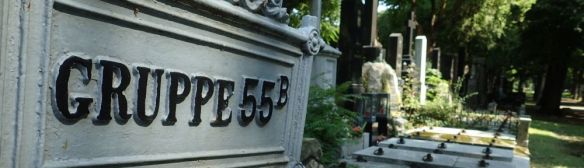
Group 55b of the Vienna City Cemetery.

Vienna City Cemetery July 2018.

The Book of the Dead

Roach has written a good book with a good combination of tongue in cheek and respect for the corporeal conundrum of cadavers. She walks through the use of cadavers as learning tools for physicians. She takes a swipe at the grisly details when there are not enough cadavers to learn from and you need to snatch one or two. And, she also discusses how cadavers are used as real crash test dummies – to calibrate crash test dummies.

I found the book very engaging at the beginning but died a bit toward the end. I guess it is hard to maintain life in a story about cadavers. Nevertheless, Roach also explores an interesting new method of cadaver-disposal: composting or chemical-cremation.

I Am Going to Wash that Body Out of My Hair

Basically a corpse (human, animal or otherwise) is put into a vat along with a de-composition solution (mostly lye). From there it is pressure cooked and the ‘….equipment can dissolve the tissue of a corpse and reduce it to 2 or 3 percent of its body weight. What remains is a pile of decollagenated bones that can be crumbled in one’s fingers…. “In effect, it’s a pressure cooker with Drano” ‘. The upside of chemical-cremation is that valuable land is not used to store corpses (not to mention the expense and waste of resources for coffin, cement liners, etc.) and mercury from our fillings does not fill the atmosphere from regular cremation. Chemical-cremation may be the way to go although it is not clear whether you can pay extra for the soylent green option.

A Good Read from an Approachable Author

Roach has written a very approachable book about the practical problem of what to do when you are done with your body. Some parts are a bit more graphic than others, so be wary. Nevertheless, she never loses sight of the fact that the corpse was a person and she treats that aspect with great respect. Stiff is a great vacation book while being buried in the sand by your family.

AIIM’s Life-Cycle Collaboration Model

In two previous blogs (Collaboration – Not the Vichy Variety and AIIM’s Collaboration Definition), I provided an overview to the definition and a lifecycle model of Collaboration. Developed by the American Institute for Image Management (AIIM), in this blog, I want to drill down on the Life-Cycle model. But first a quick re-cap, the definition is…

AIIM Collaboration Definition

AIIM Collaboration Definition

… and the lifecycle model is an eight stage recursive loop:

AIIM's Collaboration Lifecycle

AIIM’s Collaboration Lifecycle


Lifecycle Element Definition
Awareness We become part of a working entity with a shared purpose
Motivation We drive to gain consensus in problem solving or development
Self-synchronization We decide as individuals when things need to happen
Participation We participate in collaboration and we expect others to participate
Mediation We negotiate and we collaborate together and find a middle point
Reciprocity We share and we expect sharing in return through reciprocity
Reflection We think and we consider alternatives
Engagement We proactively engage rather than wait and see

Good Principles – Bad Model

While I like the AIIM definition of collaboration, I have a hard time understanding and using the lifecycle model. The circles suggest that one moves sequentially from one state to another. While I would agree that Awareness is a good starting point, is motivation really the next state? Is engagement truly the end-statement; e.g. everyone in an organization proactively being engaged? Does this not also lead to a lot of organizational noise and tripping over each other?

Some of the states are very important, in particular Reciprocity. I would suggest that this is the most misunderstood aspects of human existence let alone collaboration. Without getting too far into social-evolutionary theory or economic transactional-theory (stay tuned for future blogs); altruism in organizations only gets you so far and often not that much. I know this because I have created numerous Microsoft SharePoint sites which now lie abandoned or have long since been deleted and forgotten. In many cases the underlying business need has come and gone. In others I failed to or stopped providing a reciprocal advantage for erstwhile users (… errr, on that note, thank you for reading this blog).

As a model, I think the Life-cycle is found wanting. However, as a set of principles, I think there may be something there. Read the stages again but this time with this principles lead statement such as the following:

We the members of our organization, where we choose to work, seek to create a collaborative culture and an effective organization through the following collaborative principles:

  • We [choose to] become part of a working entity with a shared purpose
  • We drive to gain consensus in problem solving or development
  • We decide as individuals when things need to happen
  • We participate in collaboration and we expect others to participate
  • We negotiate and we collaborate together and find a middle point
  • We share and we expect sharing in return through reciprocity
  • We think and we consider alternatives
  • We proactively engage rather than wait and see

Thus, I think the AIIM Collaboration Lifecycle can help an organization establish a set of principles to allow for the creation of a collaborative culture. What the lifecycle fails to do though is provide a more robust conceptual framework to build, nurture, evaluate and continuously improve organizational collaboration. To do that, I would like to introduce the ‘3 Ps and a G over T Collaboration Framework’.

How to Disappear – When you Really Need to Go!

Full disclosure: I am not planning on disappearing and in fact I kinda like my little life just as it is.  Nevertheless, Frank M. Ahearn has written a very accessible book on how to (and not to) disappear if you want/need to.  Of course the criminal or terrorist comes to mind when you think about those needing to disappear.  Ahearn however discusses numerous other legitimate folks who have wanted to disappear for mundane to very sad reasons (mundane: avoiding greedy family members; sad: avoiding ex-spouses who want you dead).

Ahearn got into the disappearing business by finding people.  He was the guy who found you living in a trailer park outside of Vegas (or Balzac for us Canadians).  He was able to find you through a bit of subterfuge and was able to get your current address from websites, utility companies or nice companies who have sold you goods or services in the past.  Thus, while you were living under a pseudonym in Balzac, you transferred your warrant registration for your Harley Davidson motorcycle and you kept up your subscription to Pot-Pori-Monthly.

Ahearn got out of the finding people business because the tools of his trade were becoming increasingly illegal.  Thus, he got into the other side of the business – how to fall off the radar.  For us Canadians, it appears that many of the tools Ahearn mentions are specific to the United States.  However, that is probably more of a temporary state of affairs rather than a bit of permanent protection.  Some of the tools he (continues to use)/used include:

Even if you do not want to disappear, Ahearn suggests that you make yourself less visible on the web and perhaps in general.  He stresses to keep this above board (e.g. nothing illegal and keep on paying your taxes; however he does have a great speculative section on Pseudocide – how to fake your own death).  If you need no other reason, it is to avoid identity theft.

Some of his recommendations (fleshed out a bit from some web-searches) include:

  • Remove your real birthdate from all social media, in particular facebook
  • Do not use your full name in email addresses associated with your personal life, e.g. FPotter rather than frank.potter@….
  • Only accept social media friends from people you know and who you speak with periodically.
  • Use different email addresses for different sites so they cannot be mashed up together.  Don’t use a variation on an email either (e.g. Fpotter1, fpotter2, etc.).

I don’t need to disappear, but I do have enough of a spy novel fascination with it to enjoy the read.  I also value my privacy enough to want to ensure I am not dangly more than I need to on the web.  Now go and remove your real birthdate from Facebook – RIGHT NOW!

For more on Ahearn book:  How to Disappear: Erase Your Digital Footprint, Leave False Trails, and Vanish without a Trace

http://www.chapters.indigo.ca/books/how-to-disappear-erase-your/9781599219776-item.html?ikwid=ahearn&ikwsec=Home