Vienna – A City of Water?

Viennese are (justifiably) proud of their drinking water; what comes out of their tap can go against most bottle water. Amazingly, it arrives via two separate gravity-fed pipelines.  Pumping stations are not necessary as there is a gentle incline from the source all the way to south-west Vienna.
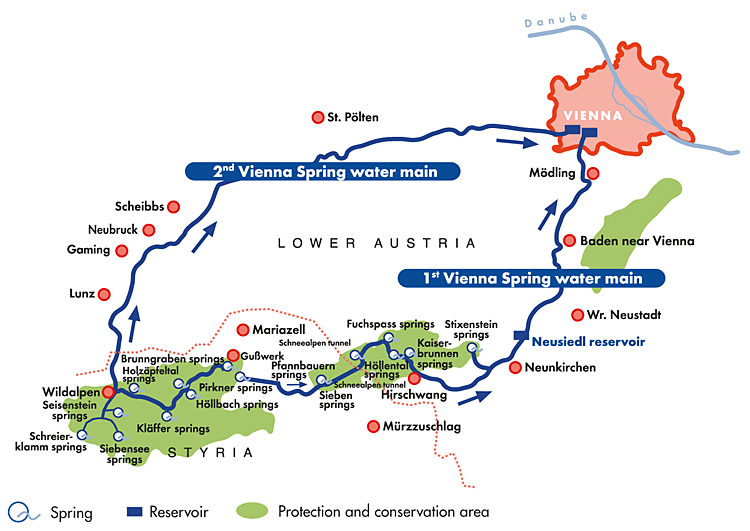
The two water pipelines supplying Vienna, source Vienna Water works.

Water, Water Every Where… but not a drop to drink (because of E. Coli)

Vienna goes back to Roman times as the Danube was more or less the frontier between the civilized Roman World to the south and the unwashed masses to the north. Vienna was a glimmer in a Roman’s eye until they all high-tailed it south when the empire came crashing down about 4 AD.  Over the next 1,600’ish years it went from an abandoned army encampment to a metropolis of nearly 2 million.

All cities are constrained by environmental factors including access to drinking water.  Vienna is on two rivers, the large Danube and the smaller Wien.  The problem is the former has already travelled nearly 1,000 km by the time it reaches the city and cannot be consumed straight.  The other comes from the Vienna Woods but is not a reliable source of water because of its small watershed.  As a result, wells were the primary source of water but were subject to contamination due to poor sewage handling.

The 19th century

The 1800’s was an engineering epoch and the problem of water was solved, in fits and starts, by engineers.  The first water pipe was built at the start of that century but quickly was overwhelmed by a growing population.  A water filtration system from the Danube was constructed in the 1830’s but was also overwhelmed.  The first water pipeline was constructed in 1873 and serviced Vienna until 1910 when it was supplemented by a second line.

Of course the average home did not have a water tap, instead fountains and communal pumps were interspersed throughout the city and many of these still exist today.  The water is still very drinkable but is now primarily a source for thirsty tourists and people without a tap in their home (typically due to a lack of a home).

A very drinkable and public fountain near SchottenTor in the NW corner of the Vienna Inner City.

Water Rights and Management

The City of Vienna owns the head waters of the two pipelines.  As the water passes through Austria, communities the pipelines transit cannot access the water.  A bit of the old imperial system that continues to today in which resources flow to the capital through the outlining areas.

Nevertheless, Vienna is a model of good water management and the importance of not only maintaining the local infrastructure but also the sources as well.  An interesting thought as our world experiences climate change.

Sources

The above has been adapted from:

Six months of paying attention

For the next six months I want to try to pay attention. Okay a bit of background, I am living in Vienna for the next six months (see the ‘Why Are You Here‘ blog for more details) so my environment is easy enough to be cognizant of,but there is a wee bit more to paying attention but first Vienna.

A City That  Demands Attention

Vienna is a city that demands attention – looking West toward the Hofburg.

Walk through the inner city of Vienna and you see life. The city has not been hollowed out and shifted to the suburbs such as like many North American cities.  A good social safety net also means that the number of street people are few.  The city itself has been reborn since its levelling seventy+ years ago under Allied bombing.  In other words, no matter where you look, there is something to see.

But this is no Disneyland caricature, Vienna is a living city and is proud of its imperial past but also secure in its current republic.  The public buildings are imposing but used everyday for the business of government.  The public art has been on display for decades or centuries and serves to improve the lives of the current and future generations… well on and on – the point is that Vienna is a cool place to pay attention to!

More than Old Buildings – Avoiding New Technology

There is another reason that I want to consciously pay attention for the next six months, the corrupting influence of technology.  Okay, this is not a ‘Luddites Unite – You Have Nothing to Lose But Your Cat Videos‘ post.  My point is that we need to spend less time seeing the world through the camera lens of our smart phone and more enjoying the world’s splendor/horrors with our own eyes.  By taking at least a few minutes a day to look around, walk on an opposite side of the street from the norm or take a different route to work – we can provide a small challenge to our brain to pay attention.  By doing so we can also train our consciousness to look not in the context of a meme, post or headline but in a way that we were meant to – as part of a series of inter-locking communities.

What Matters Gets Photographed

So, here is my plan to actively look about – I will select a single photo a day and post in a running blog for a particular month.  Okay, I get the irony that I may be using a smart phone and technology to do this, but do so suitably harnesses the machine rather than being enslaved by it.  As a bonus, I will get an electronic scrapbook of sorts.  Heck, it might even delay dementia by going back and saying – ‘I remember that image, it is because I crossed to the other side of the street that one day and saw…’ 

Hopefully you enjoy my ‘scrapbook’ and keep an eye out for blogs such as this one: March 2018 – A Photo A Day.

March 2018 – A Photo A Day

Based on a promise to ‘Pay Attention‘, this is one of six blogs with the good intention is to publish a photo a day of my six month adventure in Vienna with a caption and thoughts on the image. Note that the publication date and the date when the photos were taken are not the same. Enjoy my (manly) scrap book for future memories… take that future dementia!

March 31

March 30

March 29

Easter in Vienna, the bunnies are everywhere!

March 28

Traditional clothing is still worn extensively during celebrations. One advantage is that the style is functional. Here you can buy a Dirndl for only a few hundred Euro.

March 27

A train on the U2 line crossing the Danube. Part of the extensive public transit service in Vienna.

March 26

This is the east entrance to the Hofburg, the former imperial residence. Now where I go for meetings.

March 25

Year round bikes are a key transportation means.

March 24

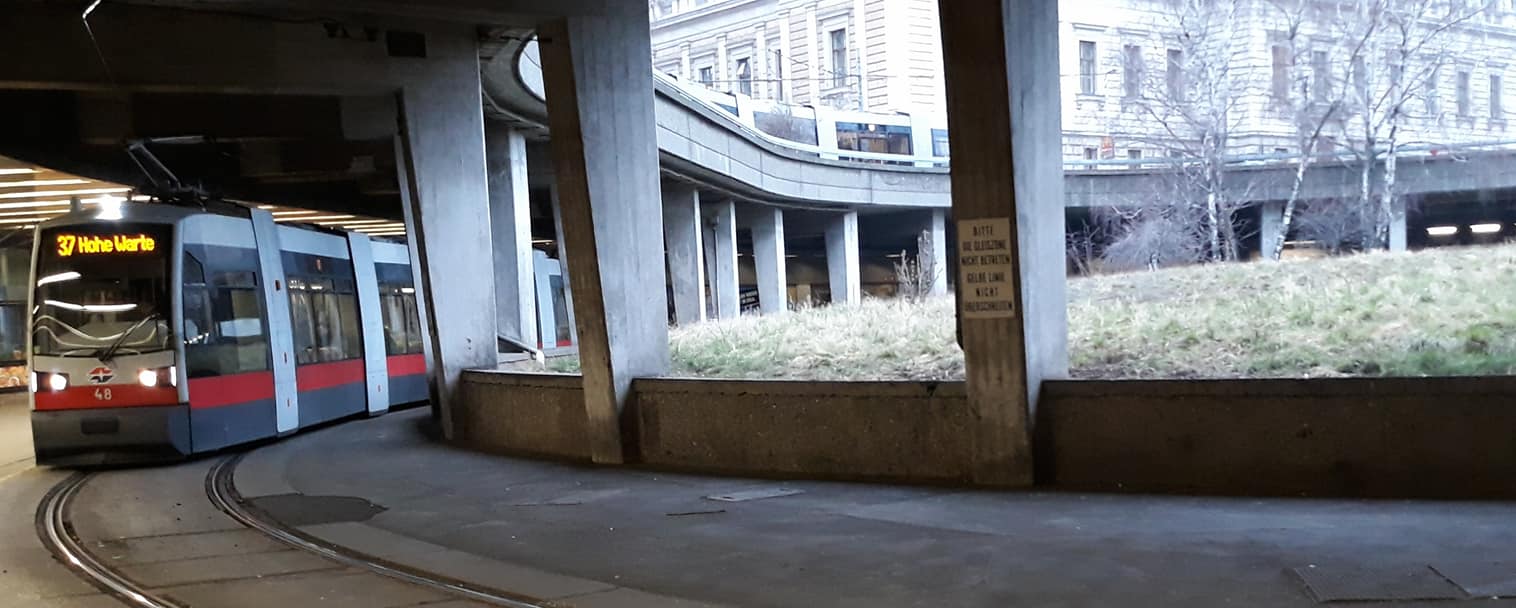
Street Trams (strassebahn) are still a key feature of public transit in Vienna. Most people are aware and accidents appear to be infrequent.

March 23

One of a number of churches in the inner city. This one is Schotten Kirchen. It is so named as it is near the former Shotten Tour/Gate in the old city walls.

March 22

Easter markets are smaller than their Christmas counter parts. Mulled wien, treats and crafts can be purchased in both.

March 21

Not all of the attractions in Vienna are vernable. A ‘social club’ is perhaps an example’

March 20

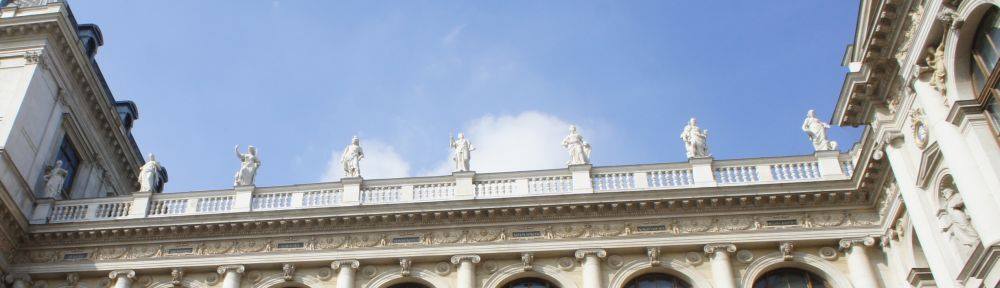
Detail of statutes gracing the top of the parliment buildings. Framed against an unusual blue Vienna sky.

March 19

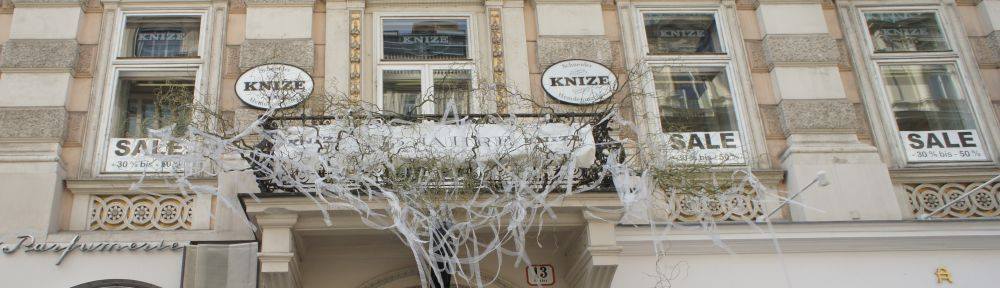
Easter Decorations on a balcony of a business in the inner city. Similar decorations are placed on the barren branches of trees.

March 18

Horse drawn carriages are a touristic fixture. Here this one is riding toward the St. Peter Catholic Church in the inner city.

March 17

A detail of a decoration on a building (housing Chanel) showing the excellent public art.

March 16

Why Are You Here?

Sitting in my new office, in a new city, on a new continent in a different country than usual; a staff member asked me: ‘Why Are You Here?’.  A seemingly innocuous question that took me aback for a response.

Whoa…. Where Are You?

For those who faithfully follow my blogs (hey, it could happen), you will know that I snowshoe, cycle, hike, blog and generally hang out in north-central Alberta (aka the Edmonton area).  This past week has not been a normal one as I finished work with the Government of Alberta on Friday, hopped on a plane Saturday, landed in Vienna Austria on Sunday and started with an international organisation on Monday, whew.

The role? I am the Deputy Director of an international organization.  Lots more on the organization in coming blogs, but for now, Why am I Here?

Sooo, Why Are You Here?

Over the past two months, it has been a whirlwind both in Alberta and finalizing this sojourn to Central Europe.  So whirlwindy that time for simple questions such as Why Are You Here had barely time to be answered… until now…

Managing your Serendipity

To start, I believe in managed serendipity.  Take a read of the blog from a few years ago, but one theme of this life-philosophy is: a) answer the door when opportunity knocks, and, b) opportunity usually knocks when you are in the bath tub.  In other words, opportunity is seldom convenient.

One thing ends and another begins

The next reason to be here is that I just spent 3.75 years in a very good gig at the Government of Alberta within the Ministry of Advanced Education as the controller for a large IT shop.  A good gig is not the same thing as an easy one; nevertheless, I look back at the body of work my team accomplished with pride.

But, all good things must come to an end and the government has chosen to change how it delivers IT services toward a much more centralized model.  I really do wish the government the very best as it seeks to consolidate this critical function.  I have my own views on the merits of making things bigger but that is no longer my business.  Suffice it to say, when the music stopped I was left without a chair and was just as happy to be left standing.

The intention is to return to the government.  I am a few years away from my first retirement number so my preference is to at least arrive at that number and then see how the world looks.  I enjoy being a member of the Alberta Public Service but sometimes it is important to take a vacation from yourself.

Vienna – Not a Bad Place for a Break

Finally the last but not least reason is because Vienna is a cool city and the organization does important work.  I think there will be lots to learn and I look forward to cycling, walking and exploring this part of the world.

The Downside of Opportunity

Of course nothing is ever free.  The costs include the time and space from family, friends and familiar circumstances.  There is also always a risk of taking a risk.  Although I am guaranteed a job upon my return what it will be is an uncertainty.  Living in a city in which you feel like you are 3-year-old language wise is always humbling (my goal is to speak ‘not-bad’ very-bad German in six months).

I am Here to Scare Myself a Little Bit

So that is why I am here, to scare myself a bit, to contribute to a larger civil society via the organization and to learn/hone my professional skills in a different context so I can return to the Government of Alberta refreshed, retrained and refocused.

Wish me luck and look for more on Vienna, the organization and new adventures.

Organizational Efficiency and Control Model

Have you ever thought about how to make an organization more efficient?  At this point you are probably going yawwnnn, been there done that with:

  • Doing more with less (how many decades have we been doing this?)
  • Lean [Whatever] remove waste from a process.
  • Business Process Re-engineering
  • Total Quality Management
  • Lean Six Sigma

A Measure of Productivity

Despite the ‘efficiency-fatigue’ you may be feeling, by any measure we humans have become more productive.  Take a look at the following graphic from the United States on labor productivity.  American workers produce more than five times what their great-grandparents did in the 1920s.  While you could argue this has come at a high cost for the environment, climate change, labor rights, etc.; you have to admit this increase in productivity is impressive.  (Source: bls.gov/opub/…/labor-productivity-the-economy.).

Labor Productivity (US) 1947-2012

A Little Dab Will Do You

Do you notice the line?  It relentlessly increases decade over decade.  There are very few spikes or drops but the ascent continues.  Technology is one factor but another is the competitive process of organizations to be more productive/efficient.

Squeezing Out Your Family

Which leads us to the central model I want to propose.  Focusing on output-efficiency is fine up to the point when your workers go strike or stress leave. Alternatively, perhaps you cut one control too many and the auditors or the police are at your door.  In other words, organizations must balance improving their processes, their people and their need to govern and/or control everything.  These three factors form the Organizational Control and Efficiency Model:

Organizational Efficiency and Control Model

OEC Forces

  • Explicit efficiency seeks to reduce the cost of an output through better use of inputs and improved conversion of the inputs.  Six Sigma, lean manufacturing or Total Quality Management can help with this objective.
  • Implicit efficiency is the ability of resources (staff, contractors, etc.) to work effectively together toward a common objective.  Resources can be efficient despite poor systems and processes.  Alternatively, the poorly trained, disengaged or unmotivated resources can negate/thwart the most efficient process. Most business models acknowledge this through concepts such executive buy-in or proper change management.  Implicit efficiency is subtly bigger than these concepts, it is how well does your organization play together?
  • Controls ensure organizational objectives are achieved. This may be through governance, automated controls, segregation of duties, etc.  Controls protect the organization but are often a drag on explicit efficiency or can negatively affect staff morale (implicit efficiency).

More Important than Corners is the Middle and the Lines

While the three corners of the triangle are important, more important is the stuff in the middle and lines between the forces.  Organizational objectives ask strategic question such as:

  • Should we still be in this business?
  • Do we invest, hold or divest of a product, business or service line?
  • Are our people working on the right things?
  • How can we become more agile and responsive to our clients/customers/citizens?
  • Do we have the right infrastructure to accomplish our goals?

The lines represent both support and tensions between the three forces.  Some organizations have discovered that by focusing exclusively on explicit efficiency they have alienated their staff or run afoul of their internal processes.

Too many controls will impede an organization’s explicit efficiency and make the organization a death march to work for.  However, too little control can co-opt or corrupt people or processes.

Finally, implicit efficiency can give you a competitive advantage (google southwest airlines steward announcements; these are people following procedures to ensure good control of the passengers while having fun).  Disengaged or unmotivated staff can derail the best quality management program or find ways around the most elegant controls.

Building a Strong Triangle

What are your thoughts?  Should this be a triangle, square or an even more complex geometric shape?  How well is your organization at balancing these 3 forces?  Does this model help when talking about efficiency and organizational effectiveness?  Drop me a note with your thoughts.