FeCT – 2018-08-12 a Ride Too Far

The is the third leg of riding about 500km of the Iron Curtain Trail or FeCT.

A Ride too Far Austria/Czech/Hungry – (60km)

Date: August 12, 2018
Starting Point (via): Marchegg Bahnhof
Weather Sunny, warm to hot and moderate to moderate north becoming south winds.
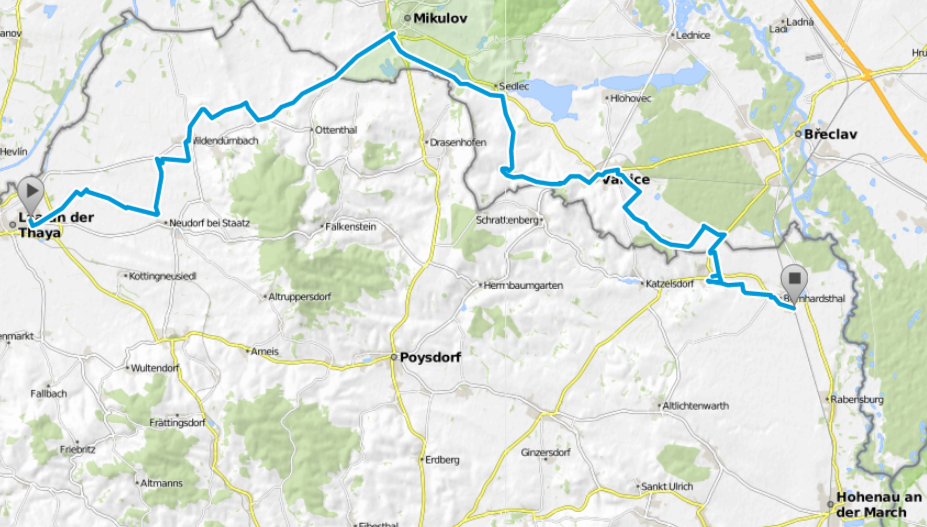
Route: South from Marchegg picking up the FeCT.  Through Bratislava and exiting the trail at Mönchhof (98km total ride, 78km without re-traces and 72 km FeCT riding).

This was supposed to be a simple ride.  We picked up the trail where I had left it a few weeks ago, through Bratislava and zig zags down to a convenient railway station allowing for a good ride pick up later on… that was the plan.  Instead it became a comedy of errors of route finding, construction detours, poor signage, a bit of bushwhacking, missed trains and some generous albeit drunk Austrians.  All in all a good day.

Bratislava – Where the F*CK is the Trail

I picked up the trail after a short 6km leg from Marchegg to the Friendship bridge.The route was good all the way into Bratislava.  Some of the walking trails showing their age being overgrown or somewhat broken.  As a warning Iron Curtain Trail signage in Bratislava is at best spotty, is hopefully not missing and at worst confusing and contradictory.

Getting to the first bridge that crossed the Danube presented our first mystery relating to signage.  The route involved going far back toward the bridge proper and take a ramp up to the pedestrian walks below the deck and on the sides of the bridge.  Clear signage to get you through a dark parking lot, nope.  Maybe a few clues spray painted on the pavement, nope.  And thus our first route finding fiasco had us trying to get up to the car deck where we discovered not pedestrian access.

Once across the bridge, the routing out of Bratislava consisted of a single sign directing us with vague ‘somewhere in that general direction’ accuracy.  Needless to say, bring a VERY good map to Bratislava, take it VERY slow and watch carefully and either a GPS or a Slovak enable smart phone are good additions as well.

Okay Signage and a Shark Tooth Border

The Hungarian/Austrian/Slovak borders south of Bratislava are a series of jagged saw tooth projections into each others territories.  Given that this border was heavily fortified, it must have taken enormous manpower given the elongations the border contours would have caused – which of course is exactly why the Hungarians opened the border because they could not afford to fix the then aging infrastructure.

Once again signage is okay to non-existence so be prepared to do a bit of route finding along the way.  Say hello to the occasional Austrian soldier who is keeping vigil because of the recent waves of migration from the eastern countries.  Of course one of the joys of route finding is being completely off the grid.  That happened in one leg when we ended up ‘bush whacking’ over a fairly overgrown trail and then enjoyed a few km of gravel roads until we could pick up a hard top surface riding into our final destination, Mönchhof.

A Missed Train and Friendly Austrians

From Mönchhof we thought we would enjoy a beer and meal in Neusiedler See (lake).  Alas we got off at the wrong station which may be just as well as there does not seem to be much in the way of services.  Nevertheless found cold beer and a passable Chinese supper at another train station.  As we were leaving, some nearby Austrians invited us for a drink –  a nice hospitable gesture – that caused us to miss our train by about 30 seconds.  Little did we know that next train just happened to be not an hour later but a full two hours later.

So, an eventful ride that was about 20km longer than intended marked by lots of route finding, generous invitations, missing signs and a very strange train schedule!

60km of the FeCT. Map courtesy of bikemap.net.

Route map (purged of all the bits where we circled around lost).

A Few Pics

The trusty steed at the Devin memorial

These guys were feeding bread crumbs to the Carp in the water. Those are not rapids but were instead a few hundred large carp fighting for the food.

The Sea can in the distance where for the soldiers monitoring this remote out post. Note the deer just to the left of the road.

Tri-corner where Austria, Slovakia and Hungry meet. I was Austrian and Gift (right) was feeling a bit more Hungari(an)

The Score!

Date Distance Name Impressions/Comments
2018-07-15 66 km Retz to Laa A great section with lots of things to see.
2018-08-05 60km Laa to Hohenau (almost) Rolling hills, lots of rural-ness.
2018-08-14 10 km Bernhardsthal to Hohenau am March A stub ride to finish the gap.
2018-07-15 52.7 km Hohenau to Friendship Bridge Green and very flat; accessible from Vienna.
2018-08-12 72 Friendship Bridge to Mönchhof Bring a good map and plan to route find!


August 2018 – a Photo a Day

Based on a promise to ‘Pay Attention‘, this is one of six blogs with the good intention is to publish a photo a day of my six month adventure in Vienna with a caption and thoughts on the image. Be patient and wait for the pictures load.  August has no theme but I will be looking for good pictures over the past 5+ months that did not match the prevailing themes or that have artistic merit (well, at least to me).

August 17: My last photo of the day and one of the first I took in Vienna last March.  A quiet moment on the Danube Canal with a young woman sitting in safety on the near shore and families out with their prams walking past tidy apartment buildings.  In a single a few of the reasons Vienna has been voted the Economists most liveable Global city for 2018.

A quiet March 2018 moment in the worlds most liveable city.

August 16: A collage of corner buildings in Vienna.  The question is, if you owned such an apartment, what would you put in such a room?  A swivel chair to look out each of the 3+ sides in turn?  Filled with plants to catch different sun locations or a series of cat-stands so Fluffly is never bored.

Collage of corner apartments

August 15: Two separate images of a large and now partially abandoned farm building.

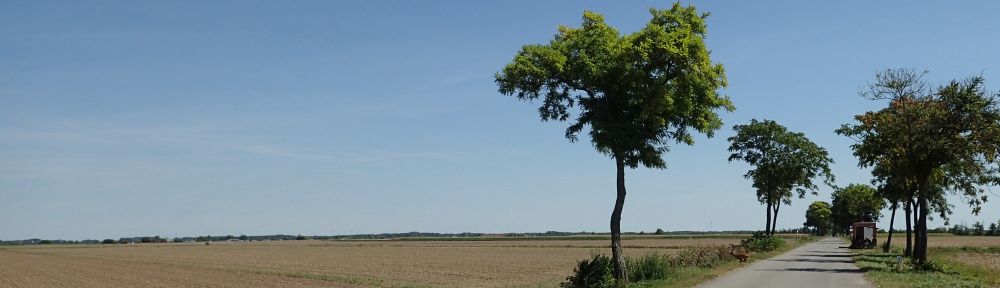
The Road to the Farm.
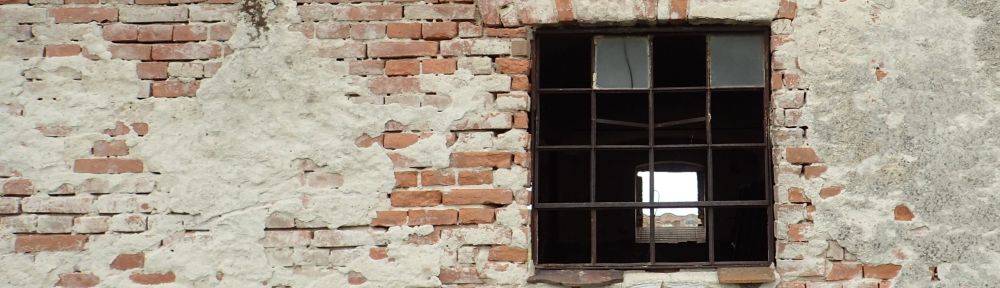
Looking through the abandoned barn into the inner farm yard.

August 14: No, these are not little homes for elves.  They are ventilation chimeys for the wine cellars built into the side of the hill.  Above freezing in the winter and cool in the summer, they dot the Austrian country side.  This particular group near Hohenau.
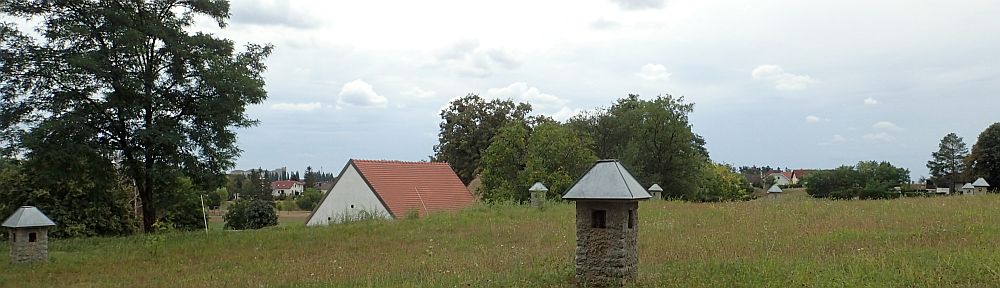
Ventilation shafts for underground wine cellars.

August 13: Having read the book The Day of the Triffids by John Wyndham as a kid, I always find sunflowers to be particularly creepy – especially when they are part of a field as far as the eye can see and standing in military precision rows.

The Day of the Sunflowers…

August 12: Scenes from the FeCT 2018-08-12 Ride.

At the point where three countries borders meet, my trusty steed and some Carp gone wild!

Tri-corner where Austria, Slovakia and Hungry meet. I was Austrian and Gift (right) was feeling a bit more Hungari(an)

These guys were feeding bread crumbs to the Carp in the water. Those are not rapids but were instead a few hundred large carp fighting for the food.
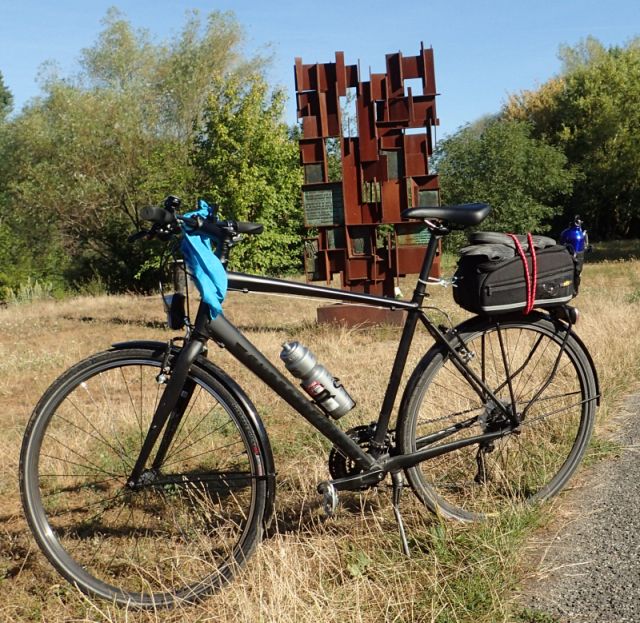
The trusty steed at the Devin memorial

August 11: A winch attached to St. Stephen’s Cathedral.  Used (according to the book Secret Vienna) to winch asylum seekers up into the cathedral to avoid prosecution.  As to who did the winching and why not remove the winch – details not available.

A winch and looking south east from St. Stephan’s cathedral.

August 10: A nick nacks shop within the courtyard formed by 3-4 buildings.  A quiet and cool place on a hot summer day.
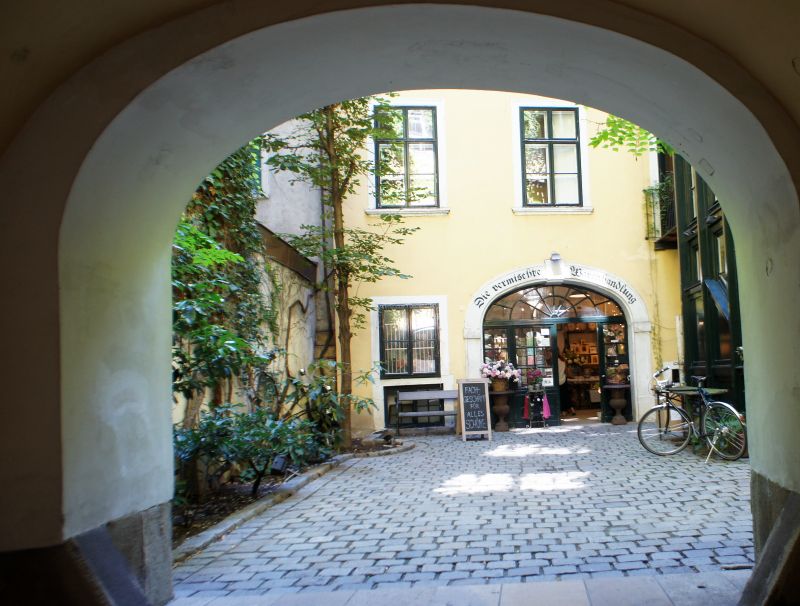
A quiet inner courtyard.

August 9: A free mason’s door complete with hanging stone… errr in case of earthquake perhaps find a different door way to shelter under.

The door to the free masons

August 8: occasionally you will see these signs and this one was outside of the literature museum in the inner city of Vienna.  In four languages (English, French, Russian and German – the first three being the languages of the occupying powers) it reads: ‘Protected by the Convention of The Hague, dated 14 May 1954, for the protection of cultural property in the event of armed conflict’.  The Austrian Military even produced its own rules of engagement for managing cultural property in case of conflict.

Cultural Property afforded protection under international law.

August 7: Scooters are incredibly popular amongst the Viennese for getting around.  Normally associated with a 10 year old, I have seen seniors, business men, professional women (complete with heels) and everyday Joe/Janes zip around on them.  It makes sense as it allows you to cover a longer distance with less effort.  For those wanting more ummphhh you can also buy electric scooters so you don’t need to exert yourself at all.  Cost, in the 80-300EUR depending on quality, powered or not, etc.

Scooters for sale and a few individuals zipping about.

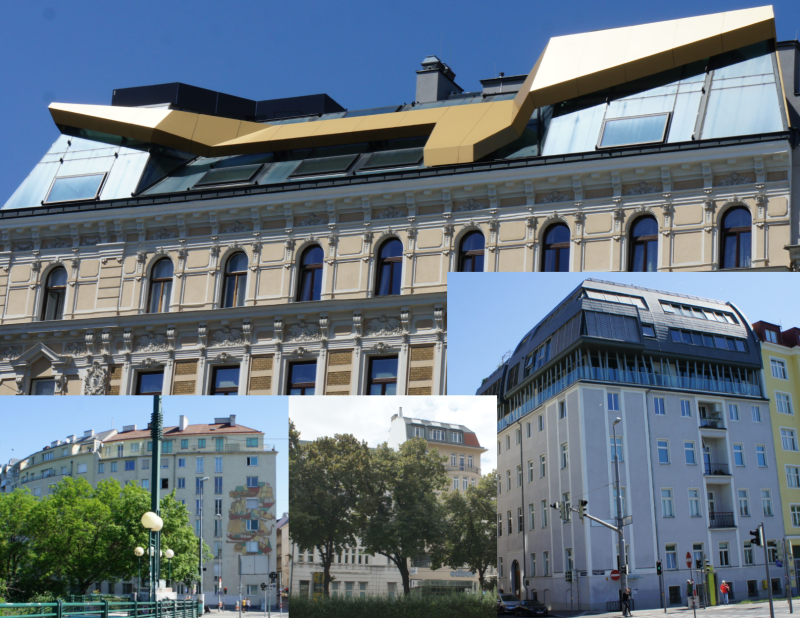
August 6: Add on Buildings: Both Vienna and the city where I grew up, Calgary, made the top 4 list of the 2018 most livable cities. By way of sustainability however, Vienna has Calgary through density.  Vienna covers an area of 414.65 km2 (160.10 sq mi) while Calgary is double at 825.56 km2 (318.75 sq mi).  Populations and respective densities are even further apart at 1,889,083/1,239,220 and 4,326.1/km2 (11,205/sq mi)/1,501.1/km2 (3,888/sq mi) respectively.  One of the ways that Vienna is that much more dense is because of it builds up and then provides excellent public transit to service the population.  Sometimes building up goes questionably wrong.

In the following montage are 4 buildings in which an additional floor has been added.  In the bottom left, assuming the top floor was an addition, the penthouse flows nicely with the architecture.  Bottom-middle has a top floor peaking up above the others but it sort of flows in an erect sort of way, bottom-right is germanic metal super-structure on an otherwise ordinary building.  And then there is the flying wing.  This gold doggish-thing apparently serves no purpose other than decorative and the Southeast exposure ensures the penthouse is an oven in the summer-heat.  No wonder it has apparently gone unsold in over two years.
August 5: Scenes from the FeCT 2018-08-05 Ride.

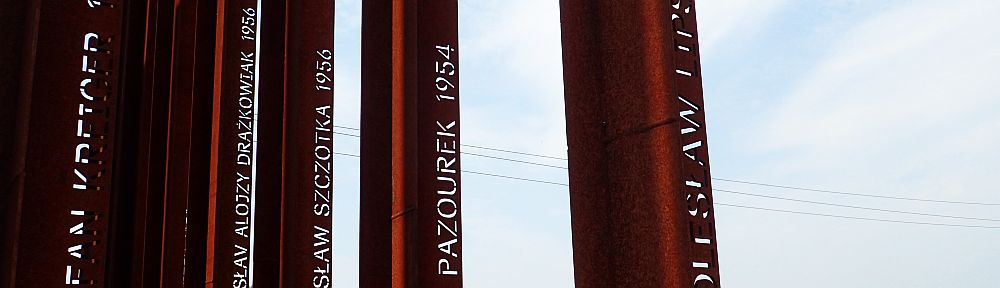
Euro Velo 13: A new memorial sculpture commemorating those that died trying to cross the border during the Cold War was due to be unveiled. The visitors are given an early glimpse of this thought-provoking piece – each iron column represents one of the 53 people that died trying to escape along the Czech-Austrian border.
Heading North, the city of Mikulo in the distance.

Heading North

Wien Kellers

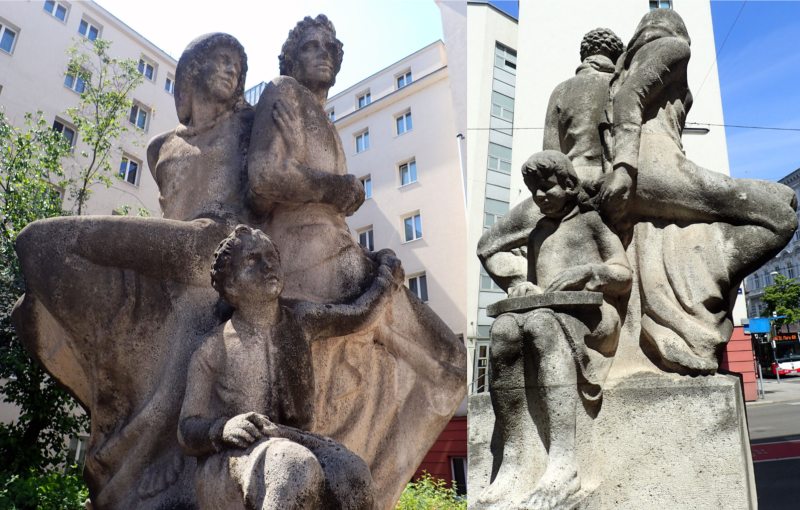
August 4:Two sides to the same statue, public art example.
August 3: Boats on the Danube.
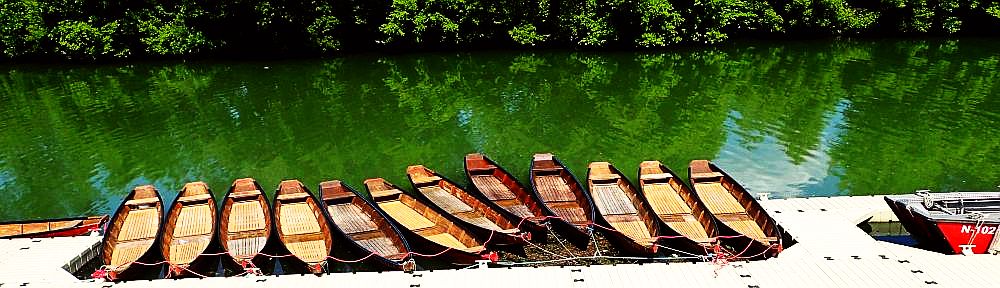
Boat on the Danube near Klostenneuberg.

August 2: Another orphan, the main entrance to Ausgarten.

Ausgarten

August 1: An orphan from July-Photo-A-Day displaced by a district.  On the road to Baden.

On the road to Baden
FeCT – 2018-08-05 – Too Much Heat

The is the second leg of riding about 500km of the Iron Curtain Trail or FeCT.

Too Much Heat in Rural Austria/Czech – Laa (60km)

Date: August 5, 2018
Starting Point (via): Laa Bahnhof
Weather Sunny, hot and moderate to strong NW winds.
Route: East from Laa with a small North jog into the Czech Republic (52km and all FeCT riding).

This was a fill in section and unfortunately I have small gap of about 10km. Alas the 35C temperatures and not wanting to miss a train both depleted me and forced the decision. As for the section, not bad. I would take the Austrian section between Retz and Laa over this bit but this is nitpicking.

The tour was was rural Austria/Czech at its best. Through in a few castles, ancient churches and you have yourself a great ride. Mostly on ashpalt but enough rough pavement and gravel to make you want to leave your pricey road bike at home. In fact a soft tail or shocks would have been good for these sections.

The route itself was through rolling hills and there was some good sections about the history of the Iron Curtain… with the catch that you have to be able to read Czech. The Czech side seemed a bit more developed than the section from Retz to Laa and there were lots of locals on their bikes with kids and large groups.

As for the Iron Curtain, it has largely disappeared other than the memorials and the occasional machine gun emplacement. This of course is a good thing and the whole point of this trail…

60km of the FeCT. Map courtesy of bikemap.net.

Laa to Hohenau (almost)

A Few Pics

Wien Kellers

Heading North into the town of Mikulov

The Score!

Date Distance Name Impressions/Comments
2018-07-15 66 km Retz to Laa A great section with lots of things to see.
2018-08-05 60km Laa to Hohenau (almost) Rolling hills, lots of rural-ness.
2018-07-15 52.7 km Hohenau to Friendship Bridge Green and very flat; accessible from Vienna.
2018-08-12 10 km Bernhardsthal to Hohenau am March A stub ride to finish the gap.


The United Nations – Pension and After Service Health Fund

Most people never have to consider the challenges (and enormous benefits) of choosing to be an international public servant.  That is an employee of an international organization.

For the duration of your employment you don’t typically pay taxes, nor do you pay into a national social security network such as the Canada Pension Plan or a health insurance program. When you are younger this seems like a great deal but what happens when you leave the service or when you retire?  Do you have a pension, health insurance or other social benefits when you are no longer an international public servant?

The answer is… it depends and this is a look into the most well-known of the international organizations, the United Nations, and their post-employment employer benefits programs.

Pension Plan or Provident Fund

The United Nations offers a pension plan but some organizations (and nations) have taken a different direction, Provident Funds. Effectively a provident fund is a savings account

When I was contracting for NATO, for example, I recall staff being able to withdrawal from their provident fund to buy homes or pay for the children’s education.  Obviously the details of each fund is very different but that is a potential advantage to an employee of a provident fund is the ability to make use of the resources earlier rather than waiting for retirement.

Unfortunately provident funds are seldom portable between organizations. Another challenge is that risk is not distributed.  Thus for a person and family who remain healthy, they may retire and leave a nice inheritance to their children.  Conversely if you/family become ill earlier in your life your provident fund may be quickly depleted.

A benefit to the employer is controlling the liability associated with the provident fund.  They truly are a define contribution scheme meaning that the long-term liability ends after each monthly fund payment. On the other hand, a friend of mine moved to Malaysia and knows stories of older people having to go back to work after gambling away their lump sum provident fund payment.  But back to the United Nations!

After Service Health Insurance (ASHI)

The United Nations offers two types of after-service benefits to its employees, a pension and health insurance.  As a career organization, this makes sense and the portability of both of these programs is excellent.  The pension fund is a defined benefit plan with a five year vesting periods.  With ~$54B USD fund, the pension is generally considered to be fully funded although has been under criticism for its investments, governance and performance (e.g. see: The UN General Assembly Urges The 54 billion pension fund to shape up).

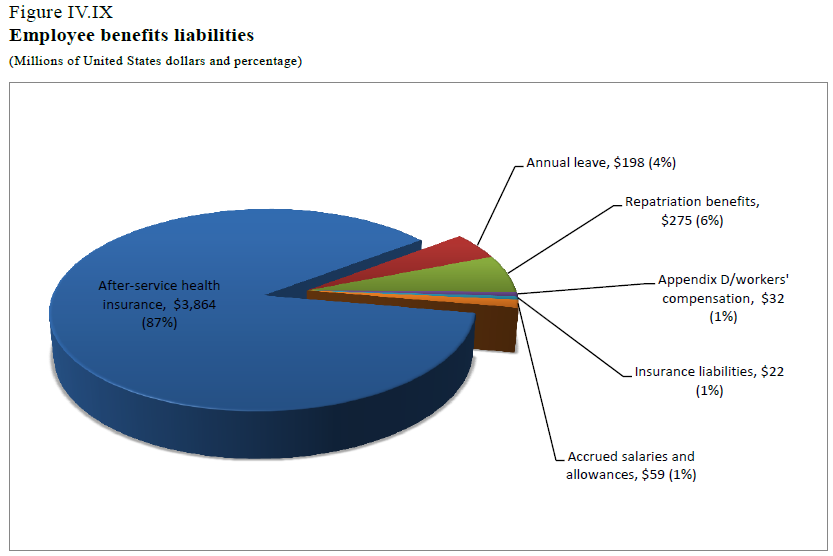
ASHI is another matter and represents a significant cost and liability to the United Nations.  The following graphic provides a visual image of why this is a critical issue given that this one benefit represents nearly 90% of the total employee benefit liabilities.  ASHI and the other long-service employee benefits have grown to the largest liability for the UN primarily because of ‘pay-as-you-go’ philosophy.  All sources from the 2016 UN Financial Statements.

Analysis of UN long service employee benefits (2016 financial statements)

What can the Alberta Government learn?

The UN’s ASHI’s deliberation has a direct parallel to the current challenges of an aging population and funding medical needs.  One of the primary challenges is moving from a pay-as-you-go to a fund-as-you-go model.  Given the accumulation of public debt and the inclination in the western democratic tradition to focus on shorter time horizons, this solution may be a challenge.  Nevertheless, the UN experience can be an excellent analog to inform public policy in Alberta (and Canada and elsewhere) on managing citizen (and public servant) costs.