
In my ongoing effort to remember what I have read, some notes on Hayes Drumwright’s book: Management vs. Employees: How Leaders Can Bridge the Power Gaps That Hurt Corporate Performance. Nothing much new in this book that has not already been said by numerous authors, nevertheless, still a good read at an inspirational level and a reminder of some enduring truths about leadership.

Who is Drumwright
Drumwright is one of the lesser-nobles of the US entrepreneurial set. According to Entrepreneur.com:
Hayes Drumwright is the founder of POPin … (and) is also the founder of Trace3, a business transformation solutions company … In 2010, Hayes was named the Ernst & Young Entrepreneur of the Year in Orange County and the Desert Regions, California.
Prior to these two success, Drumwright also started, grew a company called “Techfuel” which then crashed and failed during the dot.com bubble burst at the beginning of the century. He later started Trace3 and was eventually ousted from his own company and later began a series of successful businesses including the winery Memento Mori.
Why Listen to Him
Yawn, another ‘got lucky’ success story, what could Hayes possibly have to tell me that I haven’t read elsewhere. The answer: earnestness and learning the value of being humble.
He comes across as a geniually nice guy. He is a family man (3 boys and girl) who speaks lovingly of his wife, mother and his siblings. In other words, he is the kind of guy you would want to live next door to, have your daughter marry or even work for. Because he is a nice guy who is willing to learn from his mistake, he does have something to say. They may not be new but that does not make them any less valuable in hearing again.
Servant Leadership
Ultimately, Drumwright’s messages can be summed up in the concept of servant leadership:
… A leadership philosophy in which the main goal of the leader is to serve. … A Servant Leader shares power, puts the needs of the employees first and helps people develop and perform as highly as possible. Servant leadership inverts the norm, which puts the customer service associates as a main priority. Instead of the people working to serve the leader, the leader exists to serve the people (Courtesy of Wikipedia).
Key Messages
- Us versus Them: ‘Them’ varies by context but includes an organization’s employees, customers, families and community. By putting ‘Them’ first there is more to go around, what he calls ‘delayed selfishness’.
- Leaders and Complacency: Leaders help people to achieve their current ‘home-run’ and then immediately establish their next ‘home-run’; by doing so the leader prevent people from becoming complacent.
- Being versus Becoming: Further to the discussion on Complacency is the importance to strive to be constantly ‘becoming’ rather than ‘being’. The latter is static and means that progress is no longer being made while the former is dynamic and involves constant challenges, failures and trust in one’s self, organization, family, etc.
- Trust: In order to help ‘Them’, a leader needs to build trust. Very little can be accomplished without it and much can be done with it.
- Tenure and Seniority: Tenure or seniority in an organization is not a right to disconnect, it is an obligation to perform at a higher level.
- Tension and Respectful-Conflict: Conflict is healthy; too many like-minded people avoid challenging and thus improving each other.
- Attribution Error: we attribute negative behaviour of others to their individual characters while attributing our negative behaviours to our environment – we give ourselves the benefit of the doubt (originally from Patrick Lencioni).
- Barfing Downhill: Top leaders think they are being clear by identifying top 3 goals. The problem is that by the time those top 3 make it to the bottom of the organization, they have expanded many-fold meaning that the line-employee is faced with numerous messages that have lost their meaning. As well, barf only rolls downhill with little communication going back up again.
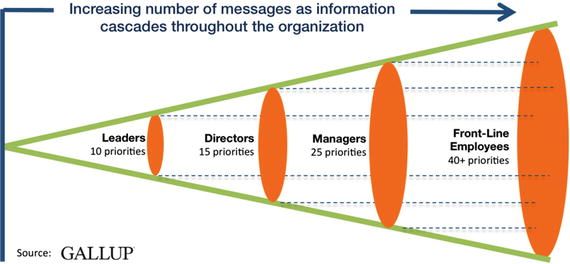
Springer Hill: https://link.springer.com/chapter/10.1007/978-1-4842-1675-0_6.
- Separate the Truth from Goodwill: People don’t like to hurt another’s feelings and this is even more so when they are loved one or a leader. While goodwill is comforting it can also be disastrous if it leads to a wrong decision. Conversely it is important to separate pride from your ideas so that it does not equally cloud the truth.
- Failure needs to be Enjoyed: It teaches individuals and organizations fundamental truths and provides for corrections.
- Talk to your Children About the Importance of Failure: This is an excellent section in the book in which Drumwright talks about the prospect of failure in a business venture with his children. This was not to scare them but to include them in the realities of the world. In the day of age of helicopter parents, excellent stuff. As a leader, it is important to discuss your failures, your likely continued future failures and the importance of learning from these failures.
- Minimum Viable Stuff: Coined by Eric Reis in the Lean Startup, this is the basis to invest the minimum so as to achieve the maximum success/failure in the shortest period of time.
- Institutionalize Anonymity: The truth is that organizations generally are becoming less and less tolerant of diversity of opinions – particularly as organizations strive to embrace mantras of diversity and inclusion. While this may seem paradoxical it also means that organizations need to increasingly protect opinions that don’t fall into the narrow parameters of politically correctness. Drumwright’s POPin application does this through an application but a good old fashion suggestion box works to.
Good Reminders and An Enjoyable Read
While Hayes is only on the bubble of a rags to riches story, he has learned a few important lessons and such his book is a good reminder of truths presented elsewhere. It will be interesting to watch this individual as he gains more experience and continues to internalize it for our benefit.
 Organizational Biology