Unknown's avatar

About Frank SAPAA

Webmaster and Board Member of SAPAA and born and raised Albertan. Love exploring Alberta particularly in the winter on snow shoes.

May 2018 – A Photo a Day

Based on a promise to ‘Pay Attention‘, this is one of six blogs with the good intention is to publish a photo a day of my six month adventure in Vienna with a caption and thoughts on the image. Note that the publication date and the date when the photos were taken are not the same. Enjoy my (manly) scrap-book for future memories… take that future dementia!

PS… Be patient and wait for the pictures load.  Also because May is a thematic month, it is best to view the images from the bottom to the top.

May 31: The last photo for May and, well small town fire halls share a similar familiarity even if they all come in different shapes and sizes.  See you next month whilst I ‘Pay Attention’.

Small Town fire hall – Zeiselmauer.

May 30: Some more public art.  The one on the left is from a bakery near my apartment, the bishop looming over tenants and passersby on an apartment building the abstract art covers a metro ventilation grill near one of the train stations.

Private and public art examples.

May 29: Behind closed doors on the street is often a passage leading to a central courtyard.  These courtyards could contain nothing more than an over grown garden or car park.  Sometimes though they contain beer gardens, a well maintained garden refuge from the summer heat or even a red carpet to a business display…
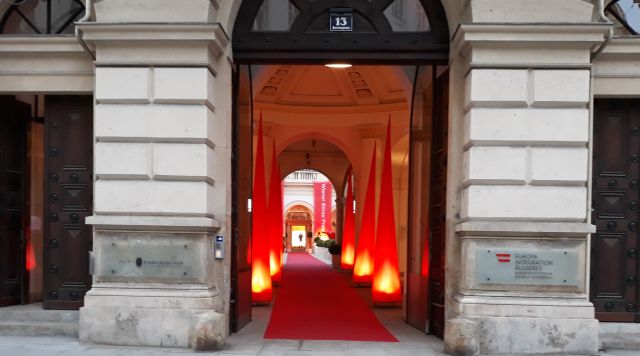
Business conference off Herren street

May 28: there are some very nice artisans in Vienna.  A few have made their appearances previous photos per day but today a twist with the Viennese coffee culture.

Coffee rings and ear rings.


May 27: A few more views of the Spittelau plant.  On clear days it is an icon visible from most parts of the city.

Three different perspectives on a burning bit of art work.

May 26: What better place to have public art than an… incinerator, yeah!  The festooned Spittelau waste incineration plant produces enough power for 60,000 homes by buring the trash from Vienna.

120,000 MWh of ART

May 25: Perhaps the best view in the city?  Note the angular buildings set juxtapose to the more traditional buildings.
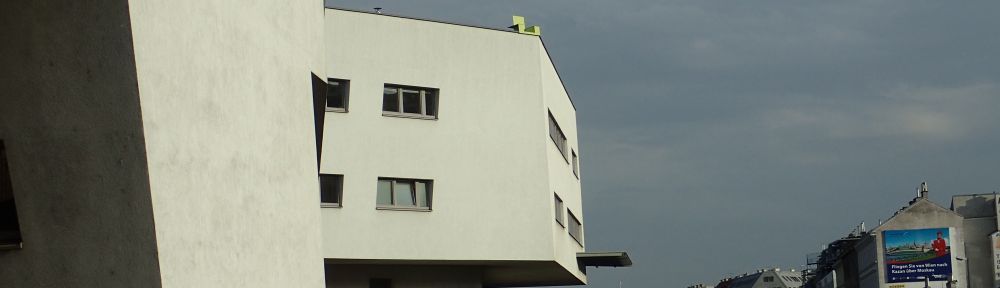
Best Seat in the house…

May 24: A very cool and practical application of bike-technology for a crowded city – a pedal powered UPS delivery vehicle.  I did not see an electric assist so looks like this fellow is getting a good daily work out.  Not so pleasant in the rain I suspect however.

Pedal Powered UPS

May 23: Design of course extends well beyond an intended work of art.  I have always admired this bridge over the Vienna river for its combination of functionality yet elegance.  For those who have been to Edmonton, a bit like the High Level Bridge, industrial beauty.
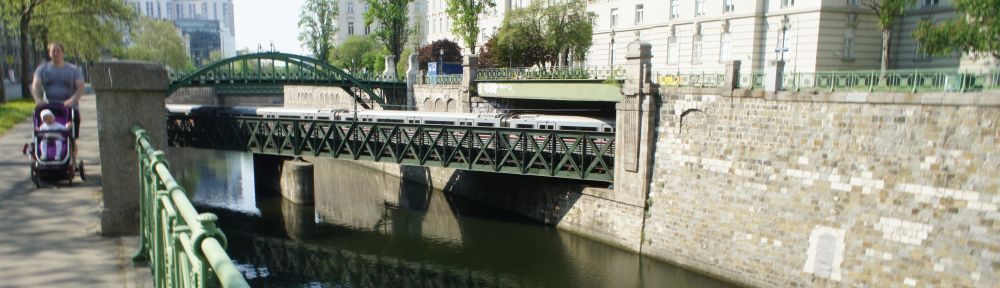
U-Bahn bridge over the Wien fluss.

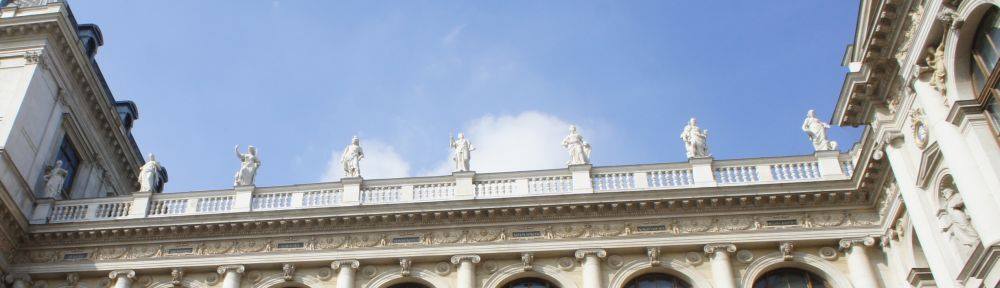
May 22: Normally I am intrigued by the more gritty examples of public art, a slightly grimy mosaic for instance.  This set of statutes on top of the post office is a perfect example of well crafted sculptures looking down from you in all corners of Vienna.

Watch art from atop the post office.

May 21: A glimpse of an intimate moment in the Sigmund-Freud-Park through a detail of an iron sculpture… and no, there is no deeper meaning to the photo, sometimes a sculpture is just a sculpture.
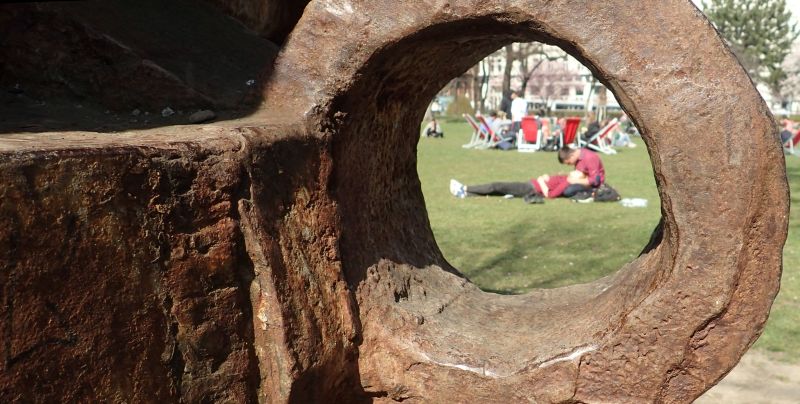
An intimate moment glimpse through public art.

May 20: Public Art in Vienna comes a number of forms, including the whimsical.

Seeing pink bunnies in the Inner City…

May 19: Grape vines grown in a shopping cart.  I have not gone back to look but I would think they are now in full bloom.
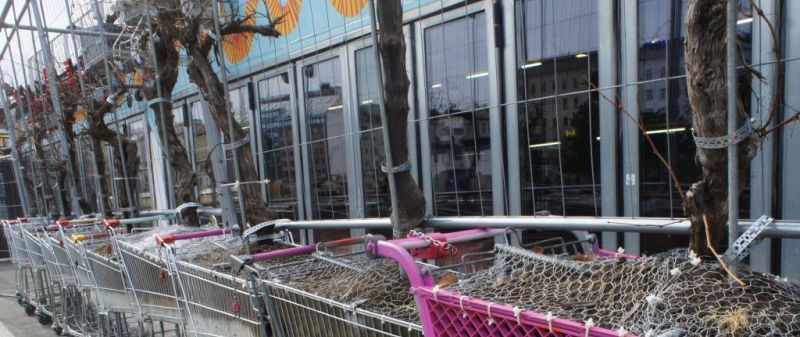
Mobile Grape Vines

May 18: A return to the public art theme, two building murals (left and top right) and a sculpture near a kindergarten. I can’t decide if the yellow paint vandalism adds tor takes away from the piece.
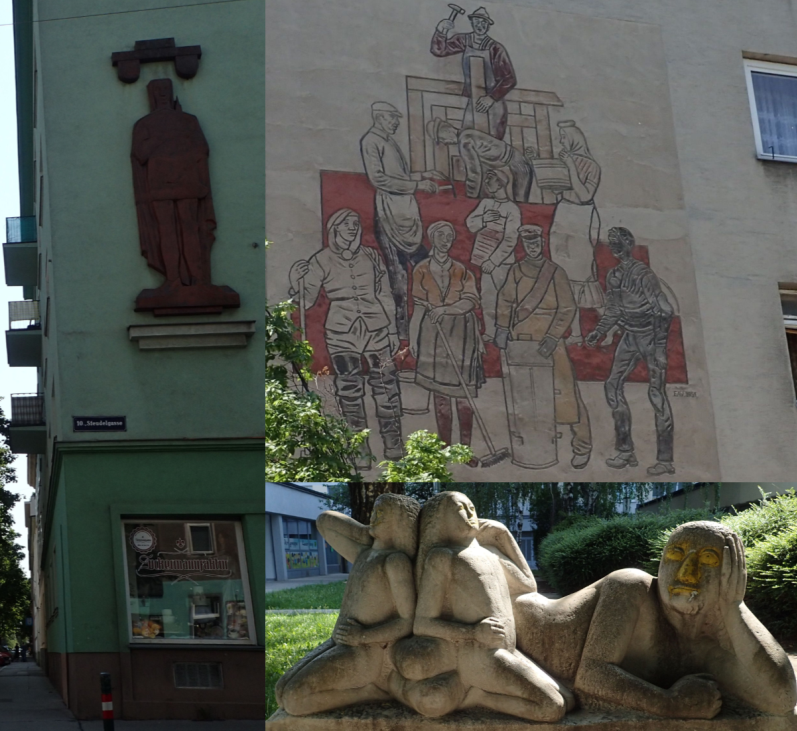
Two murals and one sculpture

May 17: Another quintessence Vienna vista.  Not the succession of big buildings but the listing of the date of construction on the social housing on this building.  In this case, this one was built between 1932-33.

Vienna Vista of Buildings

May 16: More public art found on public buildings, this time south Vienna.

Examples of public art found on buildings in Vienna.

May 15: I saw this scene whilst riding this past weekend.  Vienna is not far on all sides from small hold farms and bucolic vistas.  This was two women cross the Schwechat River with a little boy and girl.  To get across one woman lead a pony while one of kids rode on the pony.  A beautiful warm day and wonderful moment for two little ones to play near the water and I imagine for one of the women (a friend, aunt, grandmother?) to share a love of animals and a bit of nature.

Crossing the Schwechat on a pony.

May 14: I am always on the look for things like public art and vistas in Vienna.  This slice is a very typical impression of the city.  Left to right, notice the facade on the building, a bit of greenery from the apartment owner, the modern non-descript brown building, the graceful older building with likely an addition put on after its construction and finally the greenery.

A cross section of Vienna.

May 13: Alas not all pictures are happy and this is one in which I say adieu (of sorts) to my much beloved Dahon-Mu, my folding bike.  Alas it turns out that the tolerances on things like the frame hinge are beyond the safety range for a person of my impressive characteristics (plain english, I am too large for the bike to safely handle me).  I managed to rent a bike from the good folks at www.citybiker.at.

Good bye Dahon-Mu, our brief time together was a lot of fun.

May 12: An introduction to the murals found on many public buildings and in particular social housing complexes. The image in the bottom right is an example of brutalist architecture on the Vienna River, note the hole made to accommodate the tree.

Public Art Murals and a bit of brutalism.

May 11: A break from local public art… a good old prairie evening thunderstorm a few days ago complete with hail, driving wind, lightening and a torrential downpour.  Could have been worse I guess, I could have been this carriage driver trying to get back to the stables. Across the street is the University of Vienna.

A prairie’esque evening thunderstorm.

May 10: Art is functional as well, off the Danube Canal.

Note the mosaic under the portal.

May 9: Art is not limited to free-standing statues, on much of the public housing (IN which many Viennese live) murals are common.  The first of many such images this one an intricate cement mosaic.
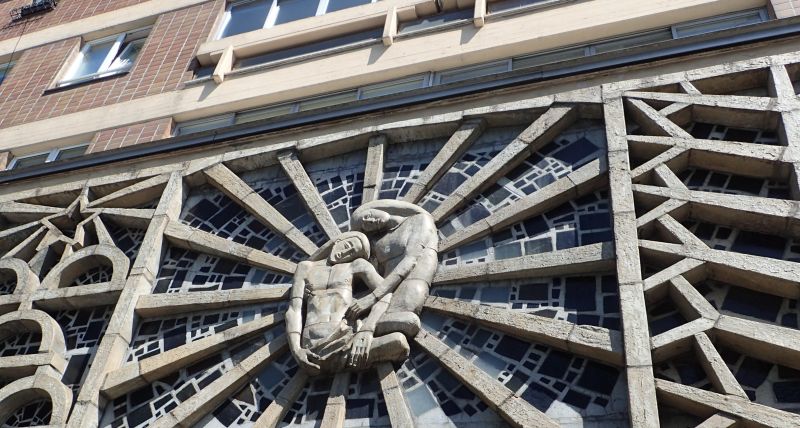
Intricate cement mosaic above an apartment buildings entrance.

May 8: Continuing with the theme of public art, the Virgin Mary on a bridge over Danube Canal.

Virgin Mary Statute

May 7: For the remainder of the month of May, a focus on the public art on display within Vienna.  Much of it on social housing and others part of government building installations.
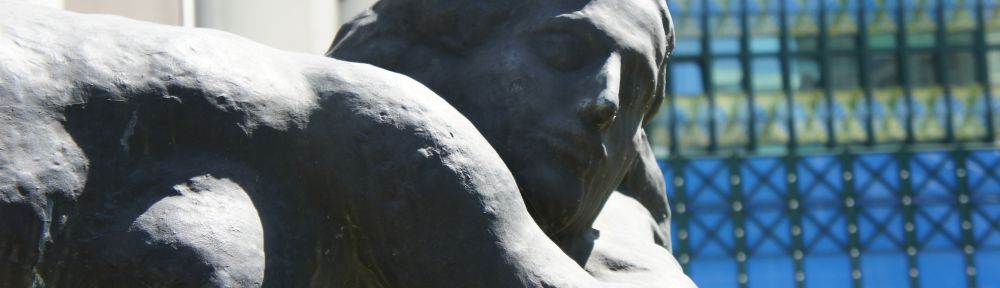
Bronze statute of reclining woman with the Ministry of innovation in the background.

May 6: The last of the labour day series, a farmer and a local chatting south of Vienna near the farmer’s vineyards.

Farmer south of Vienna

May 5 (cinco de mayo): Two for one deal, firetrucks in the inner city of Vienna.

Detail of an inner-city fire station
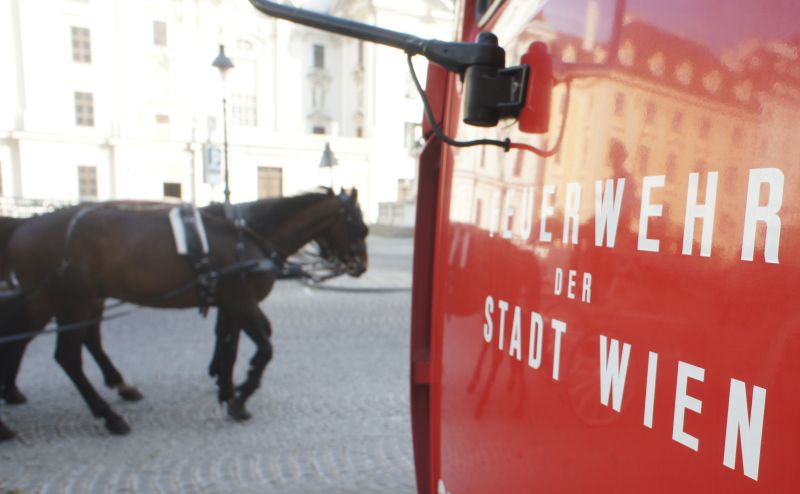
One of the numerous touristic carriages against a ladder truck.

May 4 (be with you): More labour day themes!

Used horseshoes for sale!

May 3: Continuing on a labour-day theme, a vineyard south of Vienna in early foliage.

Vineyard with early leaves.

May 2: Continuing on a workers theme, one of the most famous statues in Vienna of  Johann Strauß II.

Monument to Johann Strauss II


May 1, 2018: In honour of international labour day, a few pictures of work in Austria (and thereabouts).  The first in honour of my oldest brother and nephews, digging holes in Vienna.
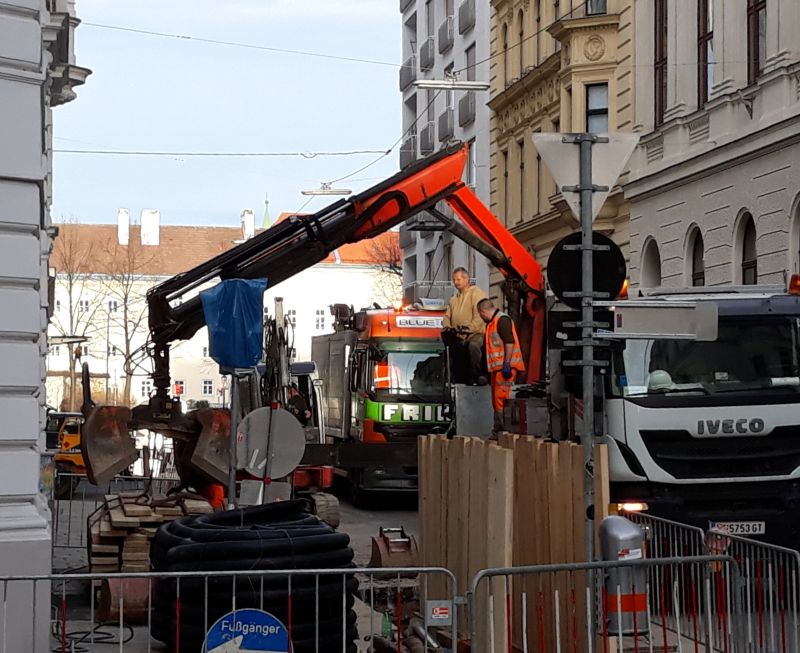
Replacing water mains near my apartment.
April 2018 – A Photo a Day

Based on a promise to ‘Pay Attention‘, this is one of six blogs with the good intention is to publish a photo a day of my six month adventure in Vienna with a caption and thoughts on the image. Note that the publication date and the date when the photos were taken are not the same. Enjoy my (manly) scrap-book for future memories… take that future dementia!

PS… Be patient and wait for the pictures load…

April 30: The last photo of the first full month in Vienna of six months.

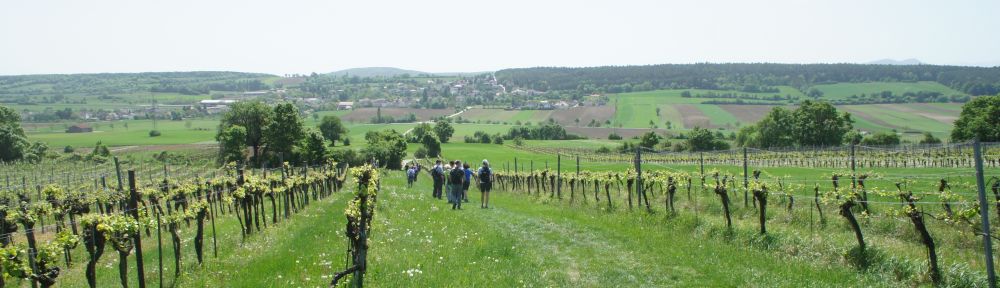
Hiking through the vineyards near Bad Vöslau

April 29: More on the theme of nailing into wood. This tree (behind the glass and named Stock im Eisen) is believed to be from the 15th century with numerous legends of its pedigree (including being the last tree of a sacred grove).  Now a seldom notice albeit prominant feature in Stephensplatz.

Stock im Eisen, Stephensplatz

April 28: Wehrmann in Eisen; I came across this unusual sculpture walking home last night.  Underneath about 500,000 nails is an original wooden sculpture create in 1915 in support of the war effort.  The first nails were pounded by the German and Turkish ambassadors, Austria’s allies in that conflict a century ago.  Taken with my phone, I may need to go back and try for a better shot with a better camera.

Wehrmann in Eisen, Vienna

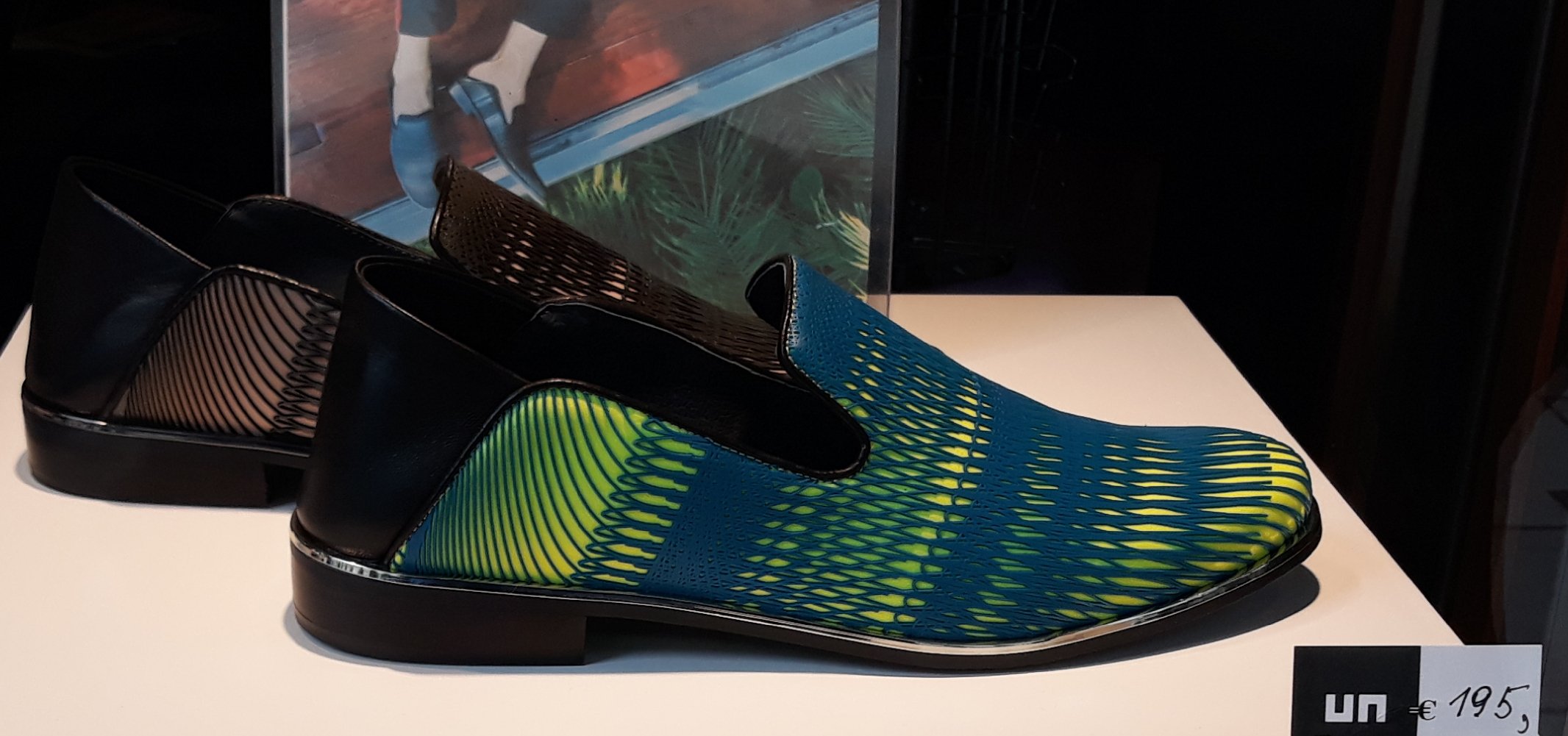
April 27: I have found the perfect pair of conservative accountant’esque shoes.  Near my office which is also home to some fabulously expensive shops selling things the rich do not really need but covet for that exact reason.

April 26: A quiet moment on the inner-city’s ring road.  Of course the reason there is a nice ring road is that it is where the city walls used to stand until a few hundred years ago.

A quiet moment on the ring road

April 25: Vienna is surrounded by woods and working farmland.  To this end, Vienna produces its own wine on the slopes both within and visible from the city centre.  This is looking east toward the Danube and across one of these vineyards.

North Vienna looking across vineyards east to the Danube.

April 24: these two gents retrieve junk from the Danube canal.  They either sell the scrap or they offer tourists a chance to throw the lanyard weighted with a magnet into the canal.  Donations are encouraged.  Note their faces were obscured upon request.

Fishing for metal in the Danube.

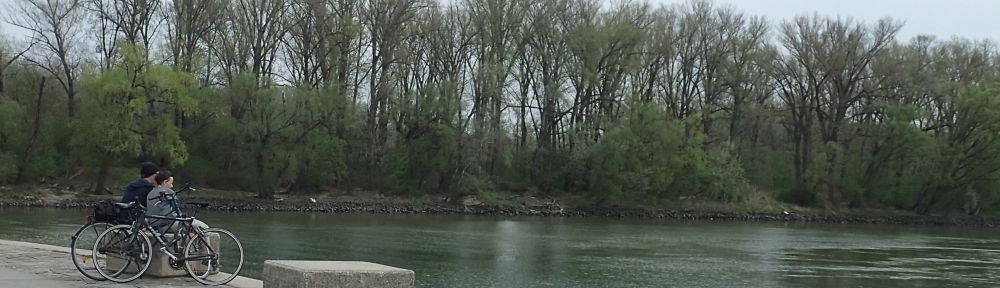
April 23: take a break cycling on the Danube north of Vienna.  A couple also enjoying a sunny and bright moment.

The Danube, north of Vienna

April 22: Did you ever have one of those days.  What started out as a brilliant plan to photograph 8 ‘scholosses’ in 8 hours was set asunder by the massive Vienna marathon and bike malfunction.

The fun category of runners turning west by the Opera.

April 21: Unfortunately the video did not turn out.  What is missing from this picture is the cacophony of sound.  Dozens of vegetable sellers singing/yelling about their wares.  You would be forgiven if you thought you were in Istanbul rather than Vienna.

Bauernmarkt Lebinizgasse

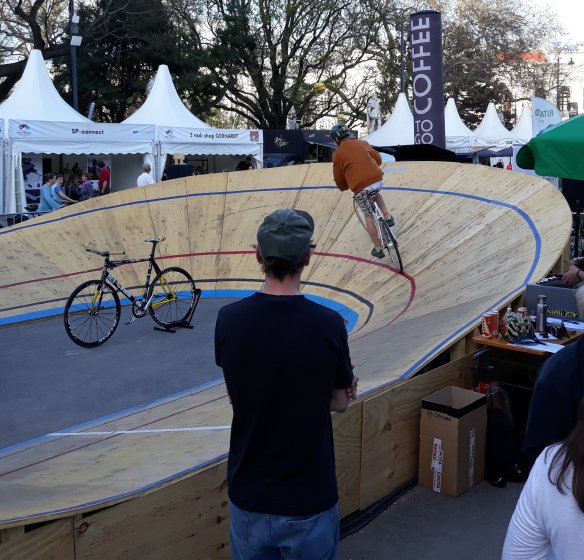
April 20: last weekend a huge bike event was in Vienna.  In addition to going around in circles there were also BMX jumps and dozens of displays and vendors.  A cyclist’s Nirvana.

April 17, 18 and 19

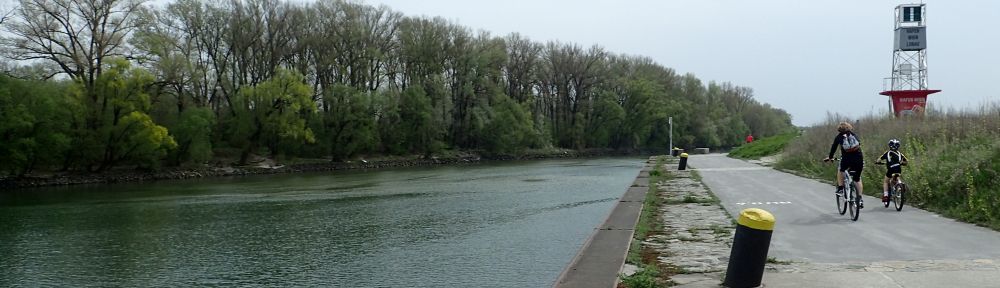
The Danube Island

Looking south on the Danube and end of the Danube island.

A cyclist rides past the stadium bridge with a back drop of spring leaves

April 16

The fellow in the reflective vest has responsibility to assign grill spots.

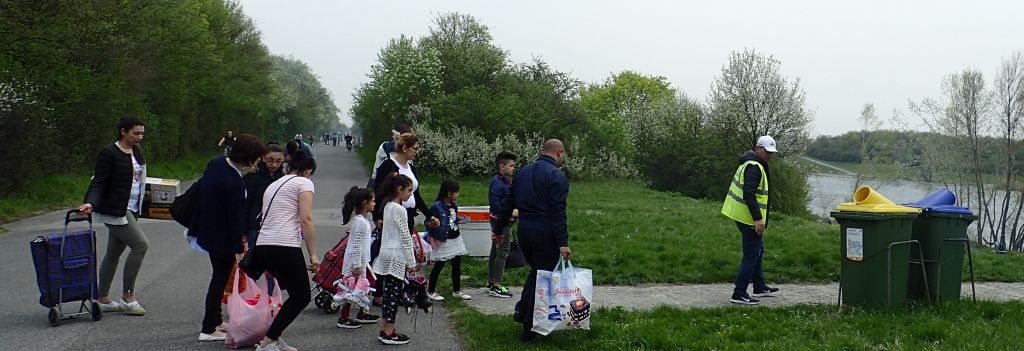
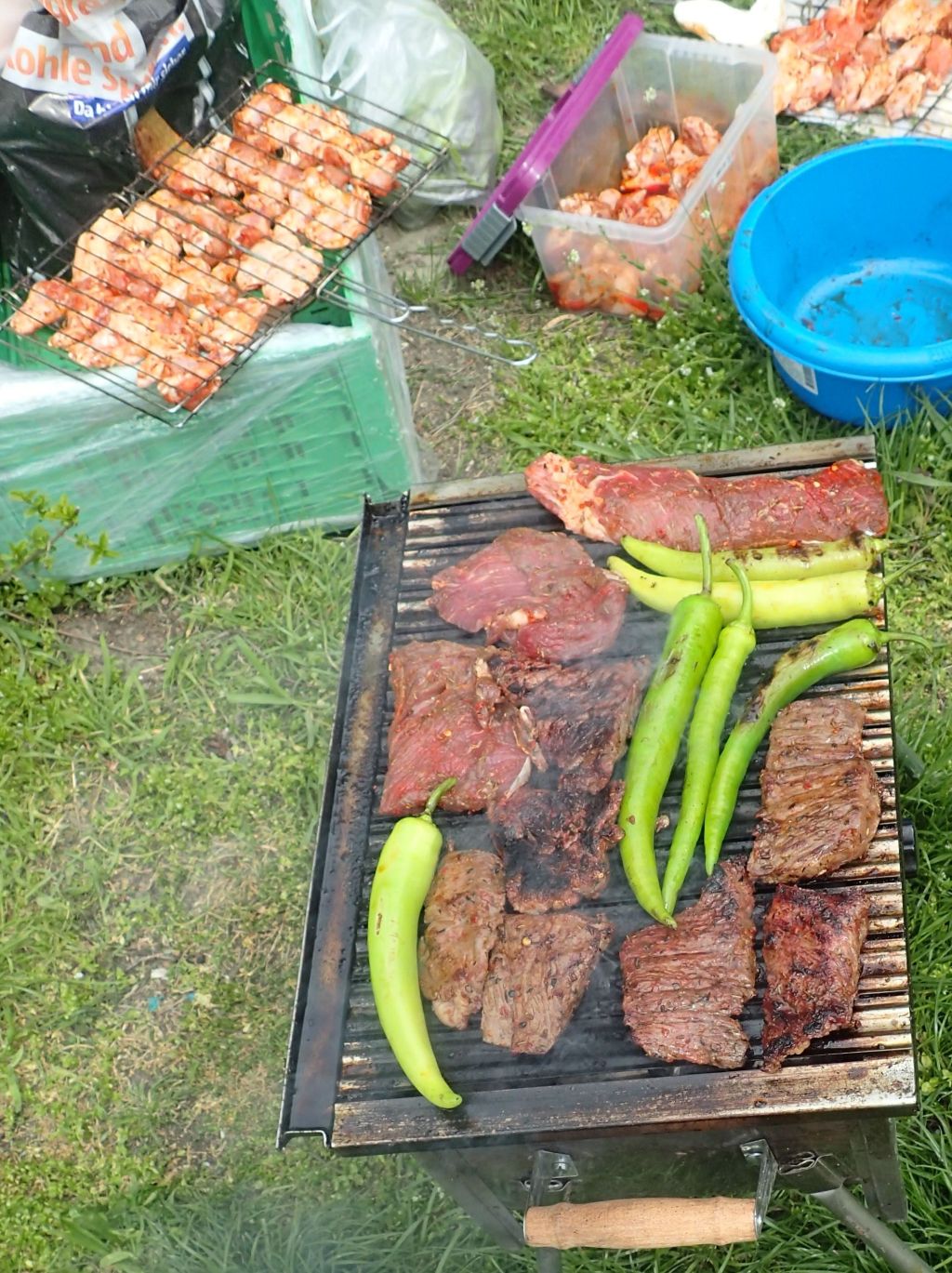
Just one of hundreds of grills along the Danube on a Sunday afternoon. The vast majoring being ‘turkish’ the smells, families and kibitzing was wonderful.

April 8-15

Canada lost 16 active people in horrific traffic accident in Saskatchewan late on April 6. As a form of remembrance (the whole point of this blog series), the next photos are simply of beauty. Enjoy and hug your kids/parents today if you have them close by.

April 7

Sometimes the seemingly easiest things are the hardest. Take finding a shower squeegee. 10 stores later I finally found the last one in all of Vienna (only a slight exaggeration).

April 6

April Budding in the bushes noted en route to work.

April 5

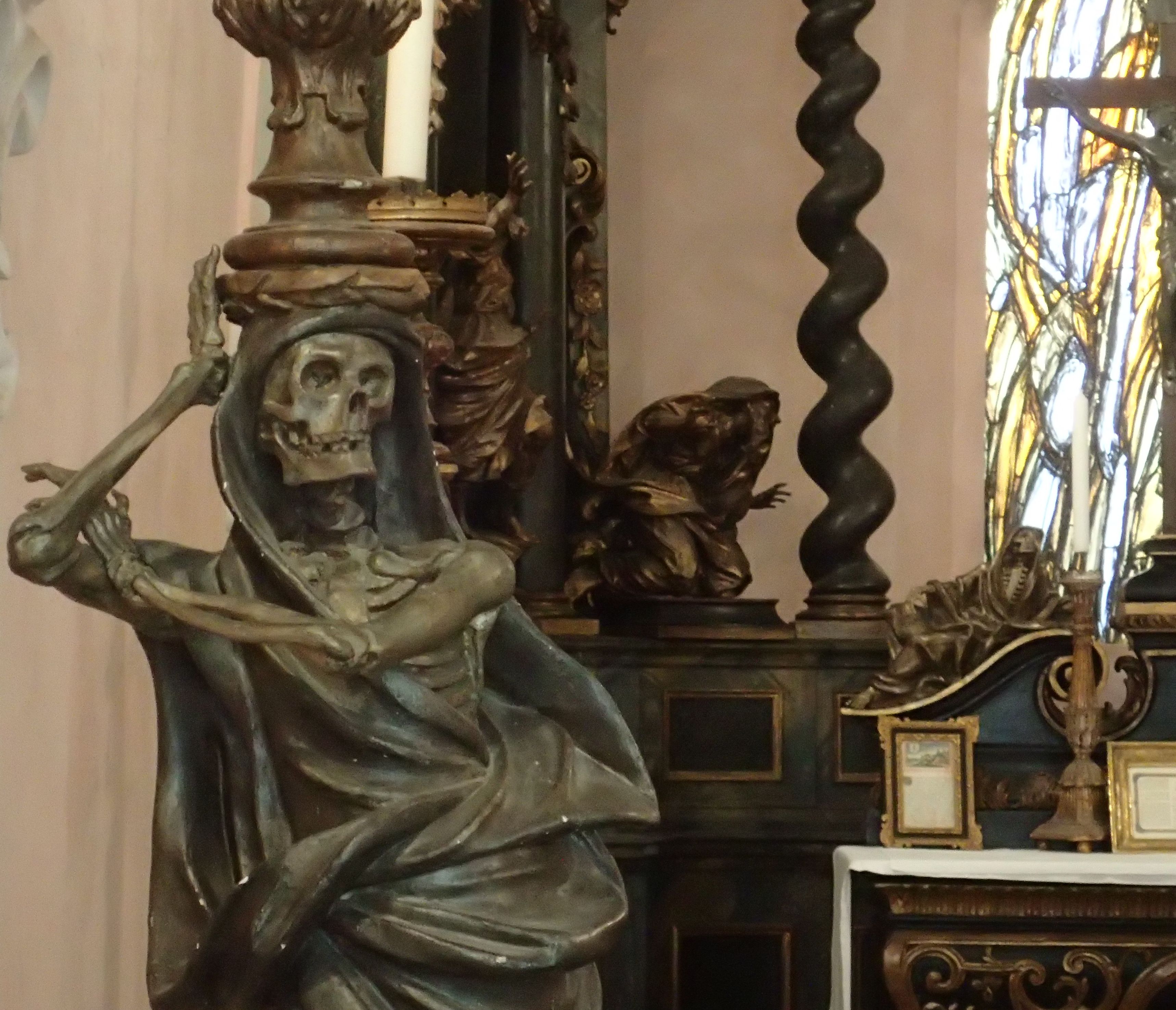
Candle stick holder in one of the chapels of the Heiligenkreuz Monastery

April 4

One of at least 3 grocery stores within easy walking distance from my apartment.

April 3

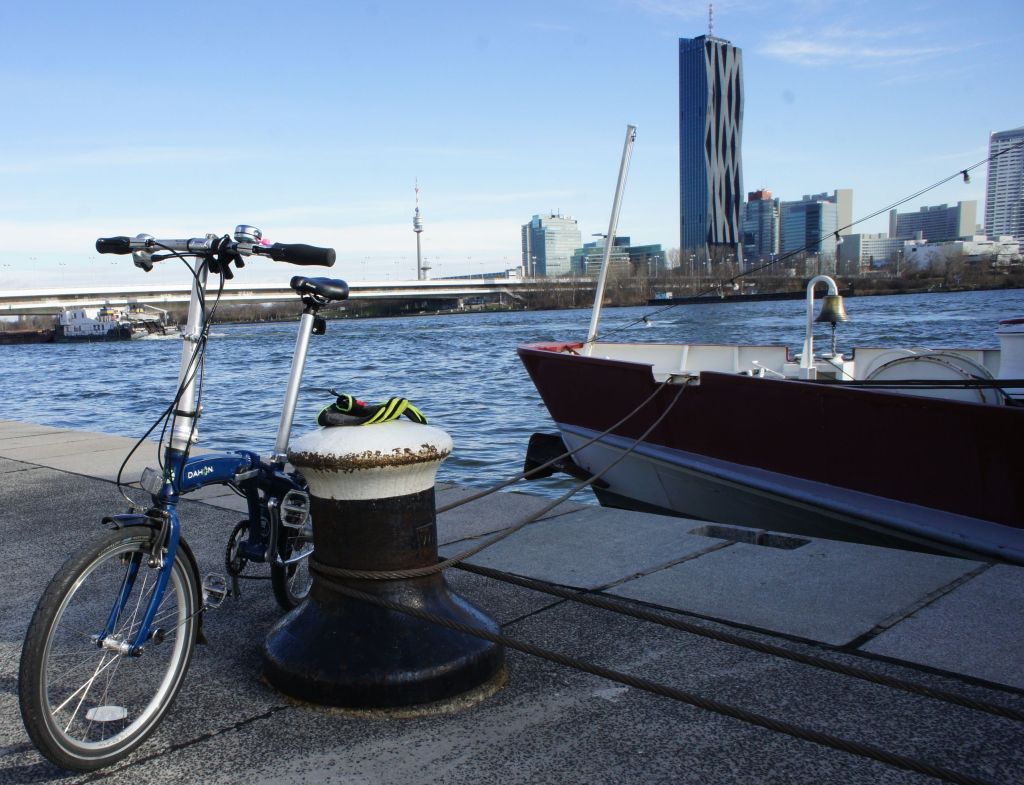
There is a lot going on in this photo. Firstly my trusty folding bike (thanks Rhonda!) on the Danube River with a barge sailing just out of left side of the picture. It is going under a major roadway containing automobile, metro and pedestrian traffic. In the background you can see the Vienna international centre as well as the office buildings springing up around this complex .

April 2 – Shopping on an Easter Sunday

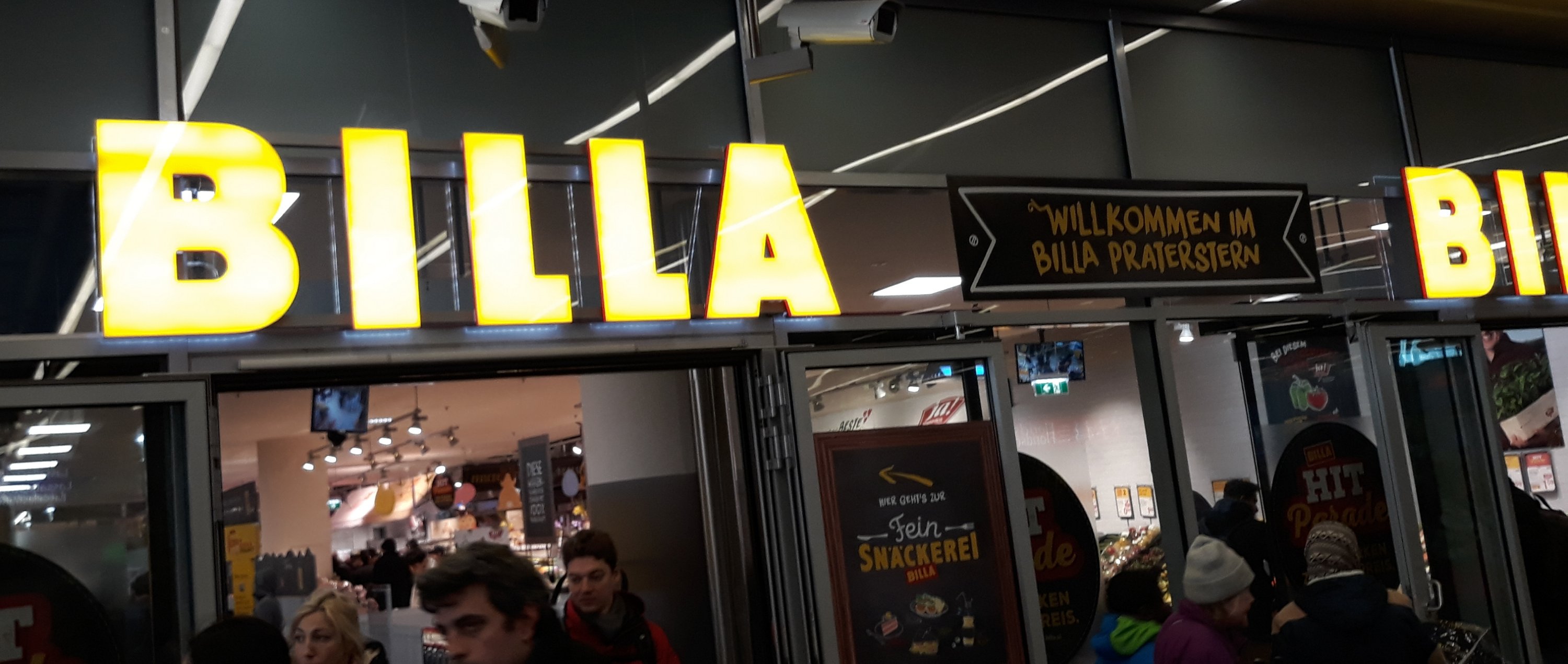
Walking into the Billa shown below in the Praterstern train station you could be forgiven thinking that a major story was looming for Vienna. Every isle is full of people and there is a frantic sense. Instead, this shop is simply one of the few that is open on Sundays. As a result, it draws people from all over Vienna for forgotten items or even a weekly shop.

One of the few grocery stores open on a Sunday in Vienna. This one is found in the Praterstern train station.

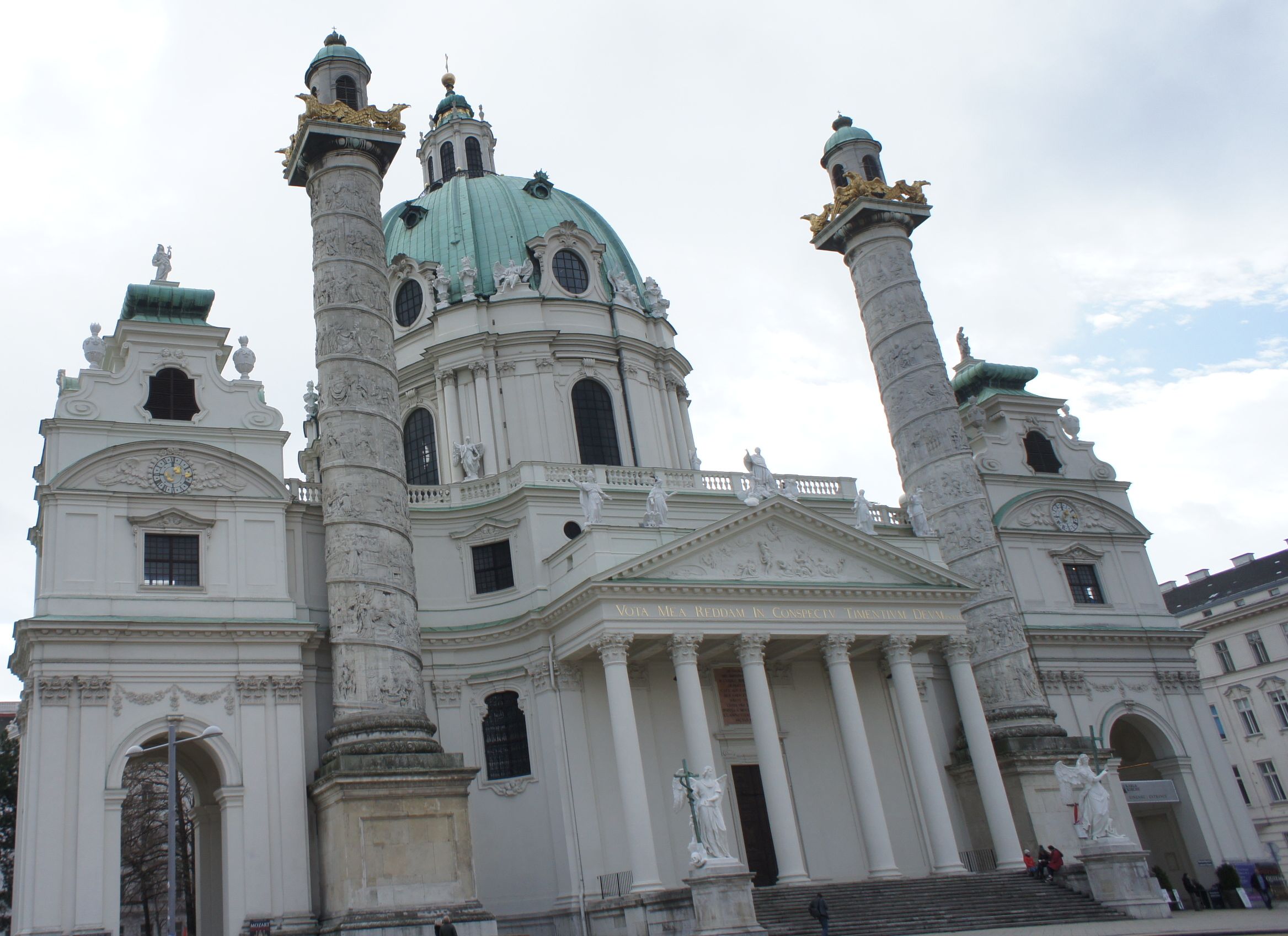
April 1 – Karlskirche

Karlskirche – the Centre piece of Karls Platz.

Vienna – A City of Water?

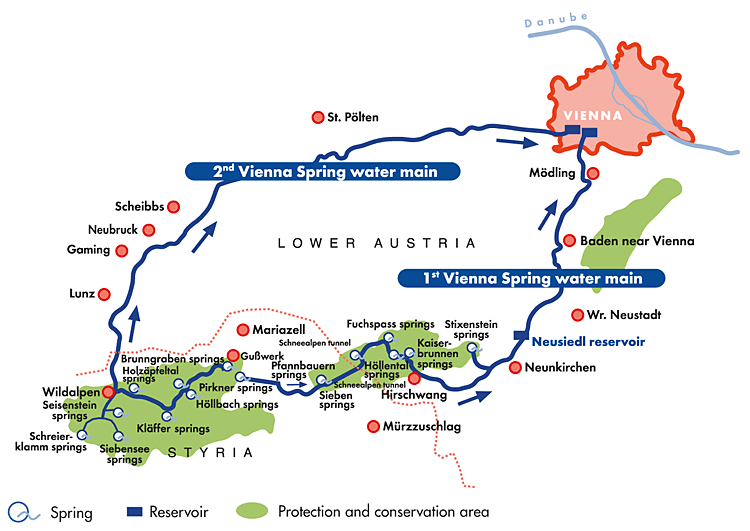
Viennese are (justifiably) proud of their drinking water; what comes out of their tap can go against most bottle water. Amazingly, it arrives via two separate gravity-fed pipelines.  Pumping stations are not necessary as there is a gentle incline from the source all the way to south-west Vienna.

The two water pipelines supplying Vienna, source Vienna Water works.

Water, Water Every Where… but not a drop to drink (because of E. Coli)

Vienna goes back to Roman times as the Danube was more or less the frontier between the civilized Roman World to the south and the unwashed masses to the north. Vienna was a glimmer in a Roman’s eye until they all high-tailed it south when the empire came crashing down about 4 AD.  Over the next 1,600’ish years it went from an abandoned army encampment to a metropolis of nearly 2 million.

All cities are constrained by environmental factors including access to drinking water.  Vienna is on two rivers, the large Danube and the smaller Wien.  The problem is the former has already travelled nearly 1,000 km by the time it reaches the city and cannot be consumed straight.  The other comes from the Vienna Woods but is not a reliable source of water because of its small watershed.  As a result, wells were the primary source of water but were subject to contamination due to poor sewage handling.

The 19th century

The 1800’s was an engineering epoch and the problem of water was solved, in fits and starts, by engineers.  The first water pipe was built at the start of that century but quickly was overwhelmed by a growing population.  A water filtration system from the Danube was constructed in the 1830’s but was also overwhelmed.  The first water pipeline was constructed in 1873 and serviced Vienna until 1910 when it was supplemented by a second line.

Of course the average home did not have a water tap, instead fountains and communal pumps were interspersed throughout the city and many of these still exist today.  The water is still very drinkable but is now primarily a source for thirsty tourists and people without a tap in their home (typically due to a lack of a home).

A very drinkable and public fountain near SchottenTor in the NW corner of the Vienna Inner City.

Water Rights and Management

The City of Vienna owns the head waters of the two pipelines.  As the water passes through Austria, communities the pipelines transit cannot access the water.  A bit of the old imperial system that continues to today in which resources flow to the capital through the outlining areas.

Nevertheless, Vienna is a model of good water management and the importance of not only maintaining the local infrastructure but also the sources as well.  An interesting thought as our world experiences climate change.

Sources

The above has been adapted from:

Six months of paying attention

For the next six months I want to try to pay attention. Okay a bit of background, I am living in Vienna for the next six months (see the ‘Why Are You Here‘ blog for more details) so my environment is easy enough to be cognizant of,but there is a wee bit more to paying attention but first Vienna.

A City That  Demands Attention

Vienna is a city that demands attention – looking West toward the Hofburg.

Walk through the inner city of Vienna and you see life. The city has not been hollowed out and shifted to the suburbs such as like many North American cities.  A good social safety net also means that the number of street people are few.  The city itself has been reborn since its levelling seventy+ years ago under Allied bombing.  In other words, no matter where you look, there is something to see.

But this is no Disneyland caricature, Vienna is a living city and is proud of its imperial past but also secure in its current republic.  The public buildings are imposing but used everyday for the business of government.  The public art has been on display for decades or centuries and serves to improve the lives of the current and future generations… well on and on – the point is that Vienna is a cool place to pay attention to!

More than Old Buildings – Avoiding New Technology

There is another reason that I want to consciously pay attention for the next six months, the corrupting influence of technology.  Okay, this is not a ‘Luddites Unite – You Have Nothing to Lose But Your Cat Videos‘ post.  My point is that we need to spend less time seeing the world through the camera lens of our smart phone and more enjoying the world’s splendor/horrors with our own eyes.  By taking at least a few minutes a day to look around, walk on an opposite side of the street from the norm or take a different route to work – we can provide a small challenge to our brain to pay attention.  By doing so we can also train our consciousness to look not in the context of a meme, post or headline but in a way that we were meant to – as part of a series of inter-locking communities.

What Matters Gets Photographed

So, here is my plan to actively look about – I will select a single photo a day and post in a running blog for a particular month.  Okay, I get the irony that I may be using a smart phone and technology to do this, but do so suitably harnesses the machine rather than being enslaved by it.  As a bonus, I will get an electronic scrapbook of sorts.  Heck, it might even delay dementia by going back and saying – ‘I remember that image, it is because I crossed to the other side of the street that one day and saw…’ 

Hopefully you enjoy my ‘scrapbook’ and keep an eye out for blogs such as this one: March 2018 – A Photo A Day.

March 2018 – A Photo A Day

Based on a promise to ‘Pay Attention‘, this is one of six blogs with the good intention is to publish a photo a day of my six month adventure in Vienna with a caption and thoughts on the image. Note that the publication date and the date when the photos were taken are not the same. Enjoy my (manly) scrap book for future memories… take that future dementia!

March 31

March 30

March 29

Easter in Vienna, the bunnies are everywhere!

March 28

Traditional clothing is still worn extensively during celebrations. One advantage is that the style is functional. Here you can buy a Dirndl for only a few hundred Euro.

March 27

A train on the U2 line crossing the Danube. Part of the extensive public transit service in Vienna.

March 26

This is the east entrance to the Hofburg, the former imperial residence. Now where I go for meetings.

March 25

Year round bikes are a key transportation means.

March 24

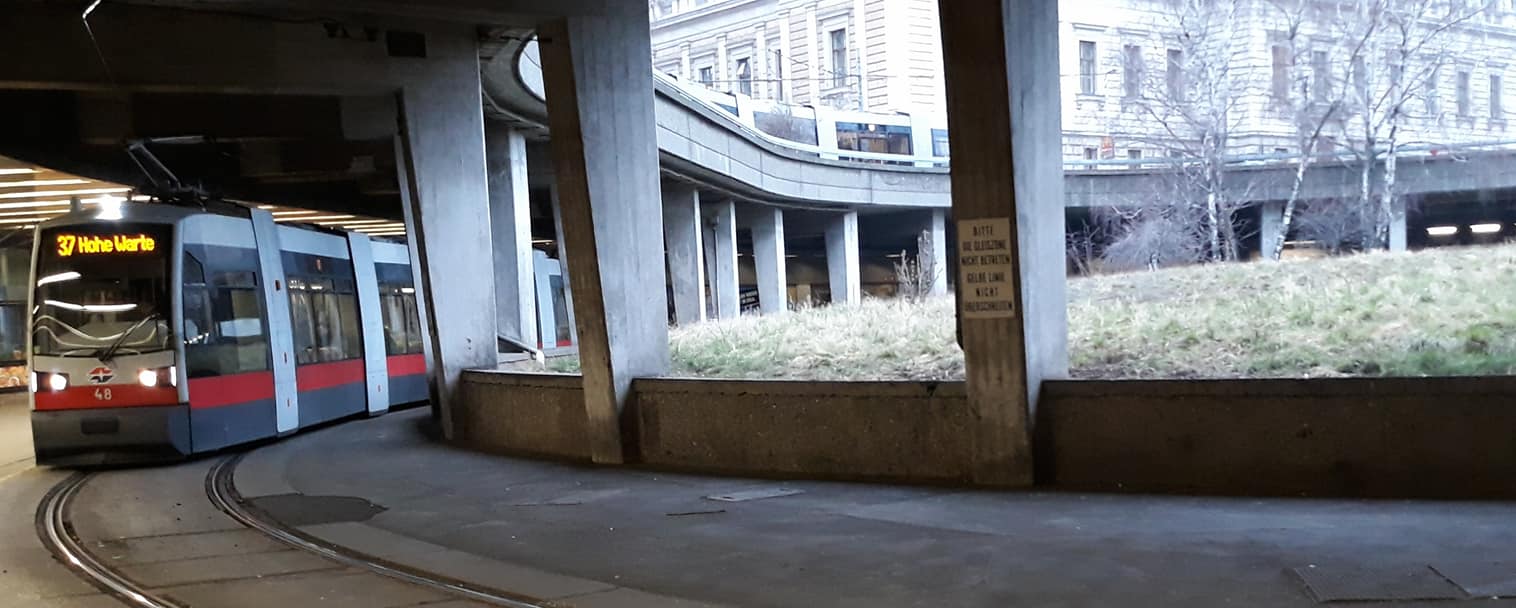
Street Trams (strassebahn) are still a key feature of public transit in Vienna. Most people are aware and accidents appear to be infrequent.

March 23

One of a number of churches in the inner city. This one is Schotten Kirchen. It is so named as it is near the former Shotten Tour/Gate in the old city walls.

March 22

Easter markets are smaller than their Christmas counter parts. Mulled wien, treats and crafts can be purchased in both.

March 21

Not all of the attractions in Vienna are vernable. A ‘social club’ is perhaps an example’

March 20

Detail of statutes gracing the top of the parliment buildings. Framed against an unusual blue Vienna sky.

March 19

Easter Decorations on a balcony of a business in the inner city. Similar decorations are placed on the barren branches of trees.

March 18

Horse drawn carriages are a touristic fixture. Here this one is riding toward the St. Peter Catholic Church in the inner city.

March 17

A detail of a decoration on a building (housing Chanel) showing the excellent public art.

March 16

Why Are You Here?

Sitting in my new office, in a new city, on a new continent in a different country than usual; a staff member asked me: ‘Why Are You Here?’.  A seemingly innocuous question that took me aback for a response.

Whoa…. Where Are You?

For those who faithfully follow my blogs (hey, it could happen), you will know that I snowshoe, cycle, hike, blog and generally hang out in north-central Alberta (aka the Edmonton area).  This past week has not been a normal one as I finished work with the Government of Alberta on Friday, hopped on a plane Saturday, landed in Vienna Austria on Sunday and started with an international organisation on Monday, whew.

The role? I am the Deputy Director of an international organization.  Lots more on the organization in coming blogs, but for now, Why am I Here?

Sooo, Why Are You Here?

Over the past two months, it has been a whirlwind both in Alberta and finalizing this sojourn to Central Europe.  So whirlwindy that time for simple questions such as Why Are You Here had barely time to be answered… until now…

Managing your Serendipity

To start, I believe in managed serendipity.  Take a read of the blog from a few years ago, but one theme of this life-philosophy is: a) answer the door when opportunity knocks, and, b) opportunity usually knocks when you are in the bath tub.  In other words, opportunity is seldom convenient.

One thing ends and another begins

The next reason to be here is that I just spent 3.75 years in a very good gig at the Government of Alberta within the Ministry of Advanced Education as the controller for a large IT shop.  A good gig is not the same thing as an easy one; nevertheless, I look back at the body of work my team accomplished with pride.

But, all good things must come to an end and the government has chosen to change how it delivers IT services toward a much more centralized model.  I really do wish the government the very best as it seeks to consolidate this critical function.  I have my own views on the merits of making things bigger but that is no longer my business.  Suffice it to say, when the music stopped I was left without a chair and was just as happy to be left standing.

The intention is to return to the government.  I am a few years away from my first retirement number so my preference is to at least arrive at that number and then see how the world looks.  I enjoy being a member of the Alberta Public Service but sometimes it is important to take a vacation from yourself.

Vienna – Not a Bad Place for a Break

Finally the last but not least reason is because Vienna is a cool city and the organization does important work.  I think there will be lots to learn and I look forward to cycling, walking and exploring this part of the world.

The Downside of Opportunity

Of course nothing is ever free.  The costs include the time and space from family, friends and familiar circumstances.  There is also always a risk of taking a risk.  Although I am guaranteed a job upon my return what it will be is an uncertainty.  Living in a city in which you feel like you are 3-year-old language wise is always humbling (my goal is to speak ‘not-bad’ very-bad German in six months).

I am Here to Scare Myself a Little Bit

So that is why I am here, to scare myself a bit, to contribute to a larger civil society via the organization and to learn/hone my professional skills in a different context so I can return to the Government of Alberta refreshed, retrained and refocused.

Wish me luck and look for more on Vienna, the organization and new adventures.

Organizational Efficiency and Control Model

Have you ever thought about how to make an organization more efficient?  At this point you are probably going yawwnnn, been there done that with:

  • Doing more with less (how many decades have we been doing this?)
  • Lean [Whatever] remove waste from a process.
  • Business Process Re-engineering
  • Total Quality Management
  • Lean Six Sigma

A Measure of Productivity

Despite the ‘efficiency-fatigue’ you may be feeling, by any measure we humans have become more productive.  Take a look at the following graphic from the United States on labor productivity.  American workers produce more than five times what their great-grandparents did in the 1920s.  While you could argue this has come at a high cost for the environment, climate change, labor rights, etc.; you have to admit this increase in productivity is impressive.  (Source: bls.gov/opub/…/labor-productivity-the-economy.).

Labor Productivity (US) 1947-2012

A Little Dab Will Do You

Do you notice the line?  It relentlessly increases decade over decade.  There are very few spikes or drops but the ascent continues.  Technology is one factor but another is the competitive process of organizations to be more productive/efficient.

Squeezing Out Your Family

Which leads us to the central model I want to propose.  Focusing on output-efficiency is fine up to the point when your workers go strike or stress leave. Alternatively, perhaps you cut one control too many and the auditors or the police are at your door.  In other words, organizations must balance improving their processes, their people and their need to govern and/or control everything.  These three factors form the Organizational Control and Efficiency Model:

Organizational Efficiency and Control Model

OEC Forces

  • Explicit efficiency seeks to reduce the cost of an output through better use of inputs and improved conversion of the inputs.  Six Sigma, lean manufacturing or Total Quality Management can help with this objective.
  • Implicit efficiency is the ability of resources (staff, contractors, etc.) to work effectively together toward a common objective.  Resources can be efficient despite poor systems and processes.  Alternatively, the poorly trained, disengaged or unmotivated resources can negate/thwart the most efficient process. Most business models acknowledge this through concepts such executive buy-in or proper change management.  Implicit efficiency is subtly bigger than these concepts, it is how well does your organization play together?
  • Controls ensure organizational objectives are achieved. This may be through governance, automated controls, segregation of duties, etc.  Controls protect the organization but are often a drag on explicit efficiency or can negatively affect staff morale (implicit efficiency).

More Important than Corners is the Middle and the Lines

While the three corners of the triangle are important, more important is the stuff in the middle and lines between the forces.  Organizational objectives ask strategic question such as:

  • Should we still be in this business?
  • Do we invest, hold or divest of a product, business or service line?
  • Are our people working on the right things?
  • How can we become more agile and responsive to our clients/customers/citizens?
  • Do we have the right infrastructure to accomplish our goals?

The lines represent both support and tensions between the three forces.  Some organizations have discovered that by focusing exclusively on explicit efficiency they have alienated their staff or run afoul of their internal processes.

Too many controls will impede an organization’s explicit efficiency and make the organization a death march to work for.  However, too little control can co-opt or corrupt people or processes.

Finally, implicit efficiency can give you a competitive advantage (google southwest airlines steward announcements; these are people following procedures to ensure good control of the passengers while having fun).  Disengaged or unmotivated staff can derail the best quality management program or find ways around the most elegant controls.

Building a Strong Triangle

What are your thoughts?  Should this be a triangle, square or an even more complex geometric shape?  How well is your organization at balancing these 3 forces?  Does this model help when talking about efficiency and organizational effectiveness?  Drop me a note with your thoughts.

The Dice Game…

Okay, this is a bit of departure from social, economic or business thoughts – but heck, it is my website so I get to post whatever I like!

Dice as a Means to an End

I recently taught the dice game twice in the past few weeks. I had to remember the rules so I thought I would jot them down for future reference. My good friend Darryl N. taught my family this game decades ago and we have evolved the rules since then.  Many families I have come across have played variations which I have incorporated.

I like this game primarily because the play is simple and it can be scaled up or down to the either children or adults.  It is both competitive and cooperative and for younger players, it teach strategy, decision making a rudimentary statistical calculations.

Objective:

  • Be the first player to get more than 10,000 points.
  • Variation, if played exact, the winner must get exactly 10,000 points.
  • The amount can be adjusted to accommodate short play times (e.g. play to 5,000).

Equipment and roles:

  • Five die
  • 1 scoring sheet divided into the number of players.
  • 1 Score keeper.
  • 2 or more players.
  • Optional: mulligan markers (see below for Children’s variations).

Scoring:

  • 1 and 5’s score 100 and 50 respectively.
  • Three Of Kind (e.g. 3 Twos) score the number X 100 (e.g. 3xTwo’sx100 = 200).
  • Four of a kind = double three of kind (e.g. 4xTwo’sx100x2 = 400).
  • Five of a kind = double four a kind.
  • A five die straight in one role = 450 points.
  • Five ones in one roll = 10,000 points and automatically wins the game.

Rolls:

  • On the Board: 500 points is required to be on the board
  • Once a player is on the board, they can accept lower point rolls.
  • A roll must have at least one scoring die to be counted (e.g. a 1, 5, of-kind or straight)
  • A roll without a scoring die is a bust.
  • If all dice are scoring, the player must roll all five.
  • If there are non-scoring dice left after a player has taken their points, the next player can roll these dice and build on the previous points.
  • A straight must be immediately scored and then passed on to the next player who will roll all five dice. A straight cannot be used to get on the board.

Rule Variations:

  • If playing exact to 10,000 then the following variation is used to manage rolls that are passed on:
    • If a player rolls at least 500 points and the next player needs less than 500 points to get exactly 10,000, then the roll pass by the second player to the next player.
    • If the next player similarly needs less than 500 points, it pass on to the next player.
    • This continues potentially around the table to the original player.
    • If no player can build on the dice because they all require less than 500 points, it is considered a bust and the natural next player rolls the dice.
  • If playing with children, mulligans can be used:
    • Based on the age of the children, mulligans can be provided.
    • For example, six and under perhaps 6 mulligans, older than six, one less mulligan per age until zero mulligans at age twelve.
    • Mulligans can be used either at any time or only on a single die roll per house rule.
    • A mulligan can be a chip or a piece of candy.
    • If candy, if the mulligan is taken, the player gets to eat the candy.  Any mulligans not used, either the player gets the remaining candy or they must be given to the winner as their prize.
    • The overall intent of the mulligans is to get younger children engaged in the game, teach them strategy and the value of delayed gratification.  Adjust the above rules as required.
  • If playing with adults, a gambling element can be used:
    • Each player must pay for a bust.
    • If they have not reached the minimum 500 points to get on the board, they pay the pot a fixed amount (e.g. a penny or nickel).
    • Similarly if they bust, even after being on the board, they must buy the roll.
    • When a player is down to a single die and wishes to roll that die, they and the other players can bet against the pot.
      • This is done by putting one or more bets in.
      • If the resulting single die is a one or five, the bettors keep their bet plus a payout equal to their bet.
      • E.g. if they bet two nickels, they keep their nickels and draw out two other nickels from the pot.
      • If the resulting roll is not scoring, all players contribute their bets to the pot.
      • They player who wins (e.g. past 10,000 or exact), receives the pot.

Has your family ever played Dice or do you have a variation that you want to share?  If so, drop me a note and I will list them here.

Other Links and Variations

Managing Voldemort Risks

“Voldemort Risks” are unspoken that employees avoid naming due to fear or cultural pressures. It highlights historical examples, like Enron and the Challenger disaster, emphasizing the need for risk identification through methods like whistleblower protections and fostering a high-trust culture. Identifying these risks can improve organizational resilience.

Continue reading

Cascading Risk Management

I have been thinking about risk management a lot and how to make it as effective as possible.  One concept that I have not seen but I would have expected would be ‘cascading risk management’.

The Neck Bone is Risk Managed by the Head Bone…

Cascading risk management is where senior levels of an organization manage risks that are germane to the entire organization freeing subordinate levels to focus on their specific strategic, tactical and operational risk management.  Here is an example in a fictional state or provincial government or larger for-profit company:

Level Risk Management Example/Comment
Government Wide / National Wide Strategic risks that affect the entire government and central services provided. Government wide IT security, tax policy, inter-government relations.
Ministry/ Department Strategic risks that affect the Department but exclude those identified as belonging to the government.  Government wide risks are inherent to the Ministry’s Risk profile but do not need to be repeated unless they meet one of the following criteria:

  1. The strategic risk is not articulated or articulated broadly enough to reflect the uncertainty faced by the Ministry.
  2. The Ministry has policy-responsibility for the risk, for example tax policy would be expanded upon by the Ministry of Finance.
  3. The political or senior management deems the risk of sufficient importance/context to include despite it being managed by a senior level of the organization.
Ministry of Finance further articulates the risks of debt management or tax policy.

The Ministry of Health further articulates the risks related to a pandemic.

The Ministry of Education reinforces the need to replace retiring teachers.

Division/ Branch Strategic risks that affect a sub-element of the organization but exclude those sufficiently belonging to the above layers of the organization.

The same conditions as discussed above apply but cascaded down one more level.  Note that this level will generate Strategic, Tactical and Operational Risks.

Western Canada Marketing sub-Department.
Tax policy unit of the Ministry of Finance

Team/ Project/ Other Work Unit Tactical and Operational Risks with a reference to the above cascaded risks.  In this manner, the operational area can focus on the most critical risks affecting delivering their contribution to organizational objectives. IT Project Team.

Policy team drafting legislation.

New product launch team.

How is the Cascade Managed?

The above is predicated on the following assumptions:

  • The senior levels of the organization have an effective risk management process including a risk registry available to subordinate areas.
  • Resources managing risk at subordinate levels have a good awareness of the scope, limitations and intended usage for the senior risk management resources.
  • Each of the resulting levels have the ‘container’ to cross reference ‘cascade risks’ that is efficient and effective.
  • As required, a subordinate level can point to a senior level risk and then add or modify it as required.
  • This method is consistent with ISO 31000 as part of the Risk Identification step.

Assuming the above exists the a cascade risk statement may look like this:

  • The Ministry of Finance, Tax Department / Tax Policy Unit has prepared the following risks that may impair its ability to meet its operational objectives.
  • This risks exclude the following risks already articulated and reasonably managed by the indicated entities:
    • Government of Riskastan’s Economic assumptions and risks available via [link…].
    • The Ministry of Finance’s business plan which include significant strategic risks affecting the unit and available via [link…].
    • The Tax Department’s Tactical and Operational plan which includes significant departmental strategic, tactical and select operational risks.
  • The exception to the above exclusions are the following two risks that are further expanded upon by the unit:
    • Risk relating to the price of prunes and the Organization of Prune Exporting Countries to manage supply and thus price for prunes (Riskastan fiscal plan, page 17).
    • Risk related to retaining staff in the Tax Department who can count on both their fingers and their toes (Tax Department Operational Plan, list of assumptions and risks, page 71).