Staff Development – Tracking via SharePoint

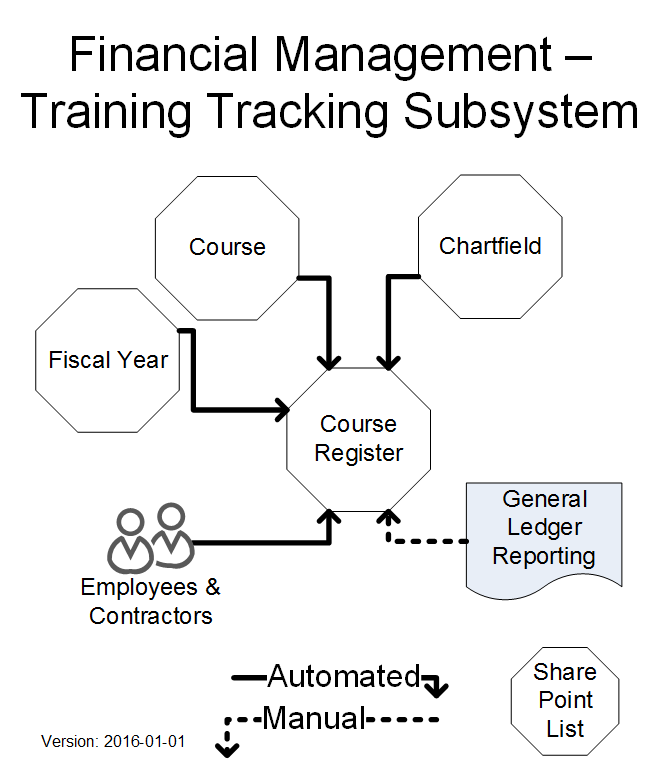
In my ongoing effort to both remember what the heck I have done and to share good ‘pracademic’ ideas, I present a method to track staff training.  Hopefully you can use/adapt what you find here and hopefully I can remember how I built it in case I need to do it again in the future!

SharePoint list topology for a training tracking system.
Continue reading

Principles of Legitimacy

In Malcom Gladwell’s book, ‘David and Goliath’, he refers to the ‘principle of legitimacy’.  These principles are the basis (or lack thereof) for why one group will allow themselves to be subject to another.

The principles stress that it is the behaviour of the leaders that determines whether or not the followers will follow.  At least, the principles indicate whether the followers see the leaders as being legitimate [1].

Walter Gadsden, 17, was attacked by police dogs on May 3, 1963, during civil rights demonstrations in Birmingham, Ala. (Bill Hudson/Associated Press) , courtesy of www.boston.com

Walter Gadsden, 17, was attacked by police dogs on May 3, 1963, during civil rights demonstrations in Birmingham, Ala. (Bill Hudson/Associated Press) , courtesy of http://www.boston.com [3]

The three principles of legitimacy

  1. those being ruled need to feel that they have a voice in the arrangement (e.g. no taxation without representation)
  2. the rules must be predictable and consistent (e.g. rule of law and due process)
  3. the rules must be consistently applied and appear to be fair to all being asked to follow the rules (e.g. equality before the law)

Kindergartens, Northern Ireland and the Jim Crow Laws

The writing brilliance of Gladwell is that he introduces this concept first in a kindergarten and then applies it to broader contexts such as Northern Ireland or the segregation laws of American South pre-1960.  In these examples, Gladwell extends the theme of his book in which an advantage may in fact be a disadvantage.

For example, the British Army in Northern Ireland had the men and material to temporarily impose control over the local population but not to sustain it because they failed to establish legitimacy amongst both the protestant and catholic populations.

Strong armed tactics doomed the British Army to decades of occupation and directly or indirectly resulted in the death of hundreds if not thousands of combatants and civilians.  The principles of legitimacy are not without their consequences.

Too much or too little legitimacy?

Gladwell does not have the space in his book to discuss is how much or how little of each are needed based on varying circumstances. There are circumstances where one of the three is reduced to nearly zero (try asking for a voice in the arrangement during the first week of army boot camp).

Alternatively, is there such a thing as too much of these principles?  Do they break down when taken to the extreme?  Have you ever been ‘surveyed’ to death by an employer asking about your degree of motivation or engagement with the company?

How about rules being applied too consistently such that the application actually erodes the legitimacy.  A ten-year old child who is expelled from school because they made an imaginary gun out of their fingers is an example of a zero tolerance policy gone horribly wrong [2].

Leadership (and Life) is Hard

The take away from Gladwell’s book is that these three principles of legitimacy are just that – principles.  They are not hard and fast rules and leadership is in their application rather than their memorization.

Here are some of my thoughts on considerations before over-applying one of the three principles of legitimacy:

  1. A voice in the arrangement:
    1. Ultimate accountability cannot be delegated away however.
      • For trekkies, Captain Picard solicited his crew’s opinion but he still made the decision.
      • Alternatively, calling for a vote and a study group when the captain orders everyone into life rafts is ill-advised.
    2. Coercion can compensate for a voice in the arrangement, but only within short time periods or overwhelming force.
      • The soldier in the boot camp knows that his time is short and the ultimate value of the camp’s training outweighs the immediate discomfort.
      • Conversely, segregation worked not only because of the power of the whites in the South but also a lack of an united front amongst the blacks (see [2] for the back story behind a famous civil rights photo).
    3. A voice does not equal gaming the system.
      1. The squeaky wheel gets the grease but it also violates the other two rules of fairness and consistency.
  2. Predictable and consistent and 3. Consistently applied and appear to be fair to all being asked to follow the rules
    1. To be predictable and consistent, a system needs to quickly and fairly establish two things: 1) how to change the rules and 2) how to allow for exceptions while disallowing unfair advantage.
    2. Having a voice in the exceptions is critical.
      • Think about a handicap parking spot.
      • We allow society (the leaders) to dictate that we give up the best parking spot because as a society we have had a voice (directly or indirectly) that this is a legitimate use of power.
      • At the same time though if choice spots were given out based on political affiliation or personal relations, the majority of the voices would be against the privilege.
    3. The sense of fairness is culturally biased.
      1. In traditional Islamic families, the opinion of the father or grandfather is nearly law.
      2. It may seen fair to deny a girl a right to an education or marry a non-Muslim in this context.  In the secular West, these would seem patently unfair and sexist.

Lessons for the business reader

For business leaders, is there anything new here?  Yes and No.  Societies with the greatest longevity have adhered to these principles.  These principles are also the hallmark of good leadership and good governance.

If you want to build an enduring organization that will outlast you remember that those being led:

  1. Seek both a voice in the decision but also expect leadership when leadership is needed.
  2. Expect rules to be fair, predictable and consistent but not at the expense of common sense.
  3. Know that part of leadership is in recognizing and explaining the exceptions without the system falling victim to being gamed or exploited.

Leadership is still hard but authors such as Malcom Gladwell can help us to challenge our assumptions and become better, more legitimate, leaders.

Notes, Comments & Further Reading

  1. p. 207: “When people in authority want the rest of us to behave, it matters – first and foremost – how they behave.
  2. Milford 5th-grader suspended for pointing imaginary gun, as reported Nov 19, 2014,
  3. Gladwell devotes nearly a full chapter to the back story behind this  picture which was a turning point for the American Civil Rights movement in 1963.
    • However, there more in the photo than meets the eye: p. 192: “The boy in Bill Hudson’s famous photograph is Walter Gadsden.  He was a sophomore at Parker High in Birmingham, six foot tall and fifteen years old.  He wasn’t a marcher.  He was a spectator.  He came from a conservative black family that owned tow newspapers in Birmingham and Atlanta that had been sharply critical of (Martin Luther) King.”
  4. Implicit in the above discussion is the role of trust as a human bond within organizations.  The following are some other thoughts on this and related matters:

Organizations in Four Part Harmony

What exactly makes up an organization and how is work done within them?  This is a subject of a handy mental model I use when I am trying to understand an organization; an organization in four part harmony.

1.    Harmony 1, Infrastructure: the furniture, furnaces, machinery and head offices of the organization.  Note that in many organizations infrastructure is often a non-tangible.  For example a computerized airline reservation system or perhaps a finance system.

Steamfitter, by Lewis Hine (American, 1874–1940) .  Metropolitan Museum of Art, New York.  Accession Number: 54.549.56

Steamfitter, by Lewis Hine (American, 1874–1940) . Metropolitan Museum of Art, New York. Accession Number: 54.549.56

2.    Harmony 2, Operations: these are the day-in-day-out processes, tasks and procedures which we typically hire people to do.  Accounts payable clerks, widgets assembler or process engineers are hired because payables need to be clerked, widgets assembled and processes engineered.

3.    Harmony 3, Ad hoc activities: if you have a reserved parking spot close to the head office of an organization, I bet this is what you do all day.  Sure, you were hired to do operations (Chief Executive/Finance/Information Officer) and sometimes operational work sneaks in when you are not looking.  More than likely though, you have crossed into the grey and smudgy no-man’s land that separates operations from the world of the ad hoc.

4.    Harmony 4, Strategic thinking/planning: Periodically, the leaders of an organization will set aside their many ad hoc and fewer operational activities to complete strategic plans.  Strategic plans hopefully answer questions like, do we have the right infrastructure, efficient operations and why are there so many ad hoc activities.

Four Perfect Harmonies

If you dig out your old college text books, organizations are described as functioning something like this.  Wise executives poke their heads up from the fray and gain strategic knowledge.  In turn, this knowledge is used to tweak infrastructure and adjust operations.  Ad hoc opportunities are few and nearly always involve entering into new markets, maximizing shareholder wealth or stakeholder well-being.

Dilbert and The Four Harmonies

In a Dilbert’esque world, the four harmonies work in isolation.  Most of the management focus is on performing ad hoc work that usually involves fixing or infrastructure or operations.  This is because infrastructure suffers from a lack of investment while operations are conducted by poorly trained leading the newly hired.  The only time either of these harmonies get any attention is when they fail and then they are hastily repaired, usually in an ad hoc manner.

Beyond the Harmonies

Most organizations fall in between these two extremes.  Ideally infrastructure is like a well-run furnace on a cold winter’s day – well-functioning, appreciated and invisible.  Time invested in operations saves management effort solving future ad hoc problems (an ounce of prevention is worth of pound of cure).   Ad hoc efforts need to be the exception and not the standard modus operandi of an organization.  Unfortunately management through heroics and drive by management can make it difficult to operationalize a corporate culture used to the adrenalin rush of the last moment.

Finally strategic planning should be an ongoing rather than intermittent activity, ad hoc activity.  Ideally, an orchestra-conductor makes small corrections to the harmony rather than having to stop the tune and start again from the top.

Organizations are much too complex to fit into four neat buckets, but it is surprising how this simple model has help me channel my thinking about complex and abstract structures, such as organizations.  So, how well does your organization manage the four harmonies and what are your thoughts on the mental model?  As always drop me your thoughts, ideally via a singing telegram in four part harmony.