Customer Experience – Not just for Techies

Customer Experience is one of those buzzy terms that is typically associated with technology.  Wikipedia has this definition: “customer experience (CX) is the product of an interaction between an organization and a customer over the duration of their relationship.

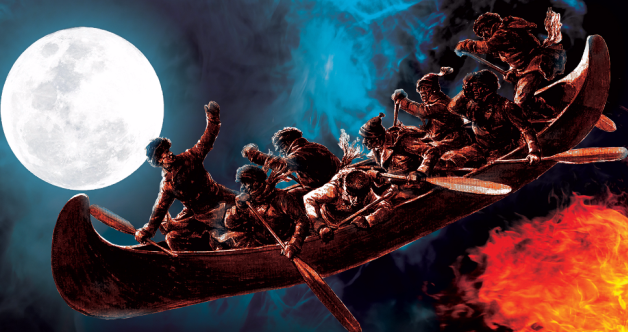
Flying Canoe Volant
Continue reading

Pin the Tale on the Disruption

This is a conclusion of a previous blog series entitled ‘Seven Days of Disruption‘.  These blogs discussed a variety of potential disruptions that could affect the public service.  During a Financial Management Institute conference entitled ‘Disruptive Writers‘ on November 22, 2017, 110 presenters, attendees and volunteers were asked to rank one of 18 disruptions as having the greatest impact on the Canadian Public Service over the next 10 years.  This blog will describe the game ‘Pin the Tale on the Disruption‘ (in case I want to use it in the future) and describe the results of the game including the response rate.

The Results of the Game

The number one identified disruptor (+15%) was the emergence of Artificial Intelligence.  Four disruptors were given more than half of the scoring, these four were:

  1. Evolving Artificial Intelligence
  2. Growing debt Overhang
  3. Cyber Insecurity
  4. IT Revolution 2.0 and the Rise of the Machines

Despite the inclusion of sociopolitical disruptors (e.g. Canadian regionalism, Canada in the age of Trump or De-Population Waves), technology disruptors represented more than a third of the scoring and were in first, third and fourth place respectively.  While hardly a scientific or statistically sound survey, the game ‘Pin the Tale on the Disruption’ should help public service leaders plan and align operational and tactical plans over the next decade.

Results of ‘Pin the Tale on the Disruption’ – FMI Event 2017-11-22

How the Game was Played

  • As part of the pre-conference notes and as a physical hand out, each participant were given 12 dots and a listing of disruptions to vote on.
  • Participants could also ‘make your own disruption’ if they thought one or more were missing (note, no additional disruptions were noted).
  • Dots were applied before the conference and during the break.
  • Instructions were provided upon registration, informally at each table by event leader and then en masse at the start of the session.
  • By apply dots, attendees received a ticket which entered their name in a draw for a prize (note, the tickets were inadvertently forgotten so prizes were given out via other means).

Future Notes on How the Game Went

  • Approximately 1,200 dots were distributed and 757 dots were applied for a response rate of 63%.
  • This response rate is lower than expected (with an ideal around 80%) and could be improved via better floor walkers and in-event promotion.
  • The moderator and the game coordinator had a good rapport.
  • Identifying and having a roving microphone in advance to encourage audience participation would have been ideal.
  • A pre-game run through with the moderator and participants would have been beneficial.

Blog Annex – FMI Event Description:

Disruptive Writers. 

This FMI event will focus on real and potential disruptions and how to navigate change.  Three local authors have each written about this topic from very different perspectives.  These authors will describe their books and their journey to becoming authors.  

Driving MS Daisy 2018

A Little Context Please

Canada has the highest rate of multiple sclerosis (MS) in the world, with an estimated 1 in 340 Canadians living with the disease. While it is most often diagnosed in young adults aged 15 to 40, younger children and older adults are also diagnosed with the disease (source, MS Society).  Each June the MS Society of Alberta and the NWT runs the Leduc to Camrose ride over two days and about 150km.

Year round bikes are a key transportation means.
Continue reading

Teaching Gears to Be a Better Manager

In the Spring I run a weekly program called ‘Wheeleasy Wriders‘ which teaches newbie cyclists how to go from a painful 20KM ride to thinking that a 60KM ride is a breeze. Although this is a hobby, the techniques that I use are directly translatable into a work environment and the reverse as well – Wheeleasy Wriders makes me a better manager – last week is a good example.

How To Explain The Round Gizmos On a Bike

Many new riders are scared of their gears.  Although a marvel of engineering, they do require a small investment of time to learn how to use them properly.  But using gears effectively is not what this blog is about (however the blogs listed below DO talk about such things).  Last week I took a page out of my work environment and did the following:

  1. I broke the riders into groups of three composed of 2-newbies and 1-experienced rider.
  2. I separated married couples into different groups (more on this later).
  3. My request was that each newbie explain to the other newbie how their gears worked on their bike (as if the other explainee-newbie was going borrow the explainer’s bike).
  4. After a couple of minutes they switched roles and the explainer became the explainee.
  5. The experienced rider was there to listen and provide additional information, corrections and encouragement.

Teaching Focuses the Mind

The result was that most of the newbies self-assessed their gear knowledge higher after the explanation than before.  Why, for the following reasons:

  • They had to actively recall past explanations and externalize the content and concepts.
  • Based on the recall, they had to match the explanations to what they were seeing.
  • There was a small amount of anxiety to get the explanation right.  This anxiety actually helps to better form memories.
  • Anxiety notwithstanding, the experienced rider represented a safety net.
  • The experience rider had to compare their own mental-model of how gears work into two different newbie explanations.  This conversion strengthen their own understanding of the gears.
  • I separated the couples because people who know each other very well can have a harder time communicating.  They use codes, shortened forms of speech, etc. that takes away from the effort to externalize and codify a complex topic (such as how bike gears work).

Giving Training the Gears

I use similar teaching methods at work when I need to train people.  Rather than standing around in a parking lot explaining bike gears, at work this is done through webinars and conference calls.  One of my ‘rules’ is that I actively encourage cheating on my exams. Thus, other audience members are encouraged to help the ‘trainer’ out. Because the audience knows they be asked next to provide an explanation, there is better attention and retention for the content.  I have learned a few cautions/guidelines though:

  • Always Build Up: This is not about ridiculing or embarrassing the person. Before asking the question, be reasonably assured the person can answer the question or be guided to the answer. Only use this technique (or select the person) if the person can feel more positive about themselves after they have done the activity.
  • Be Ready to Move On … QUICKLY: You may discover that you asked a person who simply does not know or is getting flustered by the attention.  If so, quickly move on so that person is not social embarrassed.  Moving on could include: providing lots of clues, going to someone else or changing the subject.
  • Gentle Humour Lubricates: use gentle and positive humour to help the situation. Be careful that the humour is not caustic or ridicules the person. A bit of self-depreciation works for me.
  • Mix Up the Couples: mix and match people who don’t know each other well.  This forces different levels of communication effort.
  • Bit Size the Learning: if possible, focus on only one to two key concepts in each session.  More than this will overload the person and create too much anxiety.
  • Summarize, Crystallize and Repeat the Learning: be sure to repeat the 2-5 key messages from the learning so that the memories can quickly form around these kernels. Memory and learning works best when there are mnemonic devices or conceptual construct to hang the details on.

Good luck with your efforts to train and explain in your organization.  Also, if you want to learn more about riding or how to use your gears, be sure to read:


Innovation Bingo

On September 21, 2016, the Edmonton FMI Chapter hosted the following session (detailed description found below in the ‘blog-annex’: Fostering Innovation in the Public Service When Money is Tight.  Part of the conference was a game entitled ‘Innovation Bingo’.  The objectives of the game were as follows:

  1. Help participants assimilate knowledge about innovation.
  2. Assist in networking with other participants, particularly those outside of ones normal circle of associates.
  3. Win some prizes.

How the Game was Played

  • As part of the pre-conference notes and as a physical hand out, each participant was given a bingo card (see the last two pages of the pre-conference notes: FMI-2016-09-21-Innovation-PreNotes or download Innovation Bingo.
  • Instructions were provided on the card, informally at each table by event leader and then en masse at the start of the session.
  • The card was alluded to a few times by the moderator and during the conference.
  • The card had two sides:
    • Personal Information: name, birth month, interests, and needs.
    • Bingo card proper.
  • At the end, prizes were distributed but only if the individual was willing to share the results of their card.

Assessment of the Game

The following conclusions were drawn from the results of the game:

  1. The game itself provided a reasonable ice breaker at table.
  2. Individuals did not actively use the card outside of their table and there was limited interaction or discussion with the card.
  3. The room itself however appeared to be well engaged and networked suggesting that the card and game provide some social license that eased initial conversations.

Conclusions and Future Use of Innovation Bingo

  • An en masse ice breaker game can work at the table level.
  • Room level coordination requires greater coordination which would detract from the program.
  • Conclusion: ‘Bingo’ games of varying forms can be used in other FMI events but should be downplayed and use for fun things such as prize distribution.

Blog Annex – FMI Event Description:

Fostering Innovation in the Public Service When Money is Tight. 

Public servants are expected to be innovative while working in a risk averse environment. This inherent conundrum is compounded during times of fiscal restraint when ideas are solicited but resources to execute few. This session will investigate innovation in the public services from a number of facets.

What is innovation, how do you get it, how do you keep it and when should you ignore it? Next, how to propose, implement and sustain an innovative idea or culture in an environment that is less than ideal. Finally, thoughts and strategies of making the case for innovation during times of fiscal restraint; after all, never let a good crisis go to waste. 

Cycling on a Grade – Part I of II

Describing cycling ride difficulty poses challenges due to the need to assess individual abilities and bike conditions. Current grading rubrics cater primarily to experienced cyclists. To address this, a Cycling Grading chart inspired by skiing is proposed, categorizing rides by distance, speed, duration, and elevation, enhancing clarity for new cyclists.

Continue reading

The Social Animal – or why we can’t play like a six year old anymore?

Look for this in my Books Read section as well although I thought this book deserved a bit more of posting.

Title: The Social Animal, by David Brooks

A Recommended Read (out of 5, 5 being highest): 4

My thoughts:  This book touches on my interest of the self-reinforcing roles of biological evolution versus social structures and how the two reinforce each other.  Brooks accomplishes this through a fable of two individuals (Harold and Erica) who come from different worlds (within the American context).  He proceeds to discuss all aspects of life including such things as why we marry (and should we), how we become happy (or not) the role of the rationale and unconscious mind.

A couple of great examples of how this fable story telling works includes the relationship of the newly arrived Harold and his mother and then the role of play and imagination in the development of children.   To the first, some great quotes:

“Harold spent his nine months in the womb, growing and developing, and then one fine day, he was born.  This wasn’t a particularly important event as far as his cognitive development was concerned, though he had a much better view.”

“Though he still had no awareness of himself as a separate person, little Harold had a repertoire of skills to get Julia (his mother) to fall in love with him.”

“Julia’s old personality battled back.  You have to give her credit for that.  She didn’t just surrender to this new creature without a struggle.  … One night, about seven months into Harold’s life, Julia was in the chair with Harold at her breast…. if you could have read Julia’s mind at that moment, here’s what you would have found her saying: ‘F*ck!, F*ck!, F*ck!, Help me! … At this moment – tired, oppressed, violated – she hated the little bastard.  He’d entered her mind with tricks of sweet seduction, and once inside, he’d stomped over everything with the infant equivalent of jack boots. … He was half Cupid, half storm trooper.  The greedy *sshole wanted everything.”

About six years later, Harold’s father, Rob, tried to insert himself into a room full of boys as they were playing a fireman’s game:

“He (Rob) got the urge to join in (with the boys).  He sat down with the boys, grabbed some figures, and joined Harold’s team.  This was a big mistake.  It was roughly equivalent of a normal human being grabbing a basketball and inviting himself to play a pickup game with the Los Angeles Lakers.  Over the course of his adult life, Rob had trained his mind to excel at … ‘paradimgatic thinking.’  This mode of thought is structured by logic and analysis.  … But the game Harold and his buddies were playing relied on … ‘narrative mode.’ … As their stories grew and evolved, it became clear what made sense and what didn’t make sense within the line of the story.  … Rob was like a warthog in a frolic of gazelles.  Their imagination danced while his plodded.  They saw good and evil while he saw plastic and metal.  After five minutes, their emotional intensity produced a dull ache in the back of his head.  He was exhausted trying to keep up.”

A well recommended read to all who are interested in how the heck you got here, human/social interactions and generally a darn good story about two people (Harold and Erica) who you will end up rooting for.  Generally I give away books after a read but this Brooks’ book will be a keeper.


From Chapters:  With unequaled insight and brio, New York Times columnist David Brooks has long explored and explained the way we live. Now Brooks turns to the building blocks of human flourishing in a multilayered, profoundly illuminating work grounded in everyday life. This is the story of how success happens, told through the lives of one composite American couple, Harold and Erica. Drawing on a wealth of current research from numerous disciplines, Brooks takes Harold and Erica from infancy to old age, illustrating a fundamental new understanding of human nature along the way: The unconscious mind, it turns out, is not a dark, vestigial place, but a creative one, where most of the brain’s work gets done. This is the realm where character is formed and where our most important life decisions are made-the natural habitat of The Social Animal. Brooks reveals the deeply social aspect of our minds and exposes the bias in modern culture that overemphasizes rationalism, individualism, and IQ. He demolishes conventional definitions of success and looks toward a culture based on trust and humility. The Social Animal is a moving intellectual adventure, a story of achievement and a defense of progress. It is an essential book for our time-one that will have broad social impact and will change the way we see ourselves and the world.

Chapters Link