Vienna – Looking Back – Flak Towers

70+ years is a lifetime, literary, yet it is also the amount of time that has passed since the end of the Second World War.  Nevertheless it is still a prominent feature in our collective consciousness and certainly the war and the subsequent peace (and wars) have created the world we live in now.

This is a photo-blog about one reminder of this event that will probably continue to stand for easily another 70 years, the flak towers in Vienna.

Don’t Peek – Read this First

There are lots of better sources describing the flak towers, their construction and their future.  See below for a partial list of some of these but suffice to say there is not a lot that I can add to this information.  Nevertheless, some details before the pictures:

  • These things are massive and originally there were six of them in addition to others built in Germany.
  • Although each tower was of a different height, the upper platforms were the same heights relative to sea level.
  • The walls are 3 metres thick and the structural density is such that all but the largest WWII bomb would not penetrate the structure.
  • During air raids, tens of THOUSANDS of people would seek shelter in these structures.  Imagine being cheek and jowl with thousands of frightened, sweating and crying women, children, soldiers and a few men crammed into a small apartment block.
  • These structures cannot be demolished due to their strength, density, cost and potential for damage in nearby communities.  As well they have also become protected historical artefacts.
  • While these structures continue to stand the engineers, slave and force labour have long since passed away.  Hopefully for the last two groups in their own bed and many years on rather than at the site while building the tower.
  • So, look at the pictures of an engineering marvel created through human misery while consuming massive material that could have built homes, highways or hospitals instead.

A Jarring Reminder in a Few Images of Time Not that Long Ago

Fire control tower in Augarten Park.

Fence on a defence in Augarten Park

Base looking up at the fire control tower in Augarten.

Main Flak tower in Augarten Park.

Main Flak Tower in Augarten.

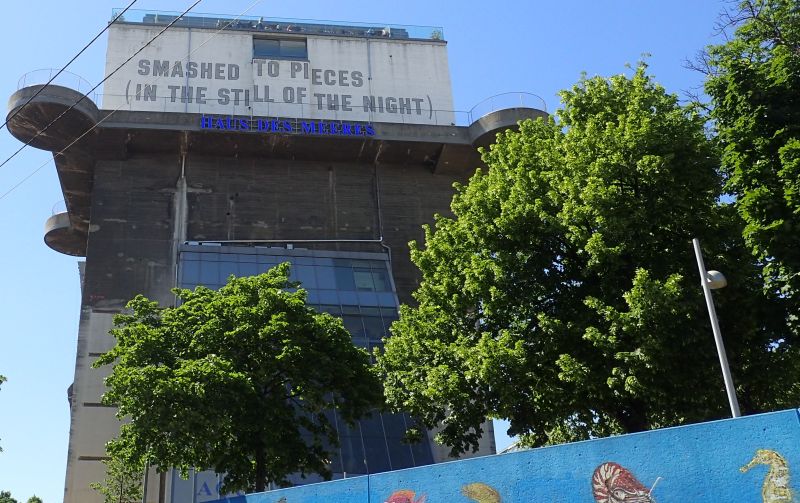
Flak tower 2-L new life in Esterházypark as an aquarium “Haus des Meeres”

Flak tower 2-L new life in Esterházypark as an aquarium “Haus des Meeres”

Augarten show damage as a result of children setting off an ammunition dump left in the tower.

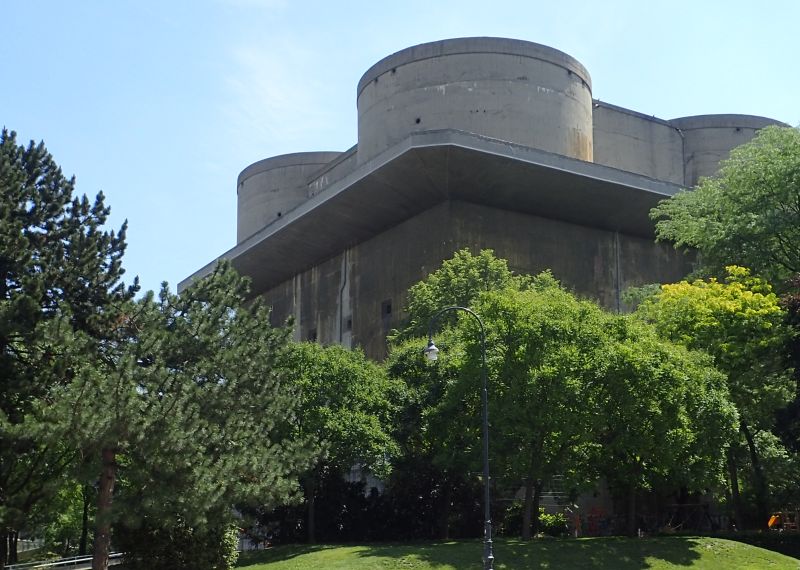
Fire control tower in Arenbergpark.

Main Flak Tower in Arenbergpark.

The base of the fire control tower now makes for a shady and sheltered bike path as part of Arenbergpark.

Links and Further Reading

  1. BBC: Plans for Austria’s Nazi-era towers spark controversy.
  2. Wikipedia: Flak tower.
  3. Atlas Obscura: Flak Tower.
  4. War History Online: 37 images of the massive German Flak Towers: .
  5. Tour My Country-Austria: Flak-Towers; NAZI Concrete Heritage at Vienna’s Heart.
  6. Wien-Vienna.comFlak towers / Vienna anti-aircraft towers.
  7. War Documentary: Luftwaffe Flak Towers in Vienna.
  8. New Statesman: Secret history.
  9. Dark Tourism: AUGARTEN FLAKTOWERS.
  10. Interior Photos (in German): Fotos aus dem Inneren eines Wiener Flakturms.
  11. Vienna Review:

https://www.viennareview.net/on-the-town/city-life/stones-of-vienna/monstrous-monuments-viennas-giant-flakturme

https://www.viennareview.net/news/special-report/towers-of-burden

Consensus Challenges

Consensus is hard work and fraught with perils.  However if you do want to improve your organization’s decision making considering visiting these excellent resources noted below. In the end, consensus is worthwhile. It forces families, housing cooperatives or nations to talk; peace, security and cooperation is always the preferred option.

Further Reading and Sources

  • [1]. A Consensus Handbook Cooperative decision-making for activists, coops and communities. Accessed 2018-04-27: www.seedsforchange.org.uk.
  • [2]. Introduction to Consensus, Beatrice Briggs, 1997.

May 2018 – A Photo a Day

Based on a promise to ‘Pay Attention‘, this is one of six blogs with the good intention is to publish a photo a day of my six month adventure in Vienna with a caption and thoughts on the image. Note that the publication date and the date when the photos were taken are not the same. Enjoy my (manly) scrap-book for future memories… take that future dementia!

PS… Be patient and wait for the pictures load.  Also because May is a thematic month, it is best to view the images from the bottom to the top.

May 31: The last photo for May and, well small town fire halls share a similar familiarity even if they all come in different shapes and sizes.  See you next month whilst I ‘Pay Attention’.
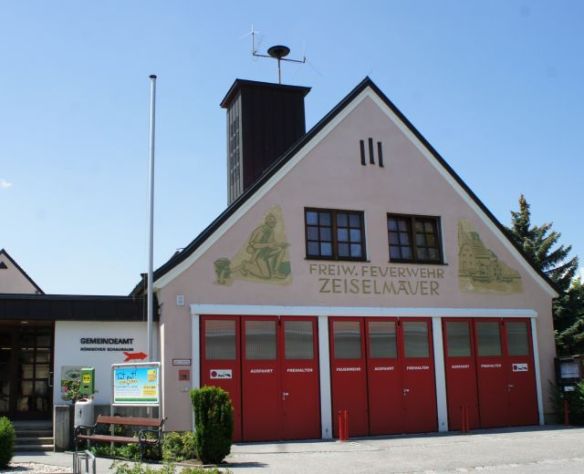
Small Town fire hall – Zeiselmauer.

May 30: Some more public art.  The one on the left is from a bakery near my apartment, the bishop looming over tenants and passersby on an apartment building the abstract art covers a metro ventilation grill near one of the train stations.
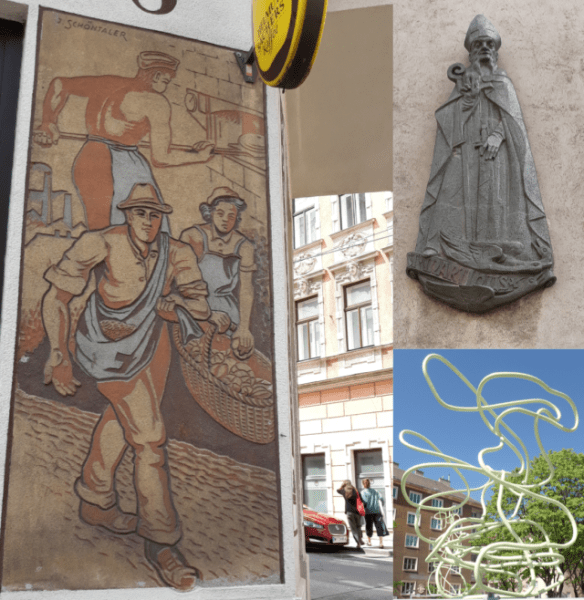
Private and public art examples.

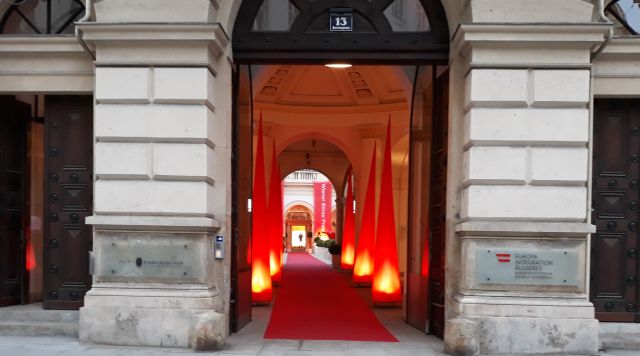
May 29: Behind closed doors on the street is often a passage leading to a central courtyard.  These courtyards could contain nothing more than an over grown garden or car park.  Sometimes though they contain beer gardens, a well maintained garden refuge from the summer heat or even a red carpet to a business display…
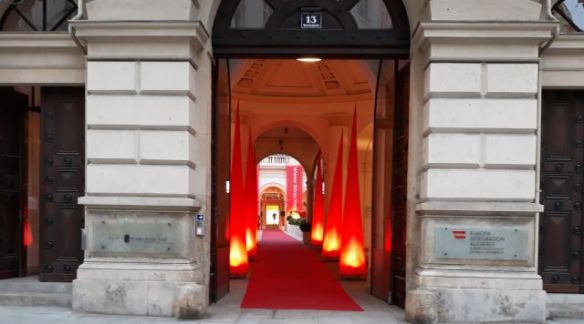
Business conference off Herren street

May 28: there are some very nice artisans in Vienna.  A few have made their appearances previous photos per day but today a twist with the Viennese coffee culture.

Coffee rings and ear rings.


May 27: A few more views of the Spittelau plant.  On clear days it is an icon visible from most parts of the city.

Three different perspectives on a burning bit of art work.

May 26: What better place to have public art than an… incinerator, yeah!  The festooned Spittelau waste incineration plant produces enough power for 60,000 homes by buring the trash from Vienna.
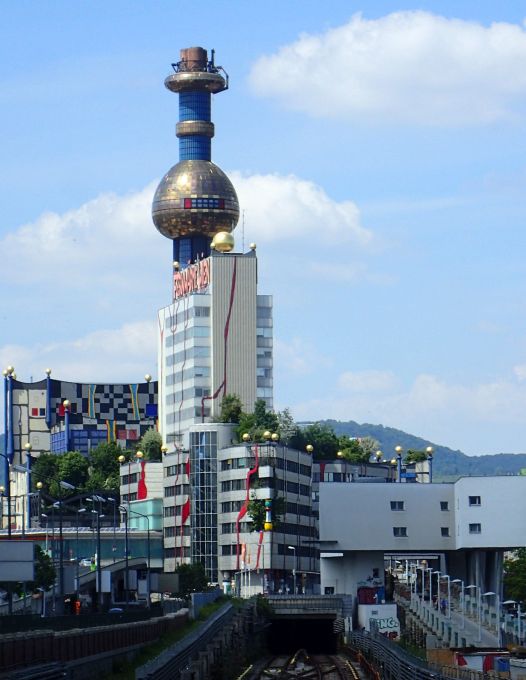
120,000 MWh of ART

May 25: Perhaps the best view in the city?  Note the angular buildings set juxtapose to the more traditional buildings.
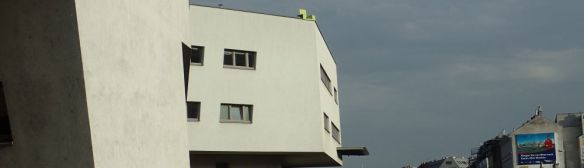
Best Seat in the house…

May 24: A very cool and practical application of bike-technology for a crowded city – a pedal powered UPS delivery vehicle.  I did not see an electric assist so looks like this fellow is getting a good daily work out.  Not so pleasant in the rain I suspect however.

Pedal Powered UPS

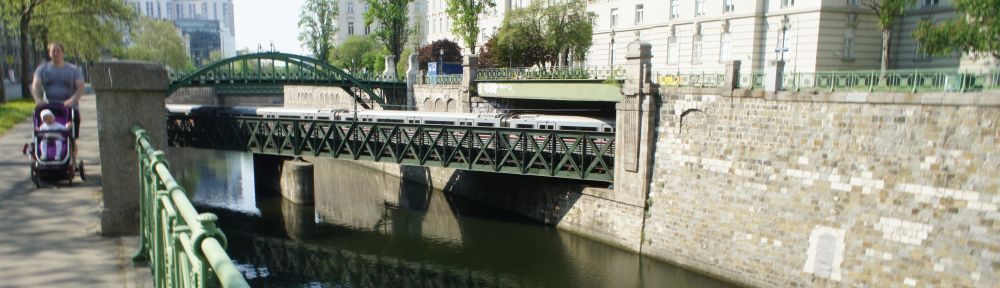
May 23: Design of course extends well beyond an intended work of art.  I have always admired this bridge over the Vienna river for its combination of functionality yet elegance.  For those who have been to Edmonton, a bit like the High Level Bridge, industrial beauty.

U-Bahn bridge over the Wien fluss.

May 22: Normally I am intrigued by the more gritty examples of public art, a slightly grimy mosaic for instance.  This set of statutes on top of the post office is a perfect example of well crafted sculptures looking down from you in all corners of Vienna.
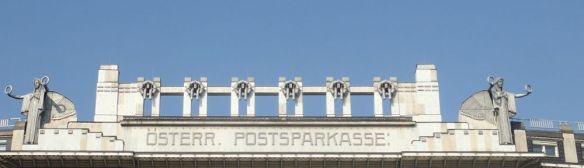
Watch art from atop the post office.

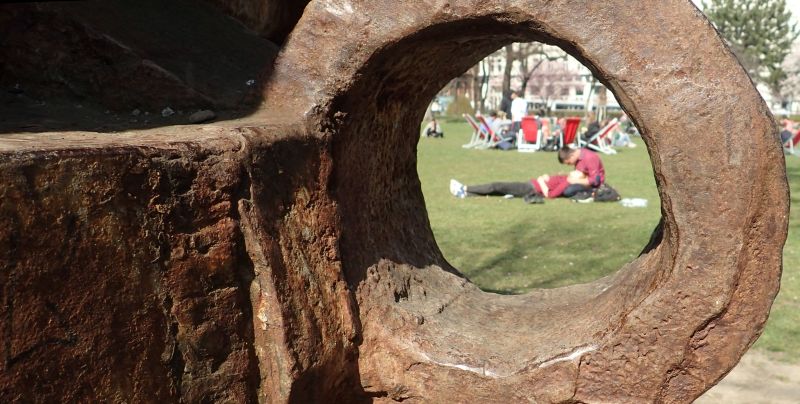
May 21: A glimpse of an intimate moment in the Sigmund-Freud-Park through a detail of an iron sculpture… and no, there is no deeper meaning to the photo, sometimes a sculpture is just a sculpture.
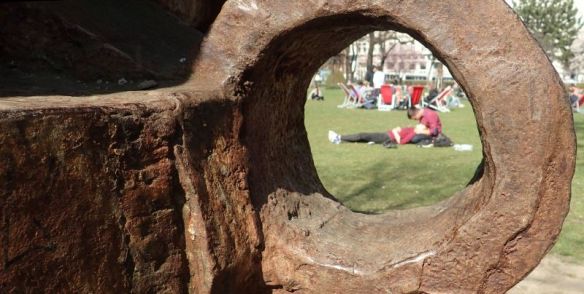
An intimate moment glimpse through public art.

May 20: Public Art in Vienna comes a number of forms, including the whimsical.

Seeing pink bunnies in the Inner City…

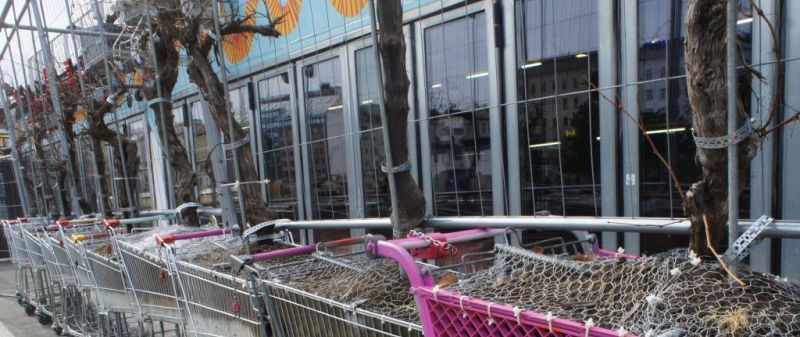
May 19: Grape vines grown in a shopping cart.  I have not gone back to look but I would think they are now in full bloom.
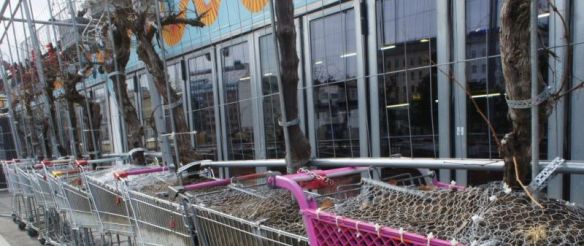
Mobile Grape Vines

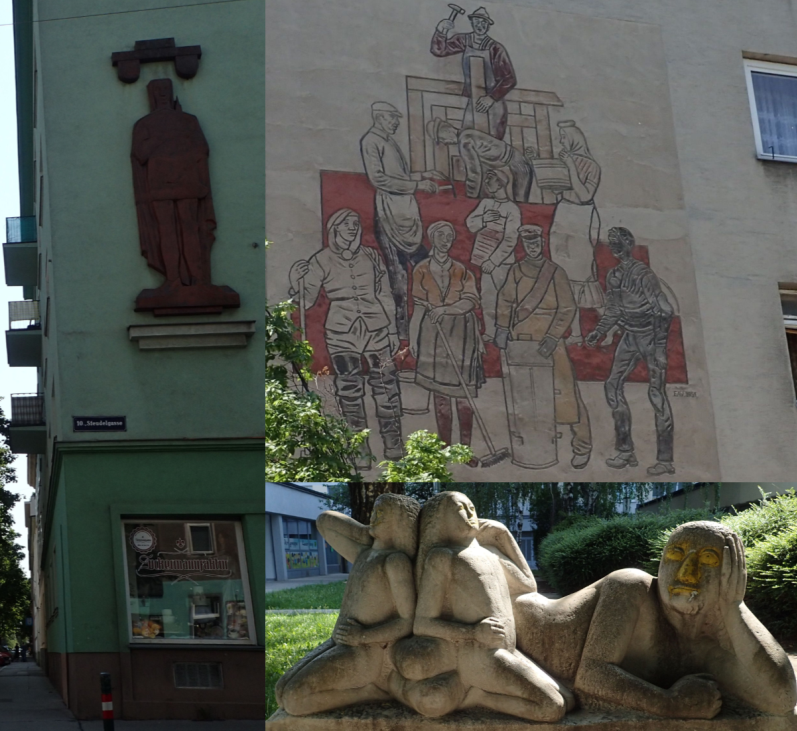
May 18: A return to the public art theme, two building murals (left and top right) and a sculpture near a kindergarten. I can’t decide if the yellow paint vandalism adds tor takes away from the piece.
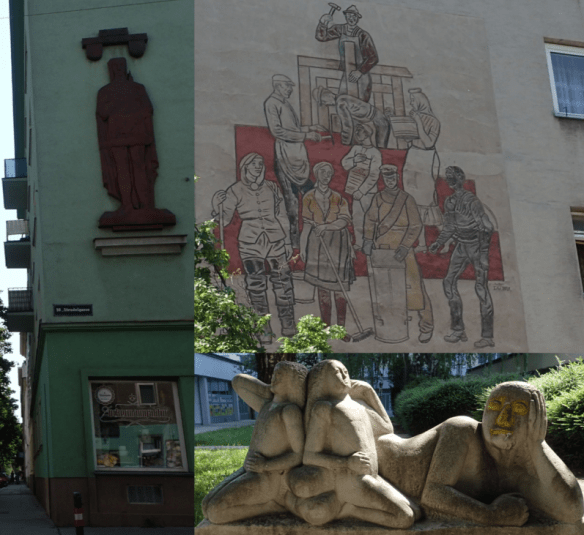
Two murals and one sculpture

May 17: Another quintessence Vienna vista.  Not the succession of big buildings but the listing of the date of construction on the social housing on this building.  In this case, this one was built between 1932-33.
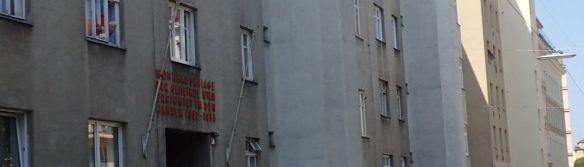
Vienna Vista of Buildings

May 16: More public art found on public buildings, this time south Vienna.
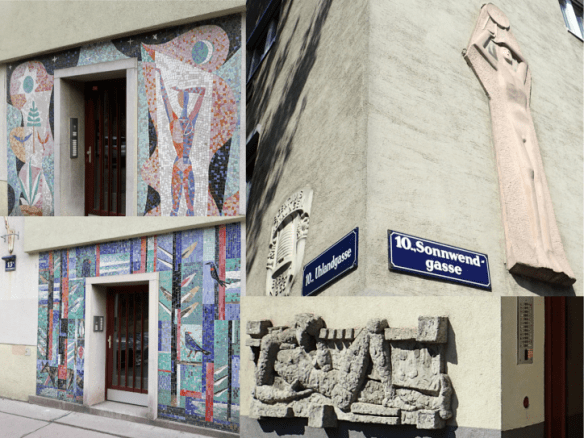
Examples of public art found on buildings in Vienna.

May 15: I saw this scene whilst riding this past weekend.  Vienna is not far on all sides from small hold farms and bucolic vistas.  This was two women cross the Schwechat River with a little boy and girl.  To get across one woman lead a pony while one of kids rode on the pony.  A beautiful warm day and wonderful moment for two little ones to play near the water and I imagine for one of the women (a friend, aunt, grandmother?) to share a love of animals and a bit of nature.

Crossing the Schwechat on a pony.

May 14: I am always on the look for things like public art and vistas in Vienna.  This slice is a very typical impression of the city.  Left to right, notice the facade on the building, a bit of greenery from the apartment owner, the modern non-descript brown building, the graceful older building with likely an addition put on after its construction and finally the greenery.

A cross section of Vienna.

May 13: Alas not all pictures are happy and this is one in which I say adieu (of sorts) to my much beloved Dahon-Mu, my folding bike.  Alas it turns out that the tolerances on things like the frame hinge are beyond the safety range for a person of my impressive characteristics (plain english, I am too large for the bike to safely handle me).  I managed to rent a bike from the good folks at www.citybiker.at.
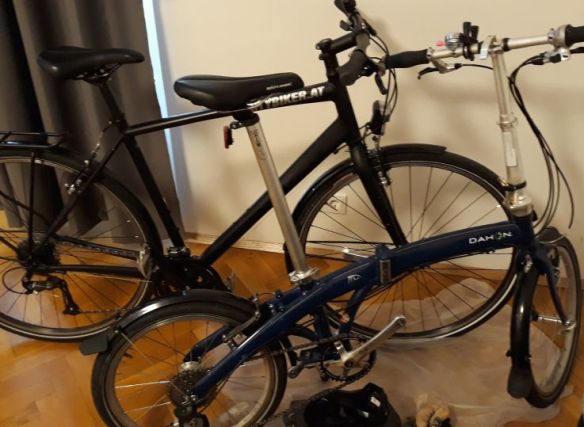
Good bye Dahon-Mu, our brief time together was a lot of fun.

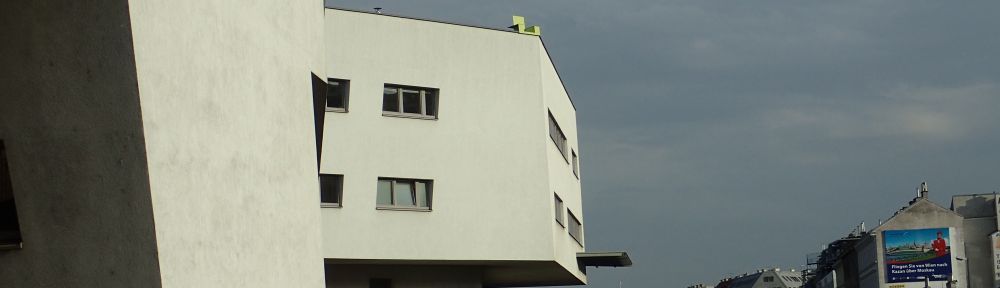
May 12: An introduction to the murals found on many public buildings and in particular social housing complexes. The image in the bottom right is an example of brutalist architecture on the Vienna River, note the hole made to accommodate the tree.

Public Art Murals and a bit of brutalism.

May 11: A break from local public art… a good old prairie evening thunderstorm a few days ago complete with hail, driving wind, lightening and a torrential downpour.  Could have been worse I guess, I could have been this carriage driver trying to get back to the stables. Across the street is the University of Vienna.
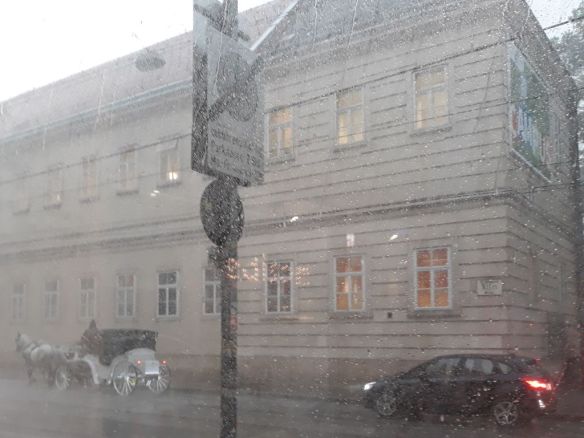
A prairie’esque evening thunderstorm.

May 10: Art is functional as well, off the Danube Canal.

Note the mosaic under the portal.

May 9: Art is not limited to free-standing statues, on much of the public housing (IN which many Viennese live) murals are common.  The first of many such images this one an intricate cement mosaic.

Intricate cement mosaic above an apartment buildings entrance.

May 8: Continuing with the theme of public art, the Virgin Mary on a bridge over Danube Canal.

Virgin Mary Statute

May 7: For the remainder of the month of May, a focus on the public art on display within Vienna.  Much of it on social housing and others part of government building installations.

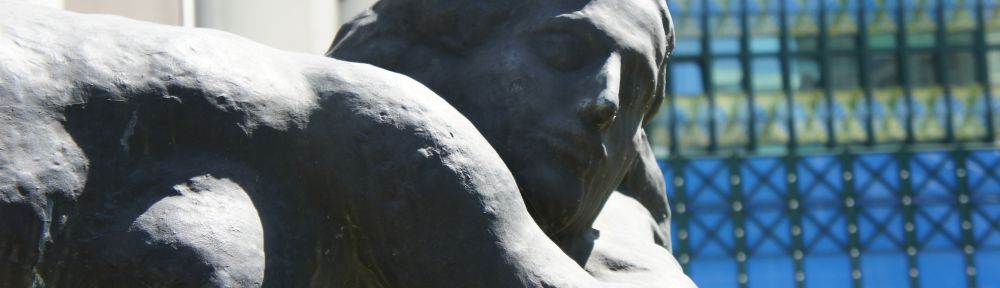
Bronze statute of reclining woman with the Ministry of innovation in the background.

May 6: The last of the labour day series, a farmer and a local chatting south of Vienna near the farmer’s vineyards.
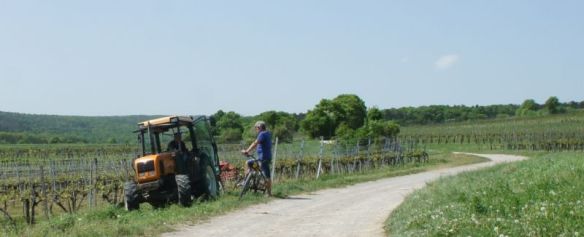
Farmer south of Vienna

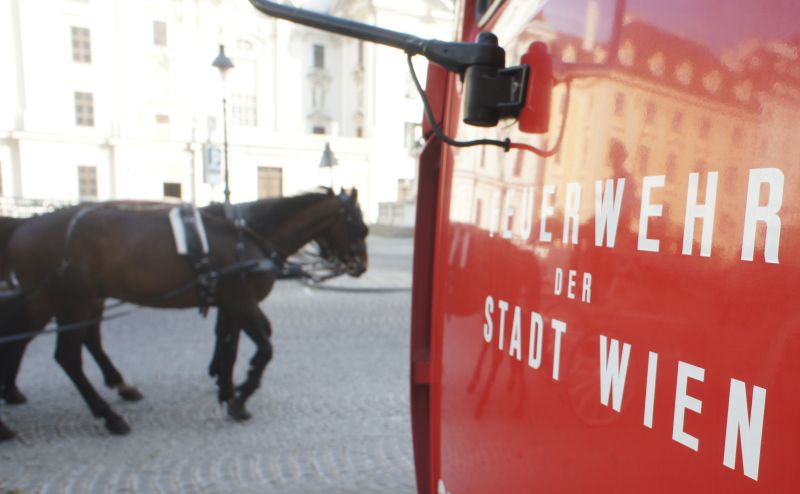
May 5 (cinco de mayo): Two for one deal, firetrucks in the inner city of Vienna.
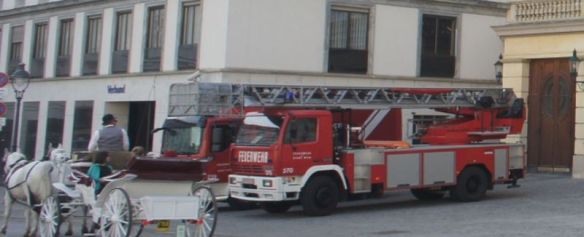
Detail of an inner-city fire station
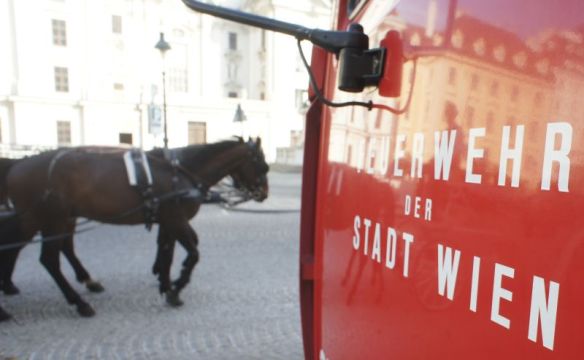
One of the numerous touristic carriages against a ladder truck.

May 4 (be with you): More labour day themes!

Used horseshoes for sale!

May 3: Continuing on a labour-day theme, a vineyard south of Vienna in early foliage.

Vineyard with early leaves.

May 2: Continuing on a workers theme, one of the most famous statues in Vienna of  Johann Strauß II.
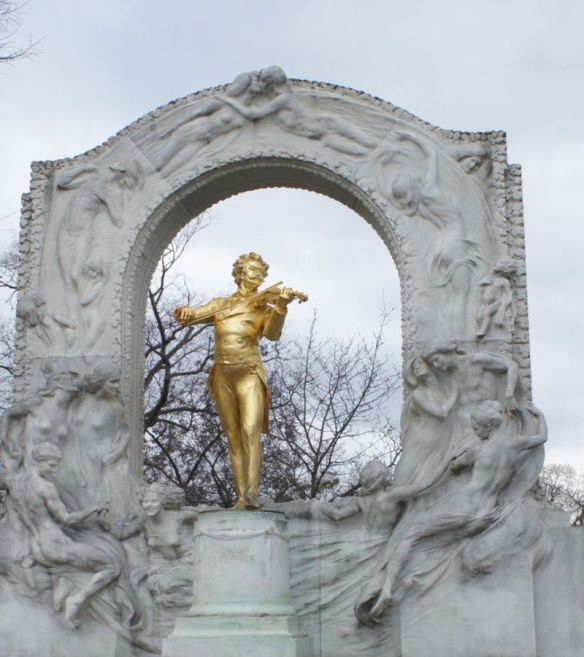
Monument to Johann Strauss II


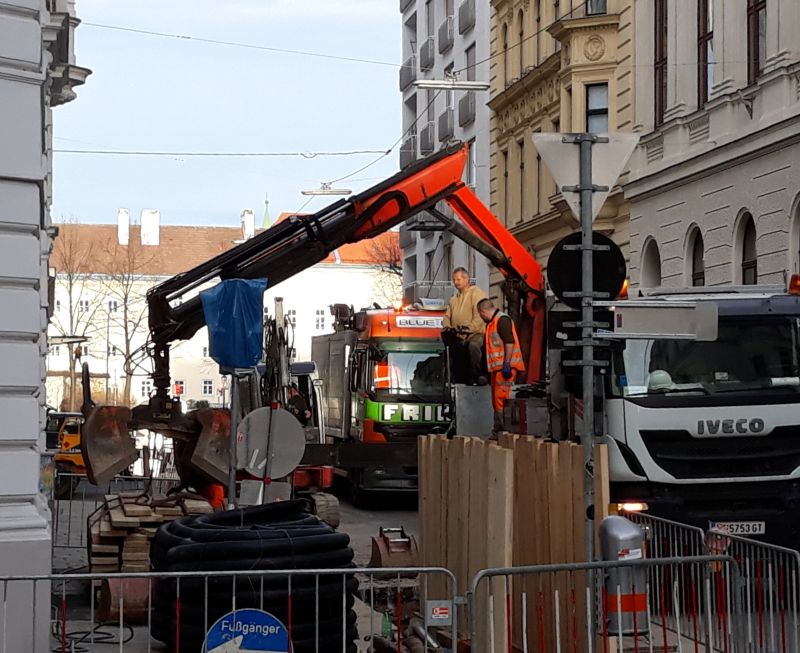
May 1, 2018: In honour of international labour day, a few pictures of work in Austria (and thereabouts).  The first in honour of my oldest brother and nephews, digging holes in Vienna.

Replacing water mains near my apartment.
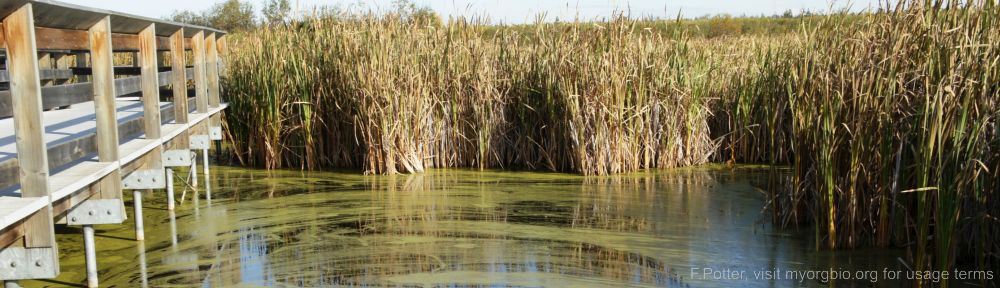
Vienna – A City of Water?

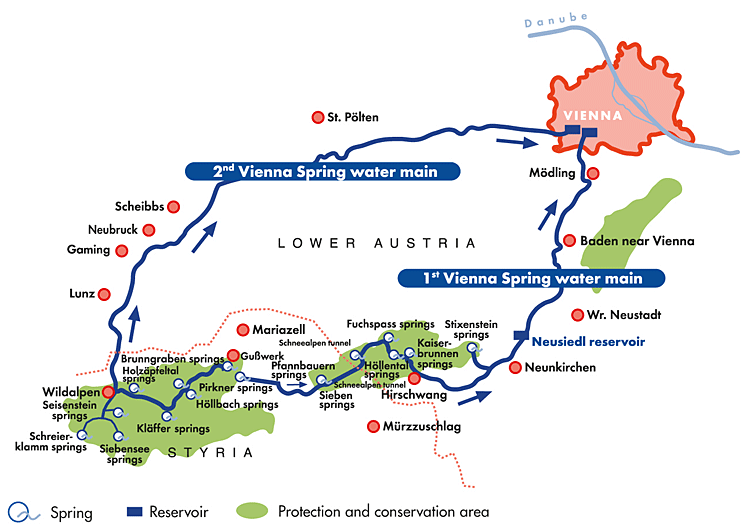
Viennese are (justifiably) proud of their drinking water; what comes out of their tap can go against most bottle water. Amazingly, it arrives via two separate gravity-fed pipelines.  Pumping stations are not necessary as there is a gentle incline from the source all the way to south-west Vienna.

The two water pipelines supplying Vienna, source Vienna Water works.

Water, Water Every Where… but not a drop to drink (because of E. Coli)

Vienna goes back to Roman times as the Danube was more or less the frontier between the civilized Roman World to the south and the unwashed masses to the north. Vienna was a glimmer in a Roman’s eye until they all high-tailed it south when the empire came crashing down about 4 AD.  Over the next 1,600’ish years it went from an abandoned army encampment to a metropolis of nearly 2 million.

All cities are constrained by environmental factors including access to drinking water.  Vienna is on two rivers, the large Danube and the smaller Wien.  The problem is the former has already travelled nearly 1,000 km by the time it reaches the city and cannot be consumed straight.  The other comes from the Vienna Woods but is not a reliable source of water because of its small watershed.  As a result, wells were the primary source of water but were subject to contamination due to poor sewage handling.

The 19th century

The 1800’s was an engineering epoch and the problem of water was solved, in fits and starts, by engineers.  The first water pipe was built at the start of that century but quickly was overwhelmed by a growing population.  A water filtration system from the Danube was constructed in the 1830’s but was also overwhelmed.  The first water pipeline was constructed in 1873 and serviced Vienna until 1910 when it was supplemented by a second line.

Of course the average home did not have a water tap, instead fountains and communal pumps were interspersed throughout the city and many of these still exist today.  The water is still very drinkable but is now primarily a source for thirsty tourists and people without a tap in their home (typically due to a lack of a home).

A very drinkable and public fountain near SchottenTor in the NW corner of the Vienna Inner City.

Water Rights and Management

The City of Vienna owns the head waters of the two pipelines.  As the water passes through Austria, communities the pipelines transit cannot access the water.  A bit of the old imperial system that continues to today in which resources flow to the capital through the outlining areas.

Nevertheless, Vienna is a model of good water management and the importance of not only maintaining the local infrastructure but also the sources as well.  An interesting thought as our world experiences climate change.

Sources

The above has been adapted from:

Six months of paying attention

For the next six months I want to try to pay attention. Okay a bit of background, I am living in Vienna for the next six months (see the ‘Why Are You Here‘ blog for more details) so my environment is easy enough to be cognizant of,but there is a wee bit more to paying attention but first Vienna.

A City That  Demands Attention

Vienna is a city that demands attention – looking West toward the Hofburg.

Walk through the inner city of Vienna and you see life. The city has not been hollowed out and shifted to the suburbs such as like many North American cities.  A good social safety net also means that the number of street people are few.  The city itself has been reborn since its levelling seventy+ years ago under Allied bombing.  In other words, no matter where you look, there is something to see.

But this is no Disneyland caricature, Vienna is a living city and is proud of its imperial past but also secure in its current republic.  The public buildings are imposing but used everyday for the business of government.  The public art has been on display for decades or centuries and serves to improve the lives of the current and future generations… well on and on – the point is that Vienna is a cool place to pay attention to!
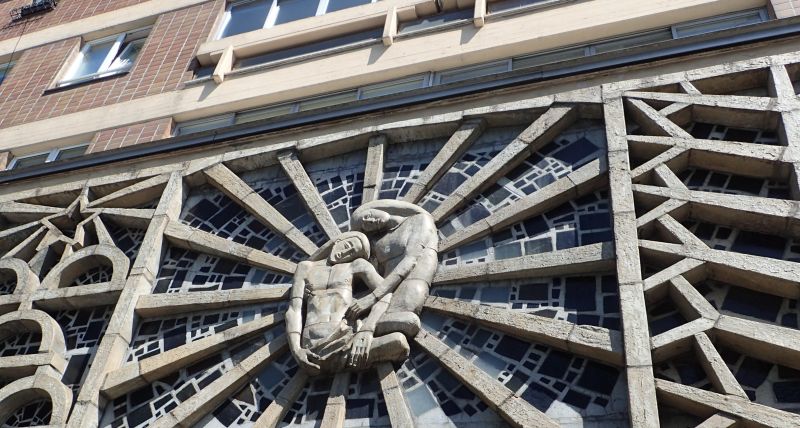
More than Old Buildings – Avoiding New Technology

There is another reason that I want to consciously pay attention for the next six months, the corrupting influence of technology.  Okay, this is not a ‘Luddites Unite – You Have Nothing to Lose But Your Cat Videos‘ post.  My point is that we need to spend less time seeing the world through the camera lens of our smart phone and more enjoying the world’s splendor/horrors with our own eyes.  By taking at least a few minutes a day to look around, walk on an opposite side of the street from the norm or take a different route to work – we can provide a small challenge to our brain to pay attention.  By doing so we can also train our consciousness to look not in the context of a meme, post or headline but in a way that we were meant to – as part of a series of inter-locking communities.

What Matters Gets Photographed

So, here is my plan to actively look about – I will select a single photo a day and post in a running blog for a particular month.  Okay, I get the irony that I may be using a smart phone and technology to do this, but do so suitably harnesses the machine rather than being enslaved by it.  As a bonus, I will get an electronic scrapbook of sorts.  Heck, it might even delay dementia by going back and saying – ‘I remember that image, it is because I crossed to the other side of the street that one day and saw…’ 

Hopefully you enjoy my ‘scrapbook’ and keep an eye out for blogs such as this one: March 2018 – A Photo A Day.