Public Policy in a Nutshell

Public policy is a fancy name for what governments have agreed to do or need to do. If you have a degree in public policy, please don’t laugh too hard about the simplification of the concepts [1]. For those without a degree, hopefully this post is just enough to talk about policy and how gRBM supports the public policy process [2].

Continue reading

What do Governments Do, Anyway?

The post explores the multifaceted roles of democratic governments, emphasizing their evolution from “stationary bandits” to providers of public goods and services. It discusses various responsibilities such as national defense, economic management, law enforcement, and public welfare, highlighting the complexities and challenges faced in governing diverse populations effectively.

Continue reading

War and Stationary Bandits who Become Leviathans

Ian Morris’ “War! What Is It Good For?” tackles the complex relationship between war and societal development. He contrasts Hobbes and Rousseau’s views, asserting that war fosters larger, more organized societies that ultimately reduce violence. While acknowledging the human costs of conflict, Morris argues that understanding war’s historical role is vital for future peace.

Continue reading

Citizen [BLANK]

I was a panelist for a workshop on: Citizen Science & Policy: Monitoring to Drive Change which was hosted by an organization called ‘the Citizen Science Hub of Alberta representing the Stewards of Alberta’s Protected Areas Association (SAPAA).

Citizen Science is one of those terms I have been vaguely aware of but never spent too much time thinking of… and then I needed to think because of that ‘… on the panel thing‘.

Continue reading

This Read is Garbage (and that is good)

Some thoughts on a book that was garbage – and why that is a good thing. Garbage Land: On the Secret Trail of Trash by Elizabeth Royte, Jennifer Aquino, et al. [1]. An excellent survey of the world of trash and the disposal of other unmentionables.

Three different perspectives on a burning bit of art work. Spittelau waste incineration plant in Vienna Austria [3].

This blog is part of my ongoing effort to remember what I have read. I have tried to write it for your enjoyment, but its primary purpose is, better recall of this worthwhile book.

Continue reading

A Walkable Read

The Jetsons would have us believe that flying cars and moving sidewalks are just around the corner. It turns out that the Jetsons live in an unhealthy environment in which the citizens would be fat, isolated and unhappy. The book, the Walkable City: How Downtown Can Save America, One Step at a Time, by Jeff Speck [1] gives an alternative, and brighter future.

This blog is part of my ongoing effort to remember what I have read. I have tried to write it for your enjoyment, but its primary purpose is a better recall of this worthwhile book.

Having interesting things to look at is a key feature of a Walkable City.
Continue reading

2×2 Goals

What does Albert Einstein [1], a gold medal-winning Olympic Athlete, the lottery, and Afroman’s hit song ‘Because I Got High‘ have in common? They can be mapped to the 2×2 Goal matrix and help financial literacy course participants better understand how to set and attain their goals.

2×2 Goal Setting: Realistic X Effort
Continue reading

Can We Start Again Please – Here is the Offer…

On September 16, 2021, I will be moderating a Financial Management Institute (FMI) virtual conference: Getting Up to Speed When the Pressure is On. The conference will present six senior Edmonton area leaders [2] who have recently started their new roles. Edmonton Chapter – “Getting Up to Speed When the Pressure is On” | fmi*igf.

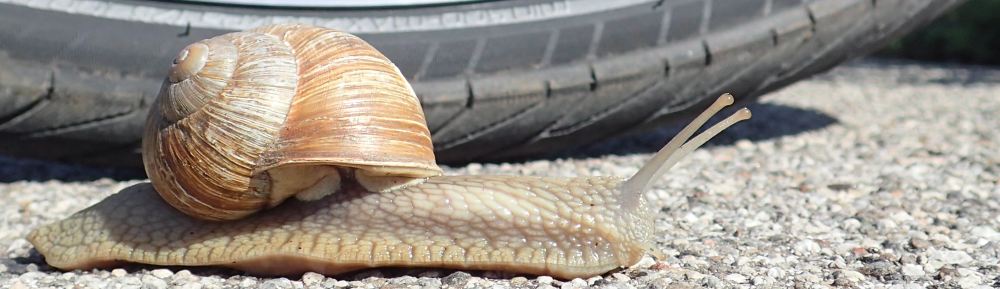
A large snail with shell proceeding past a bike tire in the background.
Moving to a new role is always daunting.
Continue reading