MEC Debt Matters

This weekend, September 26-27, 2020, is important for the Canadian retailer, MEC (formerly the Mountain Equipment Cooperative). A British Columbian court will decide if MEC should be sold to a private equity firm [1]. A grassroots group, SaveMEC, has raised funds and support to oppose the sale. It hopes to send 10,000 letters to the creditors to convince them to delay the sale for a fortnight while alternatives are sought. This blog is 1/10,000 of this support – and some thoughts on alternatives.

Author standing in front of a wooden door in the Baden monastery, April 2018.
The Author with his trusty MEC Yellow Cycling Jersey in Baden Austria, April 2018.
Continue reading

CESO Cultural Course

Some notes on a course I recently took as a volunteer with the Canadian Executive Services Overseas or CESO.  Overall, a good course that was not too preachy and had useful information when working in different cultures.  Highlights are as follows. 

The David by Michelangelo, perhaps a quintessential example of art and culture.

Continue reading

Customer Experience – Not just for Techies

Customer Experience is one of those buzzy terms that is typically associated with technology.  Wikipedia has this definition: “customer experience (CX) is the product of an interaction between an organization and a customer over the duration of their relationship.

Flying Canoe Volant
Continue reading

A Retiring Read

At a certain age, retirement becomes a possibility.  Canadian author Lyndsay Green’s book: “Ready to Retire?: What You and Your Spouse Need to Know About the Reality of Retirement” is written for men thinking about pulling the plug on work.

This is Ms. Green’s fourth book [1] about aging and perhaps it is good that it was written by a woman.  Male-bashing is a fast-growing sport in our society and a man who can afford to retire even more so.  In other words, Ms. Green could have written a virtue signalling book by demonizing men who have worked and saved for their golden years.  Instead, she has looked at such diverse areas of men’s lives as their health (mental and physical), relationships, finances and what does it mean to be a retired male in the early part of the 21st century. 

Snow in Vienna, December 2018.

Nary a Finance in Sight

This is not a book about Freedom 55 or reverse mortgages.  Instead, it is about what happens when work stops and the next phase commences.  It starts on a depressing note with the dreaded 4 D’s that plague retired men: Drinking, Depression, Divorce and Death

Money (or lack of it), is often NOT the cause of the 4 D’s. Most of the men in Green’s book and statistics she provided indicate that while income drops, expenditures also drop or are offset by savings [2].  

The D’s arise out of a sense of loss: job, social-networks, self-worth and purpose.  Two of the cultural touch points used in the book are Arthur Miller’s play: Death of a Salesman and the Jack Nicholson movie About Schmidt.  While the play is a metaphor for retirement gone wrong, the movie is a metaphor about coming to grips with aging.  

Working At Retirement

Part of getting a grip on retirement is the transition after work stops.  Some men who have retired return to the workforce, others work part time or volunteer in a near full-time capacity.  In addition to improving their financial position, this type of work helps them to fill in the losses of retirement (not to mention, get away from their wives or, just as likely, give their partners some much need solitude).  Part-time work may include re-negotiating the current role in an organization or completely re-inventing one’s self.  No matter what the form, paid or not, working post retirement is critical for a long and healthy life: [3].

Gene Cohen, the late professor of psychiatry, spent decades studying people over sixty and helping them get more out of their later years. In his book The Mature Mind: The Positive Power of the Aging Brain, Cohen reports that the people who were the most satisfied with their retirement were those who had found meaningful volunteer experiences

Friends, Homes and Retirement

A source of the 4 D’s is loneliness.  For many men, their social network revolves around work.  Men often expect to spend more time with their spouses as the center of the social relationships while the same women plan to spend more time with children, grandchildren, relatives and friends.  

The home itself can become a battle ground as men attempt to change the physical space and rhythm of the house upon retirement.  Nevertheless, most couples work out the flow.  When this does not occur, divorce does occur with the wife typically precipitating the split.  

A Book About Men … and Women

Ms. Green does a great job of weaving into the narrative the stories and perspectives of the wives and partners of the men she interviewed.  She did this in a confidential manner so that not even a husband might know which of the individuals referenced was his wife. 

Nevertheless, the men who took part in the interviews nearly all have supportive wives and themselves are supportive of the women in their lives. Most of the men have taken over the domestic chores so their wives can return to work, go to school, volunteer or to just share the workload.  

Concluding With a Wise Support Group

In summary, a man’s retirement can be the start of a decline or can be the start of the best/last chapter in his life.  How this will turn out depends upon his mind set, his plans and his support network after the pay cheques stop.  Nothing particularly new in this advise but still very worth the reminder.

Select Further Reading

[1] For example, You Could Live a Long Time: Are You Ready?

[2] Fred Vettese and Bill Morneau; The Real Retirement; Why You Could Be Better Off Than You Think, and How to Make That Happen,

[3] Gene Cohen; The Mature Mind: The Positive Power of the Aging Brain.

Daniel Klein; In Travels with Epicurus.

Roger Housden; How Rembrandt Reveals Your Beautiful, Imperfect Self, 

UK report The Seven Myths of Population Aging: How Companies and Governments Can Turn the “Silver Economy”.

Please Email Me a Car

The following are my notes so I can use the technique again (in about a decade or so) or for your benefit.  As an aside, I have used this technique 3-4 times with success.  The first time was in 1995 when I bought a Geo Metro via fax (times change!).  See the further reading section for other methods and techniques. 

My grandmother (right) and great grandmother looking at a new purchased vehicle circa 1911.
Continue reading

Imagine No Photographer

Recently, I had a discussion with a co-worker (we will call her Carol) who had a family friend who passed away.  Carol mentioned that this person was a world traveler and was a keen amateur photographer.  

What Happened to the Photos?

Carol wondered what happened to his image library.  Having never married, he did not have children who might have shared an interest or been subjects in the photos.  Perhaps an admiring nephew or niece took them or perhaps they are in a land fill somewhere by now.  

If lost, what a waste.  This person spent a lifetime capturing images some of which were possibly of historical significance.  Rather than tossing the boxes of slides or hitting delete on the gigabytes of images, could they live on after the photographer’s eyes have shut for the last time?

The Living Images Photo Library

I think yes, and here is my proposal: a non-profit stock image organization that receives images and makes them available on the internet for subsequent use.  hTe working for this organization is the “Living Images Photo Library of the World“.  

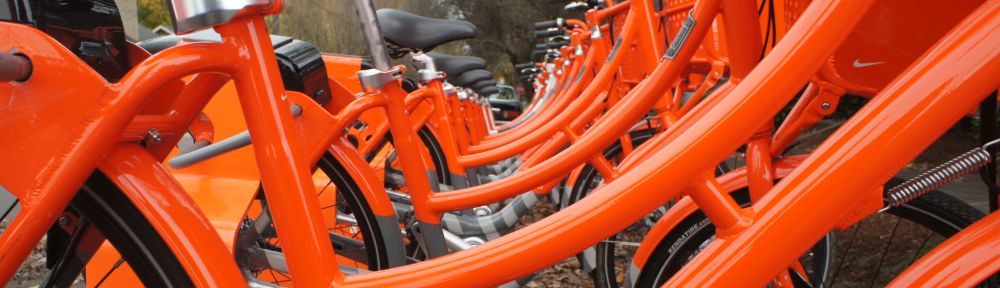
Bikes in Portland Oregon… and an example of bequest to a stock image library.

When this friend passed away, his boxes of slides would have been digitalized, categorized, labeled and made available for others to enjoy or use.  There are lots of details and issues involved here including: 

  • Ownership: the image rights are passed on to this organization in trust in perpetuity.  An appeal process for family members or subjects would be established.  
  • Model rights: some ground rules would need to be established at a global level if there are people clearly visible in the image.  For example, a public street scene would not require a license but an photo of a single individual may require a release.
  • Content Appropriateness: there are some obvious subjects that would not be accepted accordingly to currently accepted norms.  
  • Cultural Appropriateness and the PC:  Because the library would be available globally, some cultural appropriateness rules would need to be developed.  What is perfectly acceptable in Canada may need to be suppressed in Upper Somewherestan – and vis versa.  At the same time, the organization may need to fight against western cultural hegemony particularly as expressed in political correctness.  
  • Medium: assuming that only digital images are accepted, the person or the estate would need to digitalize from the physical mediums such as negatives or slides. 
  • Who Pays: as a non-profit, it would need either ongoing cash donations, support of organizations or government support.  Ideally, using the images would be cost free for personal or non-profit use (e.g. education) but fees would apply for government or for-profit use. 
  •  Taxonomy: like Wikipedia, I see volunteers looking at the images and categorizing them.  Artificial Intelligence is probably close to doing this as a first pass.  The owner may want to do this as part of bequeathing the images.  

Would You Give Away Your Pictures/

What do you think?  Would you give away your images as your last day appears to be coming closer?  If you were Carol’s nephew, would you work through 100,000 images of a life time digitalizing them as part of settling your uncle’s estate?  If you were in the image, would you want your six-year old self eating birthday cake being available for the world to see?

In other words, is this an idea of merit and worth pursuing?


Facebook and the Mall

I recently used FaceBook’s marketplace for the first time (I know, I am a VERY late adopter).  It was easy to post an entry, the interface was intuitive, communications through their messenger application was fast and it was simple to flag when the item was sold. 

Technically it was not a sale as I gave it away.  I offered for free a pair of working computer speakers I had been dragging around with me for about 10 years but was loathe to simply throw out.  

Speakers – free to a good home.

Facebook and Freebies

By giving away those speakers, I delayed their entry into the recycling system or more than likely the landfill.  They will end up there someday but at least for awhile they are being used – and this is where Facebook could improve its Marketplace … and earn some kudos.  

Why Not Support Free?

Facebook facilitated this delay to the dump and it should take credit for this.  Right now their interface is tailored or biased towards selling but could easily promote the freebie.  This would build user loyalty and a sense of real-community via the online community. Heck, they could run statistics of so many ‘cubic feet, pounds or number’ of items diverted from the waste pile in such and such a city. How is that for a triple bottom line!

Supporting the Local Shopping Mall

One more suggestion for Facebook, something that can help them grow the marketplace, build local communities and sustain itself as its user base grows older – a shopping mall lock box.  

I met the person I was giving the speakers to in a local shopping mall food court.  I don’t want strangers coming to my home and it is always better to meet in a public place.  Of course this was contingent on me waiting at the mall and the buyer driving to my location.  Why not remove time from the equation and build local spaces at the same time.  

Meet You at the Lock Box

Here is the idea.  Facebook partners with a few shopping malls to install lock boxes in their public space.  The seller goes, places the item in the lock box and logs the transaction on Facebook.  The buyer, on their own time picks up the item from the lock box.  Insert security protocols, etc. to manage the transaction. 

The payment is made electronically when the lock box opened and the buyer takes the item out.  If it is not what they wanted, the put it back and cancels the transaction.  

Facebook would take a small transaction fee, e.g. $0.50 which it shares with the mall.  The mall gets some revenue, walk in traffic and can have its tenants cross promote on the sale.  Based on the category, different stores would advertise to both the seller and the buyer. For example, for the above speakers, the stores selling electronics could promote their computer departments.  

3 L’s and Conclusion

Insert liabilities, logistics and lawyers – but heck, this is only a thought exercise.  In the meantime, I will use Facebook to get rid of other working stuff I do not want to throw away.  To close, anyone have Mark Zuckerberg’s home phone number?

In other words, making a difference in our society and the environment (reducing consumption, materialism, reuse/recycling) can be as simple as creating the interface to do it efficiently. What say you Mark Zuckerberg?