FeCT 2018-07-15 – And so it begins…

Goals are like thinking about where you want to go for dinner tonight. A good destination to walk toward until you pass something better. So, here is my goal – I want to ride at ~500km of the Iron Curtain Trail or FeCT.

The FeCT runs from the Arctic to the Black Sea along the former borders of the Iron Curtain.  At 4,127km long, it is not my intent to ride the whole thing… this year… but instead the sections that are reasonably accessible by train from Vienna.  I might do a few longer trips in Fall if weekends and work permit, but for the moment, 500km is a nice round number.

Ohhh, here are my rules for myself.  KM only count if they are on the trail and doing a section twice does not double the distance.  I will attempt to do a blog to remember the ride, make some notes in case I go back (or someone stumbles on this via Google).  Finally, I also get to changes these rules at my whim.

Full Route of the Iron Curtain Trail (www.ironcurtaintrail.eu – All rights reserved)

And So It Begins – Hohenau to Devinska Nova Ves (66km)

Date: July 15, 2018
Starting Point (via): Hohenau an der March via Wien Mittel
Weather Sunny, hot with strong North/North West Winds
Route: East from Hohenau and the south to the Friendship bridge returning to Wien via Marchegg Bahnhof (7km of non FeCT riding).

The section is definitely bucolic and only moderately busy (closer to Bratislav) and flat.  Trip notes:

  • About ~20% of the route is on roads but almost all are low traffic.
  • The trail section surface runs from smooth asphalt to rocks and broken pavement.
  • Because of the road surface, leave your road bike at home.  A hybrid is fine, a mountain bike with non-aggressive tires is perfect.
  • There are a few points along the way to buy a radler and fill your water bottle, nevertheless, plan to be self-sufficient.
  • There are some areas that are relatively remote and a way from the roads (e.g. 1-2km+); plan your travel accordingly (e.g. single women, etc.).
  • Once you leave Hohenau, there are only two bridges across the March at Angern an der March and the Friendship bridge.

The first 66km of the FeCT. Map courtesy of bikemap.net.

A Few Pics

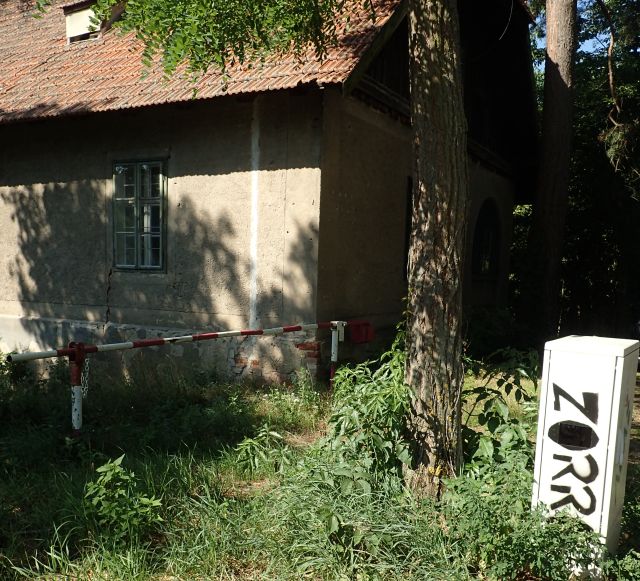
An old guard-house at the border with a control gate and customs house.  Notice the decoy electrical box with a camera pointing toward Slovakia from the Austrian side.

Former Border Control just east of Hohenau.

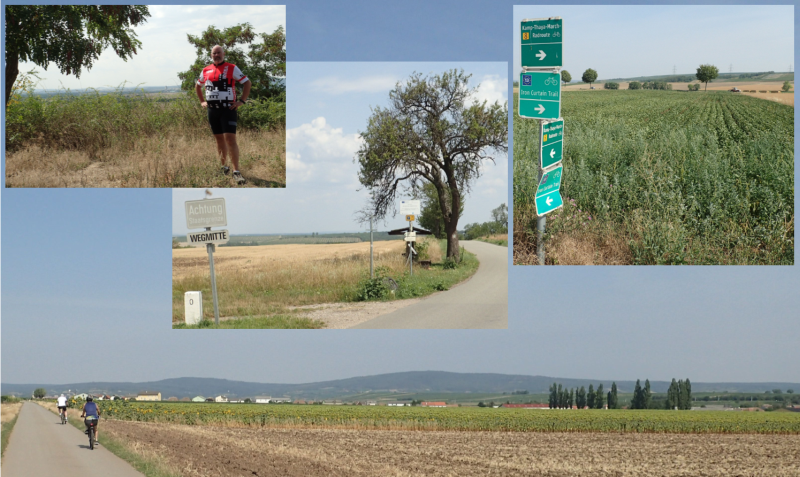
And so it begins, at the Slovakia border.

Austrian / Slovak border.

Lots of Oil and Gas activity.  It could have been Alberta….

A derrick working the Slovak oil fields.

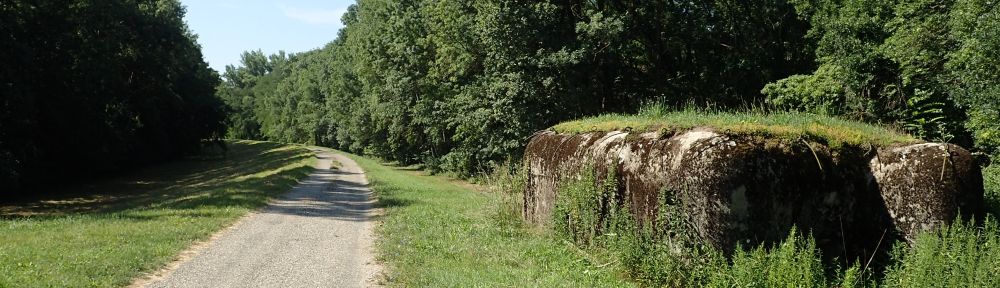
An abandoned bunker along the berm on the former Czechoslovakian side.

Abandoned bunker. There were at least 6 all spaced ~200M apart.

The Score!

Date Distance Impressions/Comments
2018-07-15 66 km Green and very flat; accessible from Vienna.

July 2018 – A Photo a Day

Based on a promise to ‘Pay Attention‘, this is one of six blogs with the good intention is to publish a photo a day of my six month adventure in Vienna with a caption and thoughts on the image. Be patient and wait for the pictures load.  Also because July is a thematic month, it is best to view the images from the bottom to the top.

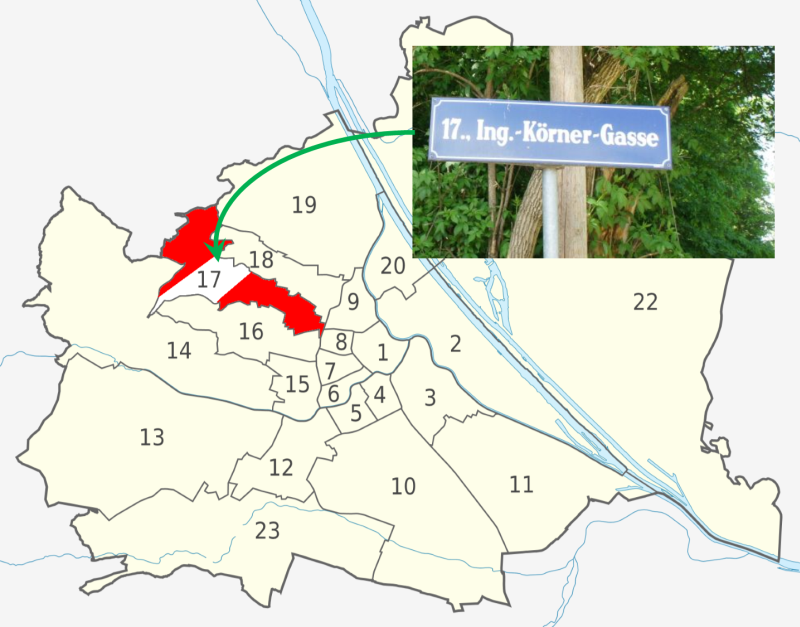
Theme for July: Vienna is divided into 23 districts each with its own name and corresponding number (see this interactive map from the City of Vienna).  For us North Americans used to a grid based city, this system can be confusing as people with assurance talk about the 9th and 10th districts although they are no where near each other.  For this photo-blog I may visited each district either in July or previously.

District Date District Date District Date
1st July 31 2nd June 18 3rd July 27
4th July 24 5th July 25 6th May 12
7th June 21 8th July 8 9th July 9
10th July 10 11th July 11 12th July 12
13th July 13 14th July 14 15th July 15
16th July 16 17th July 1 18th July 18
19th July 19 20th July 20 21st July 21
22nd July 22 23rd July 23

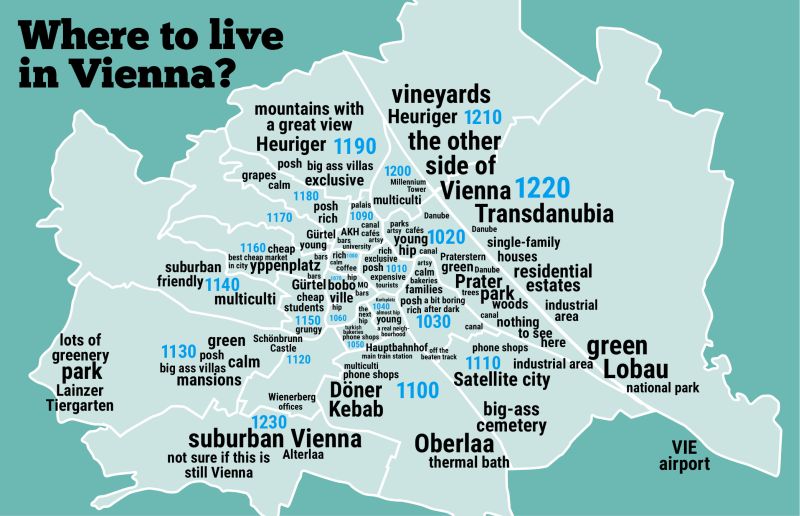
The first district to visit?.  Why the 17th of course!  Selected only for its very punny connection to Canada.  But first an overview courtesy of a tongue in cheek community character map ‘The Vienna Expat survival guide: 13 ultimate tips for internationals moving to, or living in Vienna‘.

District Characters courtesy of http://www.viennawurstelstand.com


July 31: 1st District, the first and most central area occupying the last place in the month of July.  I took one afternoon a tried to find streets I had not yet travelled.  The results are (top left, clockwise): A mural commemorating a 750 year anniversary, Figlmuller – a fixture of the tourist trade, a wall mural, a statue on an art nouveau style building, idealized men on the same building, a wall mural nearly 300 years of an abby and finally the tragic figure of Emperor Franz Josef.

Six images of Vienna in the 1st district.

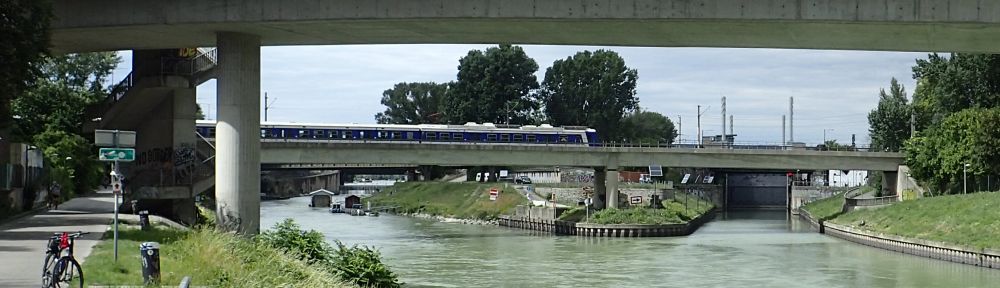
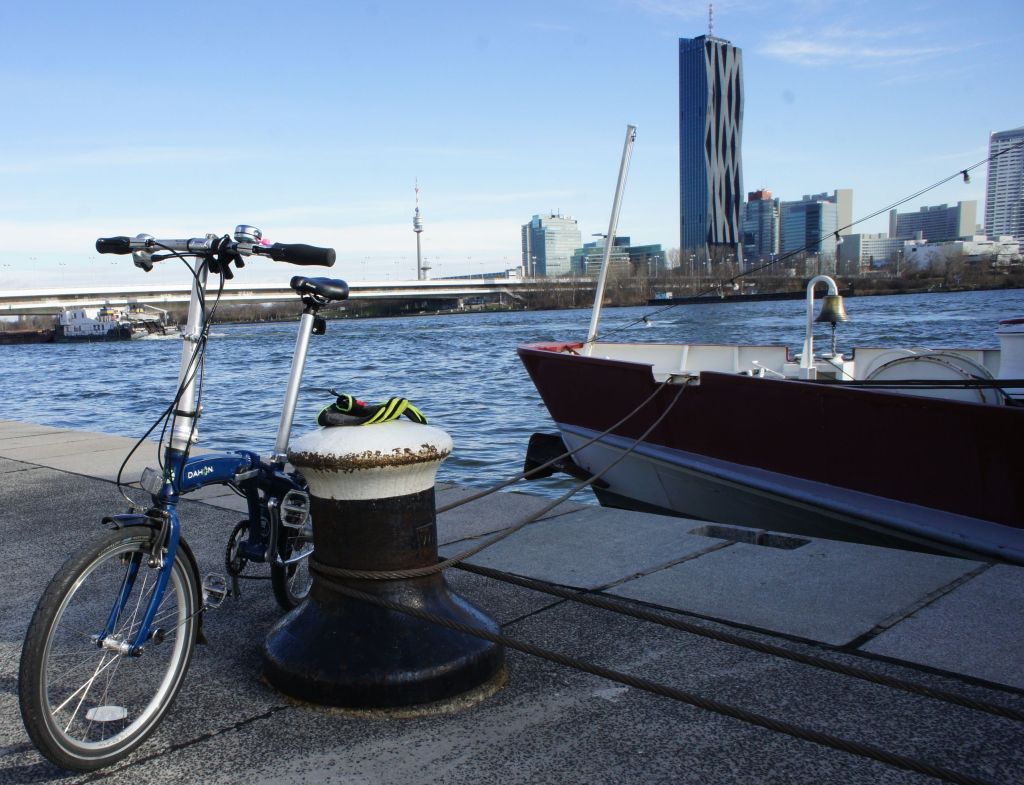
July 30: This picture is taken from where the Danube Canal separates from the main stream (top left) and an irrigation canal (top right), Marchfeld, starts its journey through agricultural land to return to the Danube just before Slovakia.  To make the scene a bit more full throw in a few boats, a S-Bahn city train, a bridge supporting a major thorough fare and my bike just by one of the well marked cycling trail heading north out of Vienna (phew!).
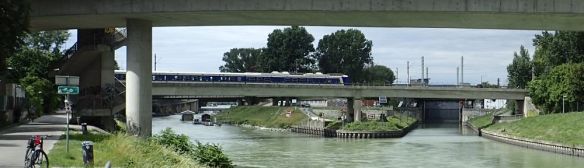
A Picture is worth a 1,000 ways to travel… or something like that.

July 29: These are two separate example of social housing, public art and a feature of Viennese architecture – The building spanning the road.  I decided to superimpose these two images as a comparison between a social housing project built in the 1950s and another built in the 1980s (back and fore ground).  A consistent architecture feature is the raised building over the road entrance and then an inner courtyard (look carefully for the bike).

Old and newish public housing, street art and a bit of graffiti for good measure.

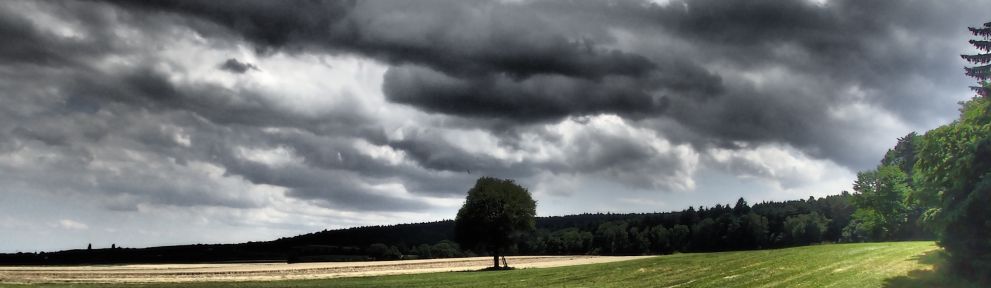
July 28: I don’t normally go too much into gimmicky photographic tricks but in this case I put my camera on an art mode by mistake and end up liking the results.  Below are both images, one gimmicky and one normal.

A loan tree but with an artistic sky.

A lone tree sans gimmicks

July 27: Vienna has not one but two big friggin’ towers.  The taller of the 2, the Danube Tower can be seen in the pictures from July 22nd below.  The more mysterious is the the one lurking in the 3rd District where it dominates the skyline.  According to the newspaper, Wiener Zeitung, requests to visit the tower are refused and little information is known about.  Nevertheless one can visit by watching the Vienna. City Panorama Web Camera from the A1 Radio Tower/Arsenal Tower.

Vienna’s second tower, a building mural and the St. Nikolaus Cathedral (Russian Orthodox).

July 26: A little bit more from the town of Baden which was having a Weiss or White festival.  Never before have I seen so many people in white and never has tomato based pasta sauce yearned to leap from nearby plates so much so as to colour those nice white clothes.
Weiss festival in Baden

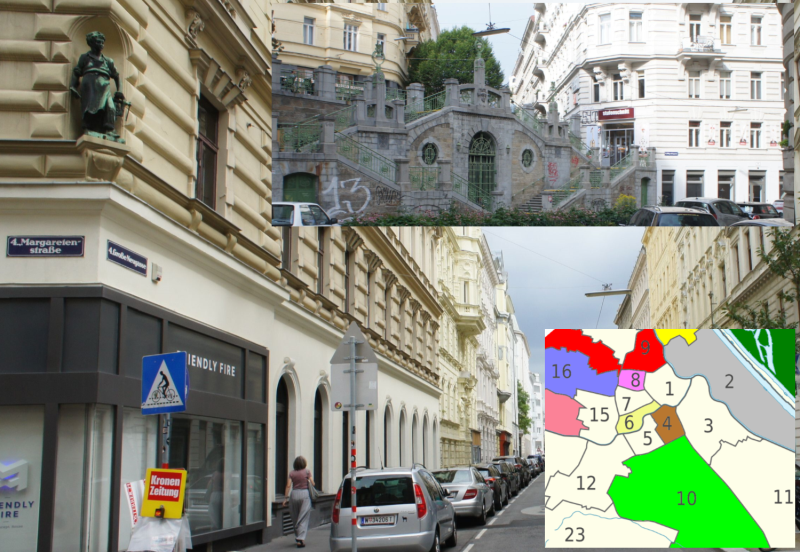
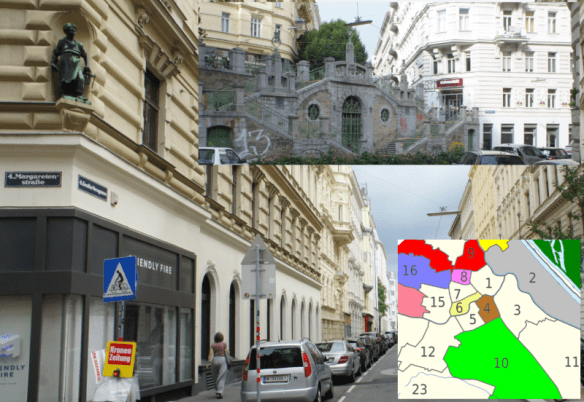
July 25: The last time I lived in Vienna, I constantly rode through the 5th District and then later looked at it from my apartment windows.  The district sprung up along the Vienna river and individual communities were amalgamated into one.  If you look at the insert photo you will see Margaraten Street heading east towards Vienna.  This is exactly what many small Austrian towns look like, buildings built right to the main street.
A classic building on Margareten Street and an insert of the same street show how it used to be a main street running towards Vienna.

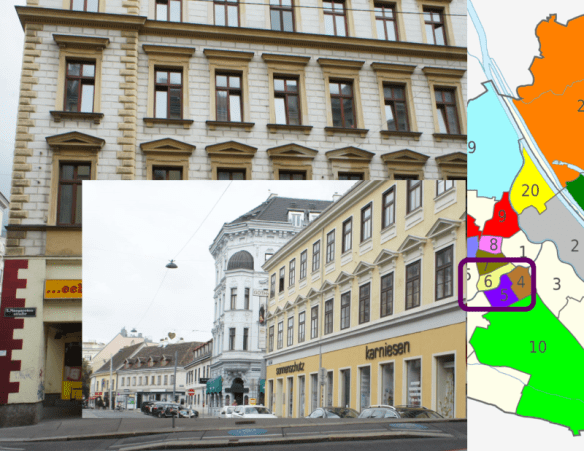
July 24: the 4th District is in the SW corner and includes lots of residential areas.  It also includes Karl’s Church and a monument given to the Austrians by the Soviets on the occasion of the withdrawal of occupying powers from Austria in 1955.
Building upon building of residential areas and a stair case to manage a change in gradient.

July 23: The last district in Vienna is the 23rd which is also the transition into the Vienna woods and beyond the Alps.  The apartment building is the Wohnpark-Alterlaa which is a social housing complex that is essentially a small city within a city.

The Liesing or 23rd district complete with a city within a city complex.

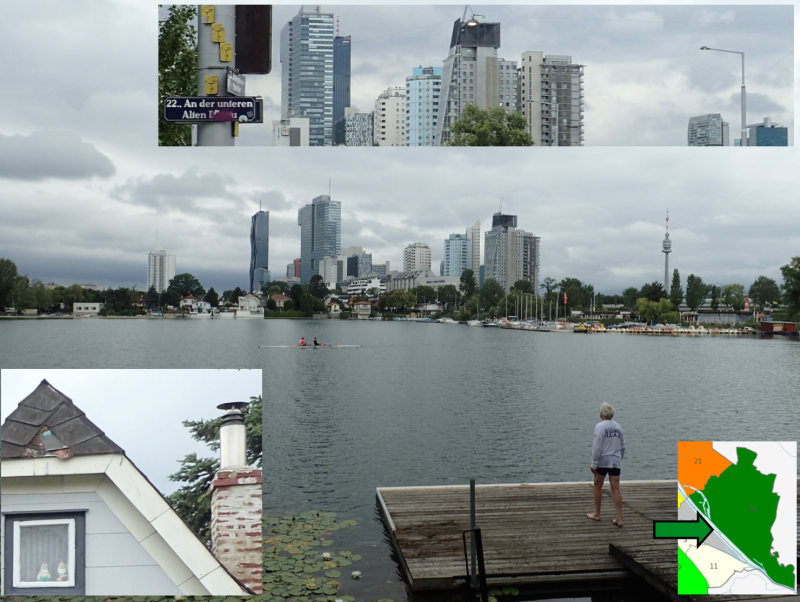
July 22: The 22nd District is an interesting blend of shiny office towers, the UN Centre, car dealerships, suburban homes and recreation.  It includes a national park along the Danube and is the largest of the districts.  Lots of water sports on the Alte Donau.
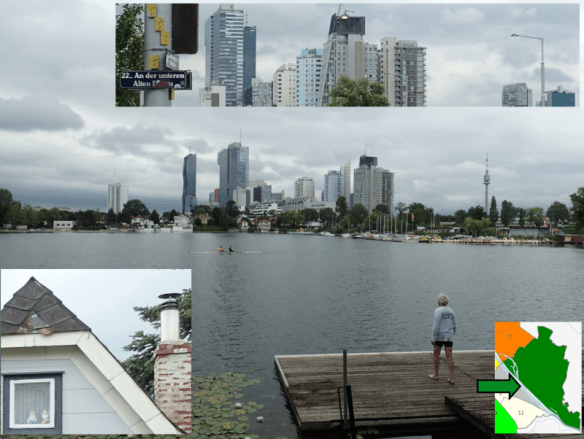
22nd District, Office Towers, Neighbourhood PaTROLL.

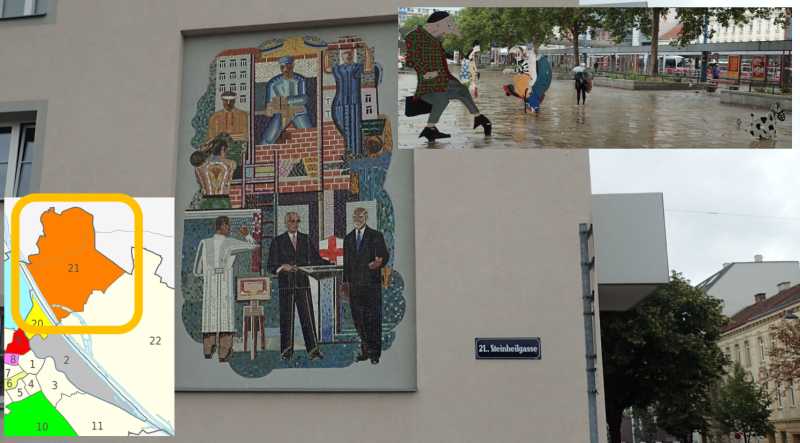
July 21: The 21st district is the sister to the 22nd bordering the Alte Donau (old Danube, a former channel of the river).  It has a more urban feel though with seemingly more social housing (such as the mosaic shown here) and numerous cement block apartments.  For a bit of whimsy a street art in the insert.

21st Vienna District. Note that street art in the top right corner.

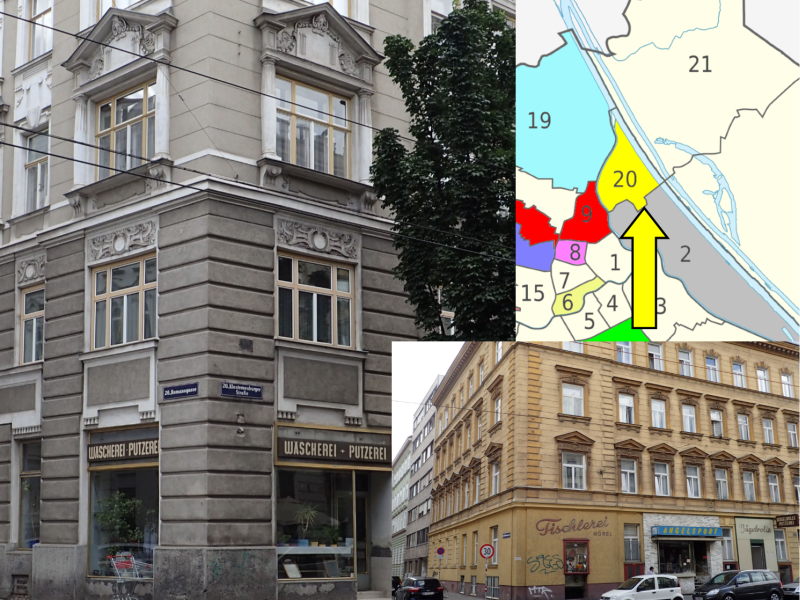
July 20: Two street scenes from the 20th district.  What I like about these pictures is that the business names are all in German.  Many current Austrian businesses have English names where as these are not only German proper nouns but descriptive nouns as well Wascheri+Putzereri (washing), Möbel (furniture) and angelsport (finding devine creatures).

Vignettes from the 20th District.

July 19: A few different scenes from the 19th district.  the background is a social housing complex built during the occupation years.  In this case the building was built in the US occupation zone.  In laid is a corner statue from another building.

Statues from the 19th District.

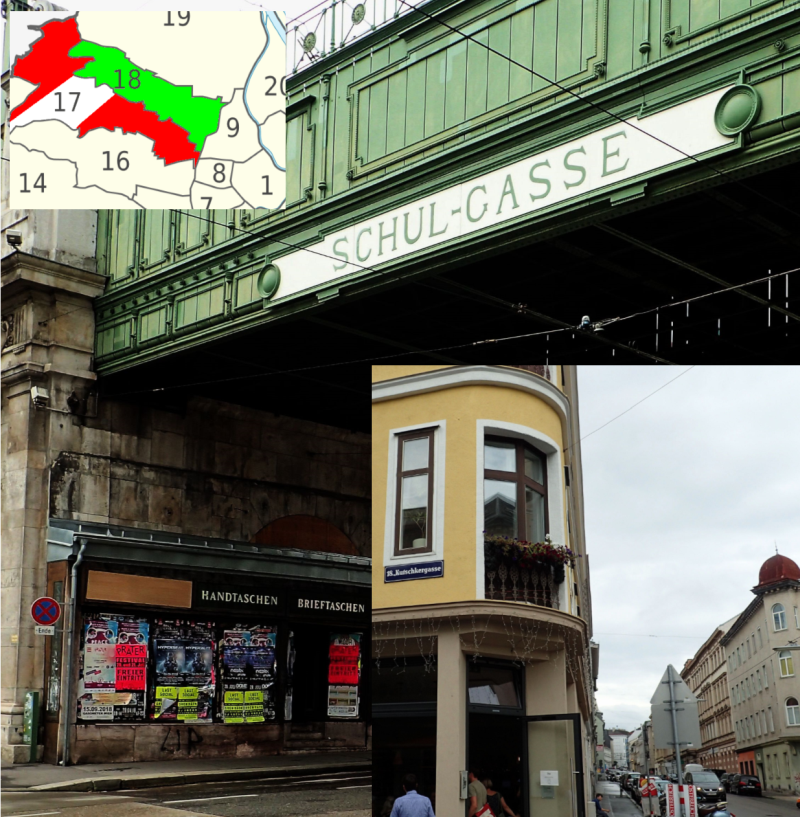
July 18: 18th District. The original city rail road with an Otto Wagner style bridge.  If you notice below the bridge, a shuttered business which is common along the railway as this seems to be an area of lower income and homelessness.  In contrast, a neighbourhood bakery does a brisk business on a Sunday morning.

Two contrasting scenes in the 18th district.

July 17: A look into an inner courtyard of a social housing complex.  The inner courtyard keeps the complex cool in the summer and provides a place for kids to play and tenants a place to socialize.

Iron work looking into an inner court yard.

July 16: A large social housing complex built at the height of Red Vienna in the 16th district.  It has both an imposing and appealing look at the same time with a touch of art deco decor.

Schuhmeier Hof built ca. 1926-27

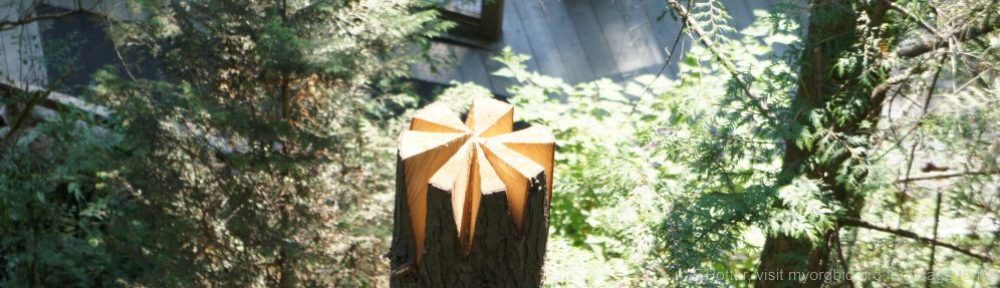
July 15: The 15th was once considered a dodgy neighbourhood.  My experience so far is enjoying an excellent lunch at a combination bicycle shop/bistro called Velobis. Note the tree sculpture in the corner of this building and that one side faces the 15th district and the other the 13th.

A tree sculpture in the 15th.

July 14: Lots going on in this picture from the 14th district.  In the background is a long narrow road radiating to/from Vienna and likely an older country road.  Bottom left are the trains heading west out of the West Bahnhof towards Munich, Salzburg, etc.  The hills in the background are the start of the Vienna woods (Wienerwald).  Top right is a more classic building in Vienna with a pub on the main floor.  The treed area to the left is a small beer garden – a place to escape the heat of the apartment!
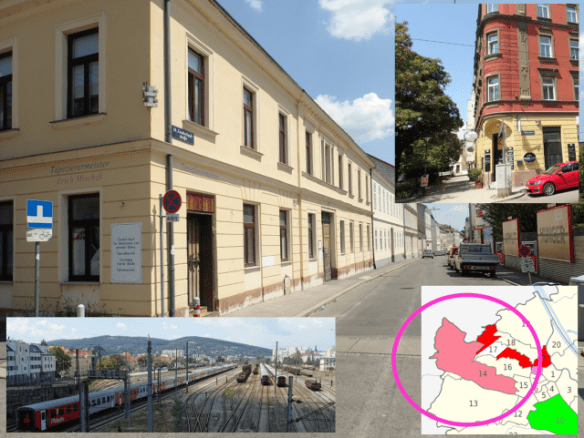
14th District vignettes

July 13: One source describes the 13th district, Hietzing, as the “Austrian Empire Theme Park” with the former hunting grounds (Tier Garten) and the Schonbrunn Palace.  Even the Hietzing U-Bahn Station are fashioned in Otto Wagner style.

U-Bahn station a la Wagner, Schonbrunn and lots of greenery describe the 13th.

July 12: The 12th district is also highly residential.  This image has a number of classic European and Vienna images.  Firstly the mosaic on the side of the overhang of the building.  The Zu Kaufen sign is offering the corner apartment for sale.  Finally, the business in the image is for a flooring company.  A relatively common business because of course when you move out you take the floor with you (as well the cupboards, etc.).
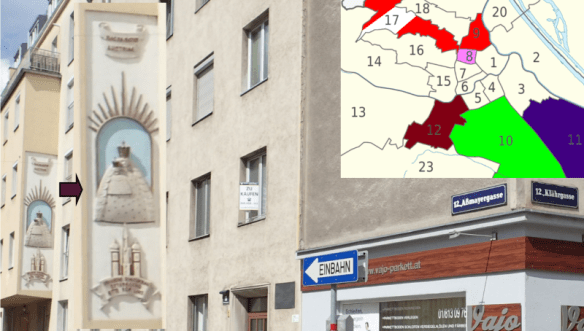
The 12th district mosaics, business and an apartment for sale!

July 11: The 11th district is generally residential but does have the huge Central Cemetery.  Within the cemetery is the Friedhofskirche zum heiligen Karl Borromäus, which has strong Art Nouveau features. Near this church is a large section dedicated to the Red Army and their losses taking the city in 1945.  (The Central Cemetery is so large the Viennese describe it as ‘having half the population of Zurich where people have twice as much fun as Zurich’.

Interior of the large art nouveau church and a sculpture of a grieving soviet soldier with a Red Army star behind him.

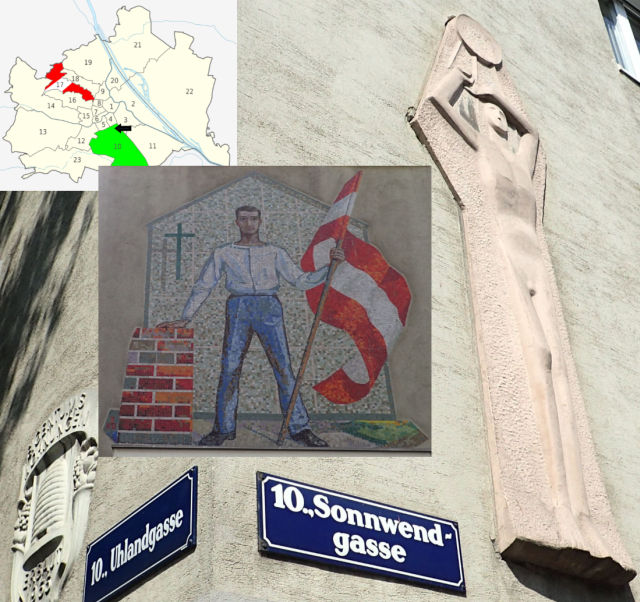
July 10: Two examples of public art, both in the 10th district and all for July the 10th!
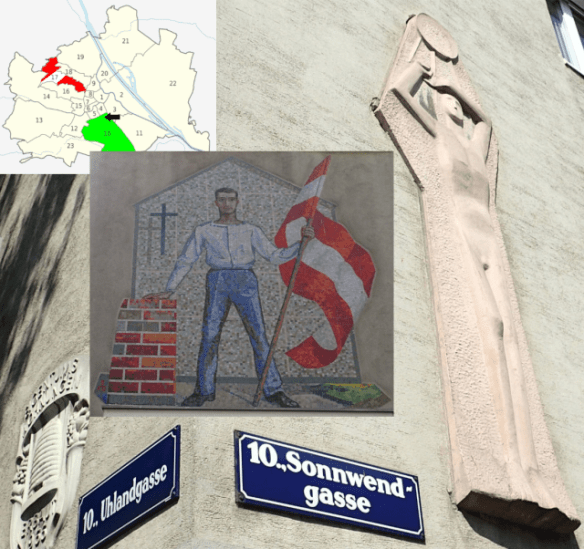
Mosaic and a Sculpture in the 10th district.

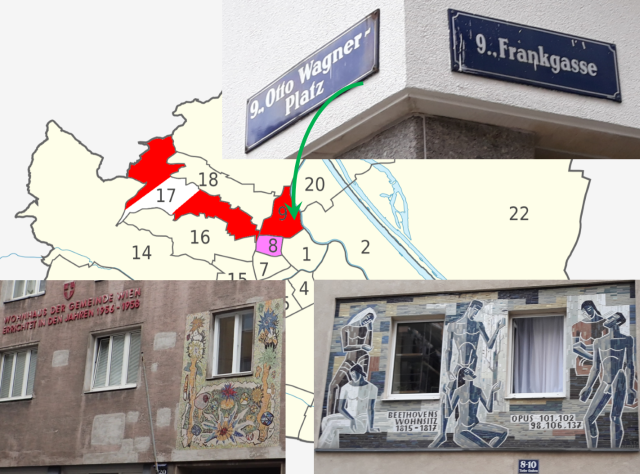
July 9: The 9th is my “hood and where I live.  Some public art in the local buildings and the corner of my apartment.  The bad news is that the door is on the left hand side of this corner although my balcony over looks the right – a very appropriate view.

Some views of the 9th district

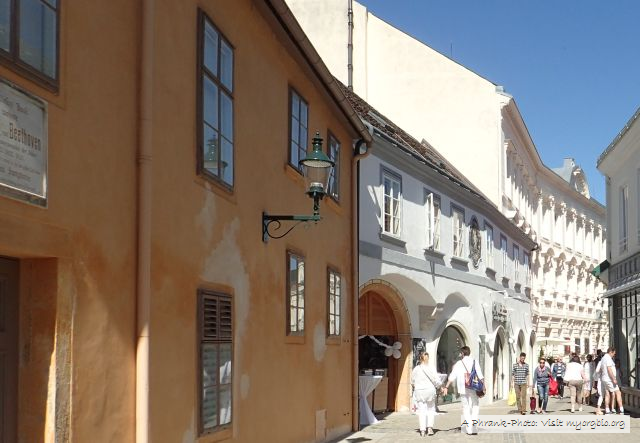
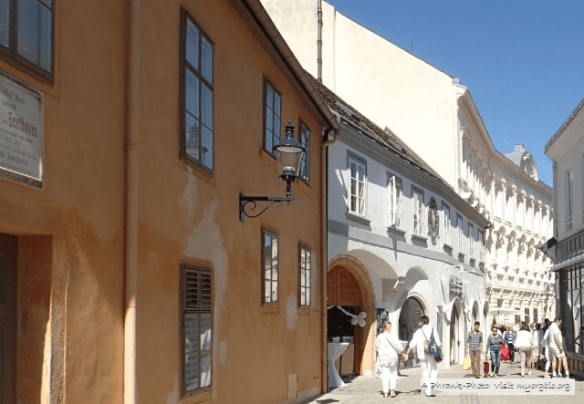
July 8: From the Eight District, three different street scenes starting top left an inlaid sculpture, bottom right more inlaid sculptures and an older style street name sign in Gothic script and on a building where Beethoven lived and worked in 1819-20 and finally, a street sign shop… where all of these street signs come from!
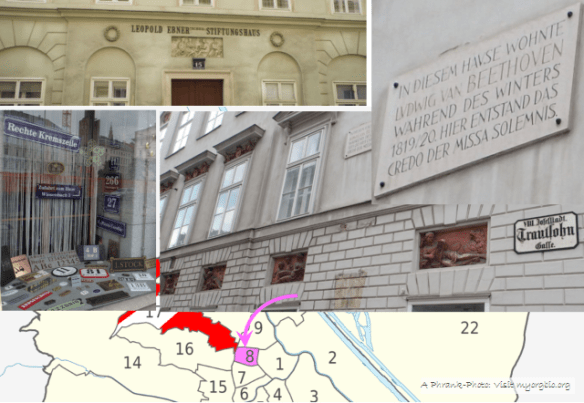
Beethoven, sculptures and a shop selling street signs – all in the 8th district.

July 7: Before we leave the Votiv Kirche, a detail and the view from my apartment balcony (two for one week!).

West Door of the Votiv Kirche. Note the Adam and Eve motif over looked by the saints.

Looking east to the Votiv Kirche from my apartment balcony.

July 6: Near my apartment is the Votiv Kirche and in a back corner in an art piece dedicated to Vivaldi and entitled “AD ANTONIO VIVALDI” and organized by the Lions Clubs of Vienna and Venice.  Two detail headers from this piece.
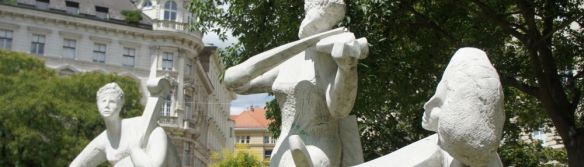
AD ANTONIO VIVALDI: Detail

AD ANTONIO VIVALDI (Detail)

July 5: Unlike many North American cities, Vienna is very much a train dependent city and has 3 separate stations.  For those train watchers out there, Wien-Meidling Station looking north towards Vienna.
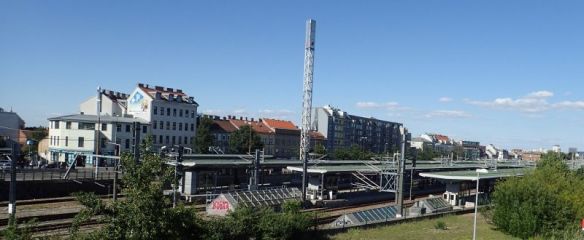
Wien-Meidling Station, the hardes friggin’ station in Vienna to find!

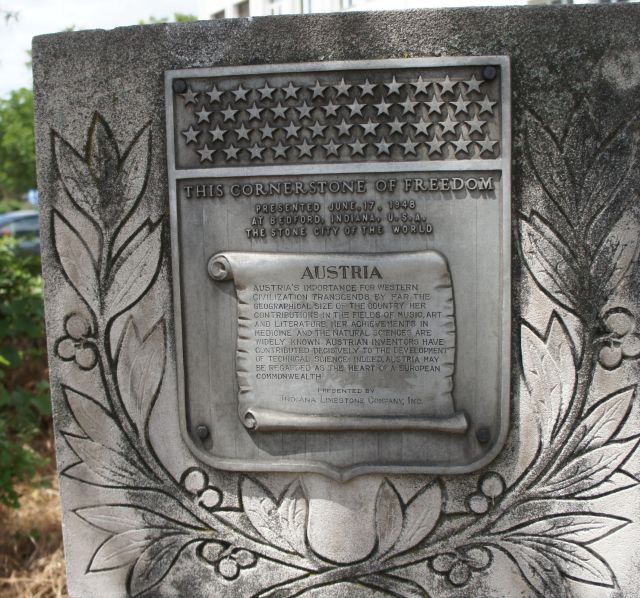
July 4: Happy 4th of July to all friends from the United States!  This monument is about 100M from my apartment and I walked by it for 2 months thinking it was a traffic control box.  The inscription is reproduced below and it was presented on June 17, 1948 at Bedford Indiana to the Stone City of the world (Vienna presumably). Based on some basic Google research:

Demokratiezzentrum (translated from German): Monument on the Frankhplatz in Vienna, which was dedicated to the city of Vienna in 1948 by the USA. The memorial bears the following inscription: “This cornerstone of freedom presented June 17, 1948 at Bredford, Indiana, USA, the stone city of the world AUSTRIA.” Austria’s importance for western civilization transcends by the geographical size of the country Indeed, Austria may be regarded as the heart of the European Commonwealth, Presented by Indiana Limestone Company Inc.”

From the Historical Marker Database: On this spot June 17, 1948 as a  part of the Indiana Limestone Centennial Cornerstones of Freedom were given to representatives of 17 friendly Nations in one of the most impressive displays of International good will ever manifested anywhere in the World.  Countries given markers include: Austria, Belgium, Burma, Canada, Denmark, France, Great Britain, Greece, Honduras, Iran, Italy, Liberia, Lithuania,Norway, Philippines and Saudi Arabi (Sic).

One of a series of limestone markers distributed by the Indiana Limestone Company in 1948 on the occasion of their 100th anniversary.

July 3: A little bit more of the bathing culture…

Cabins in the upper deck of Bad Vöslau.

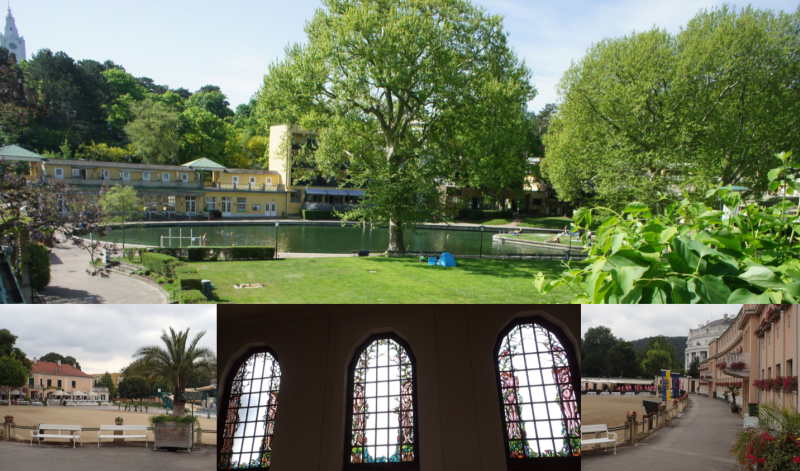
July 2: The Vienna area has a strong ‘bathing-culture‘… okay beyond good basic personal hygiene this also involves a German propensity to go swimming in lakes and rivers as well as a number of thermal baths.  A few pics from the larger Vienna area (include Baden and Bad Vöslau) which share in the tradition of coming clean with a leisure activity.

Images from one of the pools in Bad Vöslau and in Baden.

July 1: Happy Domain (errr, Canada) Day.  Don’t worry non-Canadians if you don’t get it.

Korner-Gasse in Vienna (sorry Brent was no where to be seen).
Stolperstein – Searching for Banality

Have you ever had this feeling, you come home after a hard day and you hear the door close behind.  You are HOME and just for a moment you feel that overwhelming sense of security.  Perhaps there are voices in the distance in an earnest conversation, maybe a pot of something with smells of a supper about to be consumed or perhaps complete quiet – only broken by the familiar sounds of house creaking – clock ticking and peaceful stay-in evening awaiting.

A Photo Blog About the Banality of Evil

The homey setting was shattered for about 9/10’s of the former Jewish population of Vienna [1]:

The formerly flourishing Jewish community of Vienna was all but obliterated by the National Socialists. By May 1939, roughly 130,000 persons considered Jews under the Nuremberg Racial Laws had left the country …. In 1938, approximately 206,000 persons of Jewish extraction (181,000 of which were members of the Jewish Community of Vienna) had been living in the Austrian capital.

Over 65,000 Jews were murdered in concentration and extermination camps. They are part of the six million victims of a mass murder organised with mathematical precision. We owe these victims the solidarity and respect due to them and their suffering.

Organizing the self-exile of the above individuals or their transportation to a final end required the machinery of government.  This machinery in turn coined the term ‘the banality of evil’ [6]:

In her 1963 book ‘Eichmann in Jerusalem’, Hannah Arendt reports on the trial of Adolf Eichmann, a German SS official who managed the logistics of the deportation of Jews to ghettos and concentration camps during World War II. Arendt’s portrayal of Eichmann is surprising — rather than an evil monster, she describes him as “terribly and terrifyingly normal”. Arendt’s observation of the “coexistence of normality and bottomless cruelty” in Eichmann led her to coin the term “banality of evil”. Under this lens, evil was not something incomprehensible and different but something almost ordinary. 

Stolperstein the Remembrance in Banality

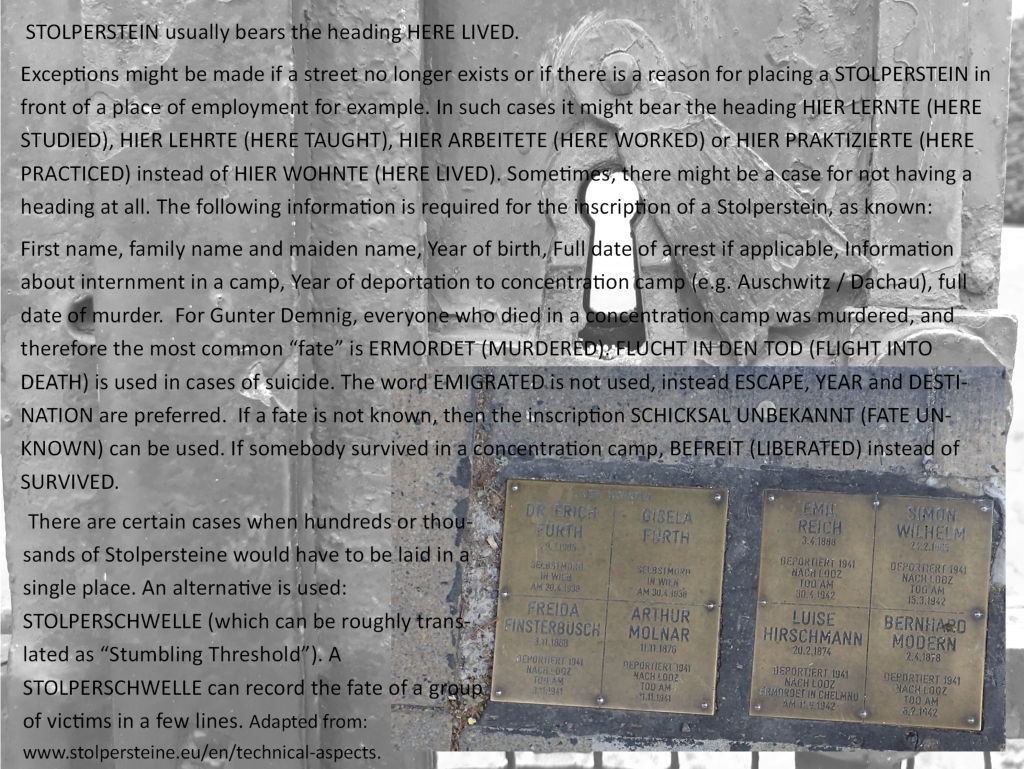
Each of these victims whether they be Jewish, a homosexual, a communist or simply different, had a home to come home to at one point.  So while there are a number of memorials in Vienna for not only the Jews but other victims of the National Socialism, I find the most powerful to be the Stolperstein [2]:

…literally “stumbling stone”, metaphorically a “stumbling block” or a stone to “stumble upon”; plural stolpersteine) is a cobblestone-size (10 by 10 centimetres (3.9 in × 3.9 in)) concrete cube bearing a brass plate inscribed with the name and life dates of victims of Nazi extermination or persecution.

Over 61,000 stolpersteins have been laid in 610 different places with the first installed in 1992.  The stones are laid in front of the last place of residence by choice (as opposed to a residence selected by force) or if necessary the last known work place of the individual. Each stone is made by hand (about 450 per month) which is done in direct contradiction to the industrialized mass murder of the National Socialists.

To install a stone, the project originator Gunter Demnig has provided the following guidelines [3]:

  1. Permission: obtain permission for the local municipality, family members and ideally the current owner of the building.
  2. Inscriptions: each stone will contain one person’s name.  This person may have died in a camp, survived, fled the country or committed suicide.
  3. Appointments: Gunter lays the first stone in each new village – with the exception of Vienna.

Vienna’s Stolpersteine

Within Vienna, a private association Steine der Erinnerung or ‘Stones of Memory’ have laid over 1,000 stolpersteine since 2005.  Inspired by the work of Gunter Demnig, there is not a formal association between the two organizations and in fact Demning has accused the Vienna based organization of plagiarism [4].

Nevertheless, the Vienna organization appears to be mostly honouring the wishes and standards set by the originator of the project. In some ways the association may have gone beyond Demning’s original vision by making it a more community affair rather than focused on the original artist.   As well, the organization also has a searchable database  and maps [5] of the 1,000 stones they have laid.

Walk Abouts and Finding the Stolpersteine

Only when researching this blog did I discover the last two resources, a database and maps [5].  In many ways I am glad that I did not know about these.  Instead I simply walk-about Vienna looking for a Stolpersteine.  To me this was a better way of doing it because finding a stolperstein should be a profound act of ordinariness.  This is beauty of this art project, the banality of the monument that shatters the sense of peace we all love when we walk into our home.

Visit June (24-30) 2018 – A Photo a Day to see the pictures.


June 2018 – A Photo a Day

Based on a promise to ‘Pay Attention‘, this is one of six blogs with the good intention is to publish a photo a day of my six month adventure in Vienna with a caption and thoughts on the image. Note that the publication date and the date when the photos were taken are not the same. Enjoy my (manly) scrap-book for future memories… take that future dementia!  June I plan to have a few themes which will be: recreation in Vienna, a bit of military history and a few bridges (someone wants some bridges for their painting classes).

PS… Be patient and wait for the pictures load.  Also because June is a thematic month, it is best to view the images from the bottom to the top.

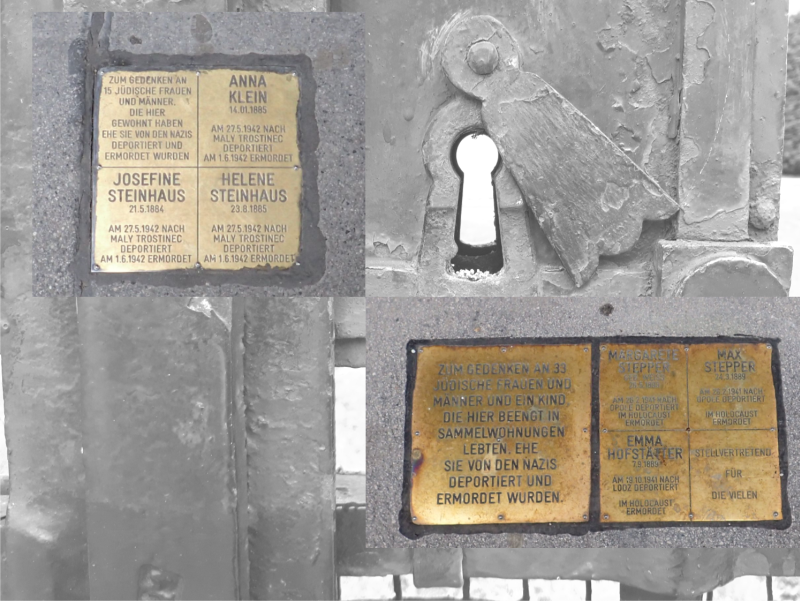
June 24-30: For these days I plan to post photos of either Viennese Stolperstein (my blog on the same topic) or other monuments from the period of occupation by the National Socialists in Austria.  While it is a risk to engage in ‘war pornography’ my intent is to show this period of Viennese history that is still raw and felt to today and to also give the individuals listed on the stone a chance to have their names spoken again.  To this end, was you are reading the names, consider saying the names out loud.

June 30: Anna, Josefine, Helene, Margarete, Max, Emma.

Anna, Josefine, Helene, Margarete, Max, Emma.

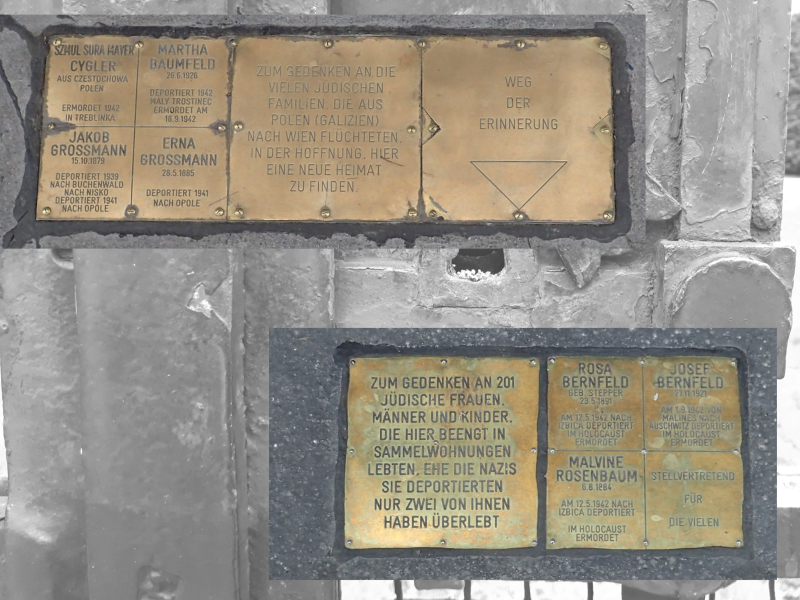
June 29: Szhul, Martha, Jakob, Erna, Rosa, Josef, Malvine.

Szhul, Martha, Jakob, Erna, Rosa, Josef, Malvine.

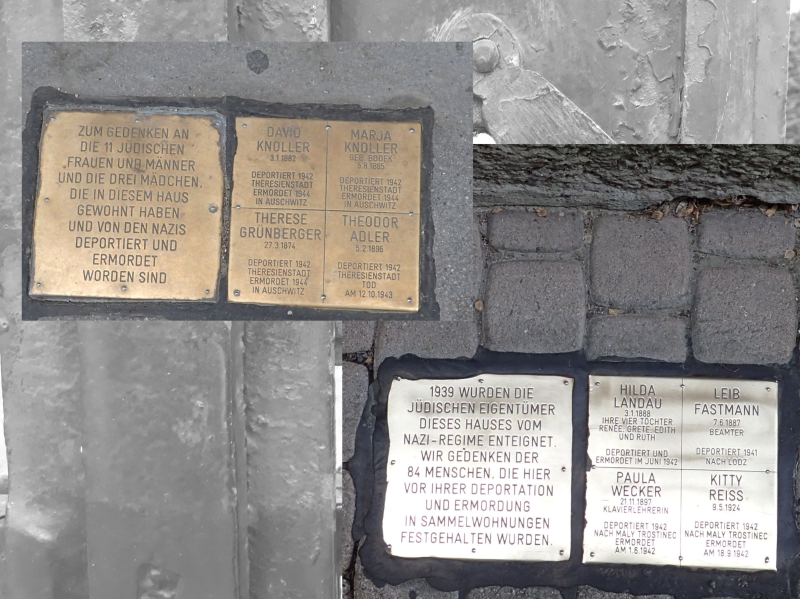
June 28: David, Marja, Therese, Theodor, Hilda, Leib, Paula, Kitty.

David, Marja, Therese, Theodor, Hilda, Leib, Paula, Kitty

June 27:Leopold, Martha, Nute, Aaron, Hersch, Malka, Mirjam, Mordechai, Rosa, Gitta, Sali.

Leopold, Martha, Nute, Aaron, Hersch, Malka, Mirjam, Mordechai, Rosa, Gitta, Sali

June 26: Elsa, Nehnrich, Elise, Dorthea, Gisela, Leo, Bronis, Norma, Leopold, Elga, Berta, Fritz, Wilhelm, Zidda, Johanna, Malvine.

Elsa, Nehnrich, Elise, Dorthea, Gisela, Leo, Bronis, Norma, Leopold, Elga, Berta, Fritz, Wilhelm, Zidda, Johanna, Malvine.

June 25: The standards used to establish a traditional Stoplerstein which appear to be largely used by the Vienna association.

Stolperstein: Erich, Gisela, Freida, Arthur; Emil, Simon, Luise and Bernard.

June 24:Three local monuments or plaques in Vienna.  The bottom left to the Gestapo headquarters and top left a series on a local government building describing the 369 weeks Austria was held under National Socialist occupation.  The Stolperstein are for Erna, Chaje, Gittel.

Erna, Chaje, Gittel

June 23: A chimney sweep off to eternal work against a bright blue Vienna Sky.

Chimney sweep off to work.

June 22: More building murals and public art.  This time a mosaic on the right and a flat sculpture on the left.  If you notice the left photo, two things of note.  Firstly the year of commissioning, 1960, and secondly the green plaque next to the door.  This plaque indicates that the former house that stood here was destroyed and replaced by the current building.

Two different type of art murals in Vienna.

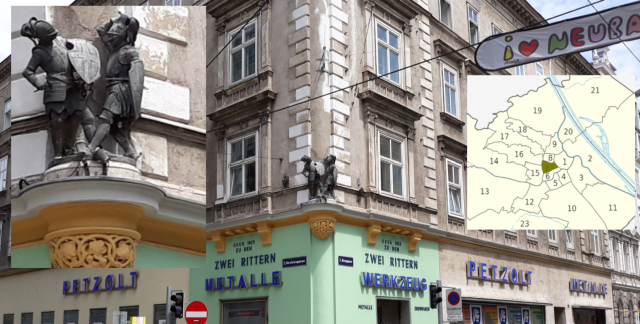
June 21: At the corner of Burggasse and Neubaugasse, two public art knights do eternal battle over a hardware store.

Knights locked in eternal battle over a hardware store.

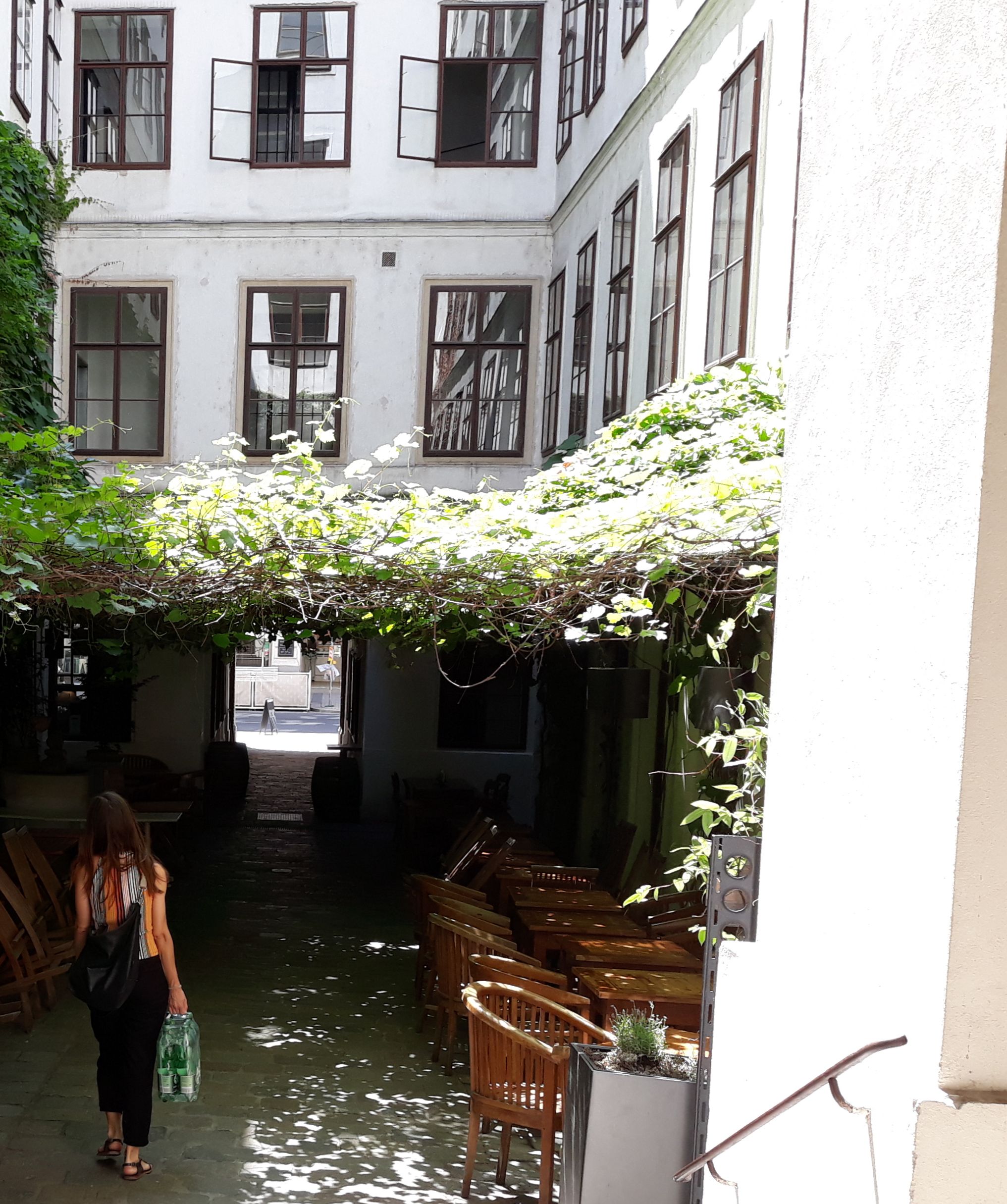
June 20: an inner courtyard near ‘my’ bicycle shop.  The greenery are grape vines and courtyard provides a welcome relief from the summer heat.

An early morning shopper entering the cool of an inner court yard.

June 19: Most street art although this time of a more commercial variety.  Nevertheless I like the shot as there are a few ‘easter-eggs’ to look for in it…

Public art on an office building… with a few Easter eggs.

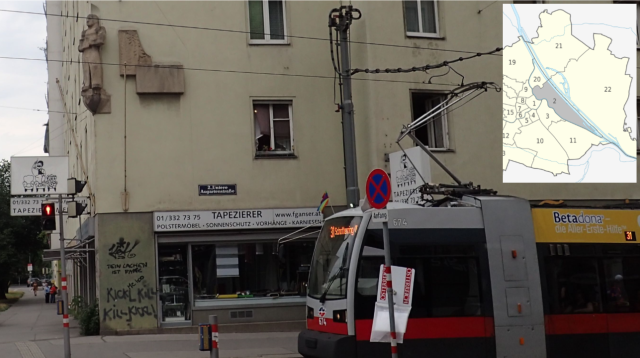
June 18: A great street scene with lots going on.  Firstly the street tram (long since disappeared from most North American cities), a bit of graffitti, an open window for the muggy Vienna day and the mix of commercial and residential in one spot.

Urban Street Scene – Vienna

June 17: What better way to show off my Father’s Day Gift from my son (the Canadian Flag at the back of the bike with the name ‘Frank’) than to do it next to a statute of a 24,000 old female fertility figurine!

Venus of Willendorf

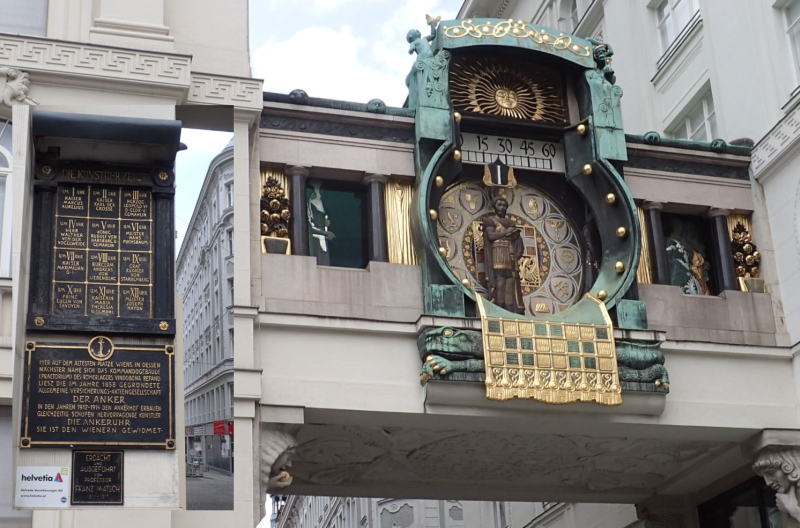
June 16:The Anker Clock in the inner city.  Built as a piece of public art on a passage (aka pedway) between two buildings of the Anker Insurance company in 1912-14.

Anker Clock with the hours it plays listed on a placard below (inset to the left)

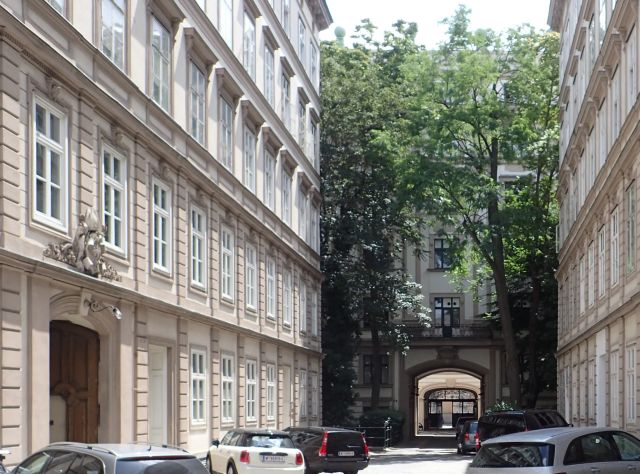
June 15:Looking down through a car park into a central courtyard likely shared by a few buildings.  The advantage is that this creates a cool core for the buildings and an oasis for the tenants so as to leave their hot apartments for a few hours.

A shaded refuge for the 30C summer heat.

June 14: Another cycling journey this time on the Marchfeld Canal.  An agricultural canal that brings water into the plain north and east of Vienna.

Feral Cherry Picking on the Marchfeld Canal

June 13: If you are a cyclist and you find yourself in Austria, the must ride tour is the 40km route from Melk to Krems.  A small glimpse of the excellent services and scenery to expect.

Melk to Krems cycling route.

June 12: Okay, the last one I promise of the Weißenkirchen in der Wachau but this one a bit closer to the nose in question.

The giant a (FPÖ’s) nose.

June 11: Looking North towards Weißenkirchen in der Wachau and the opposite to the picture below.  You can just see the eye in the bottom left side of the picture to the left of the ferry jetty.

Looking North to Weißenkirchen in der Wachau.

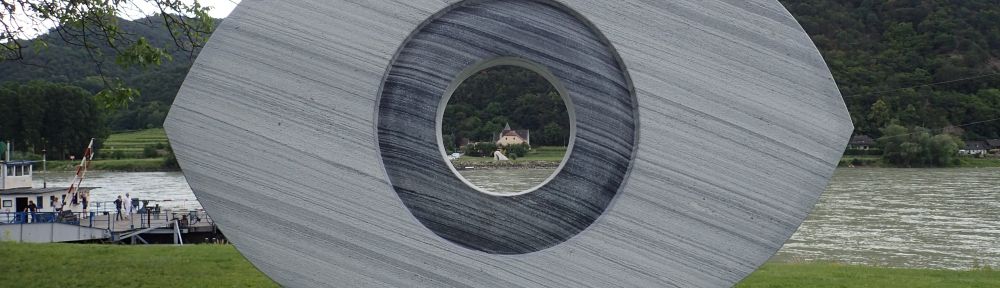
June 10: Look are looking through an piece of art shaped as an eye on the north side of the Danube near Weißenkirchen in der Wachau looking south to a giant (FPÖ’s) Nose on the opposite bank.

An eye on a nose on the opposite bank of the river Danube.

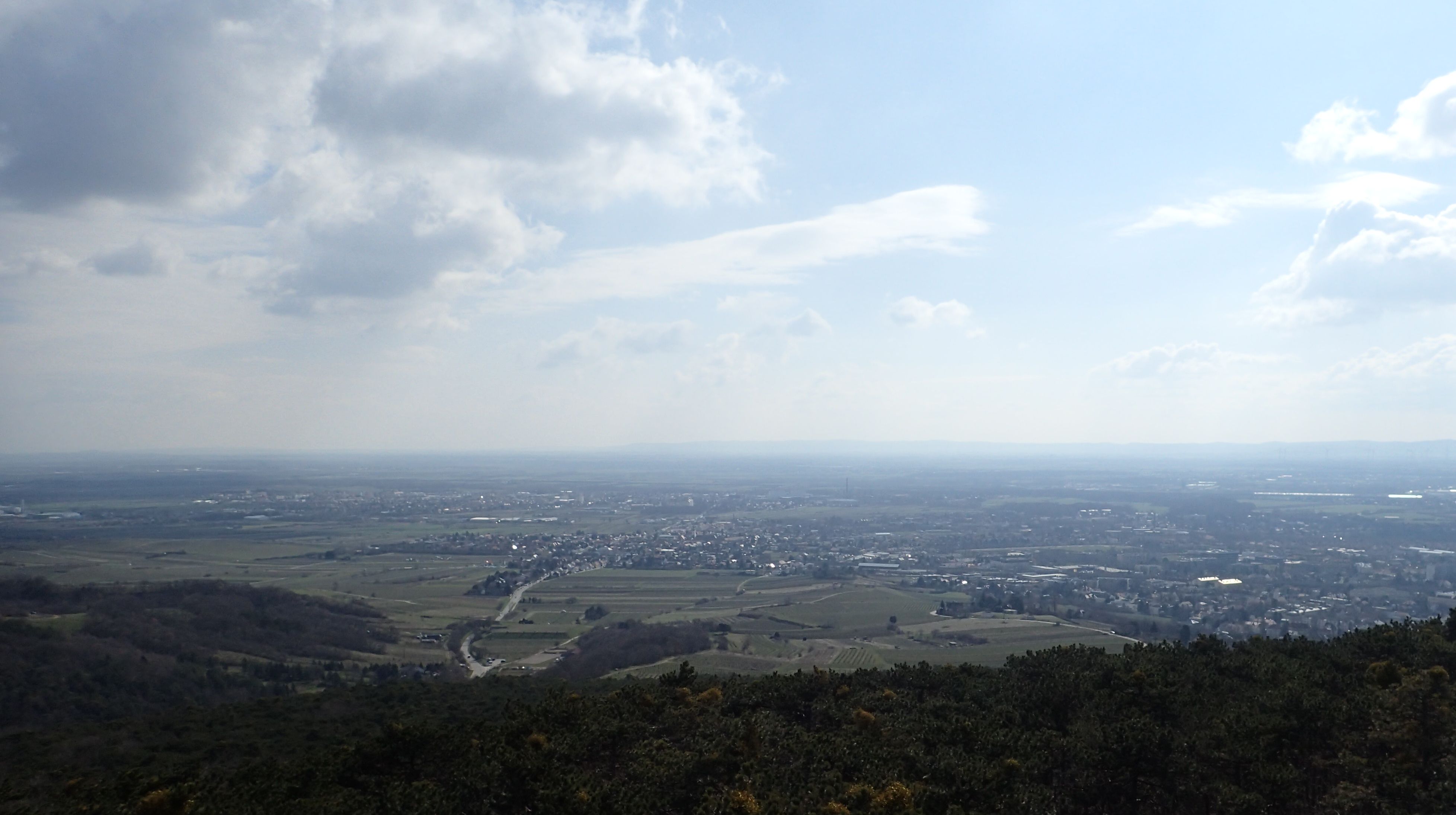
June 9: Think of Austria and your probably think of the Alps, skiing and mountains.  Vienna in this respect is apart from much of the rest of Austria in that it sits on a flat plain carved out from the Danube and past glaciers.  The following photo is taken from the Jubiläumswarte or Harzberg tower. The insert photo is looking approximately NE towards south Vienna and Danube.  For a better perspective, view the tower relative to Vienna and the Danube in Google Earth.

The Danube Valley south of Vienna.

June 8: The Alser Street Station (U-bahn).  Built in 1898 for a steam train system it now services the U-Bahn.

Alser Strasse Station.

June 7: Two vignettes of a quiet moment in the Pötzleinsdorfer Schlosspark.  If you look in the background of the first photo you will see one of the quartet of statues that survived an 1874 fire in the Vienna Ringtheater.

June 6: A wonderful albeit classical piece of building art.  I was trying to discern the nationalities of the horsemen, as they look classical=Greek.  Unfortunately no explanation near the wall art.

Unknown warriors off to battle?

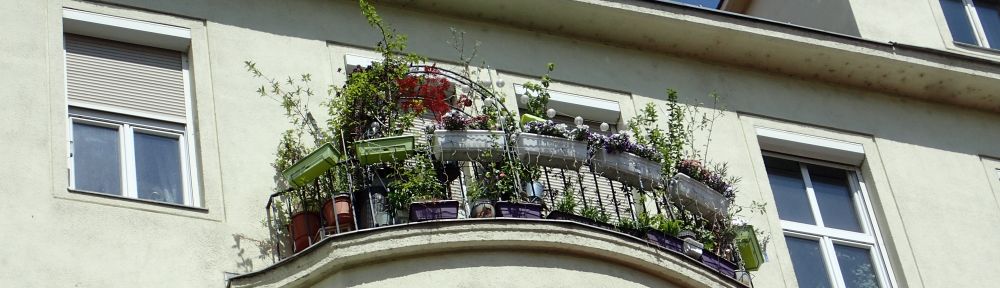
June 5: This was on the top ~6th floor, a small garden oasis taking advantage of a sunny southern exposure.

A sunny balcony oasis.

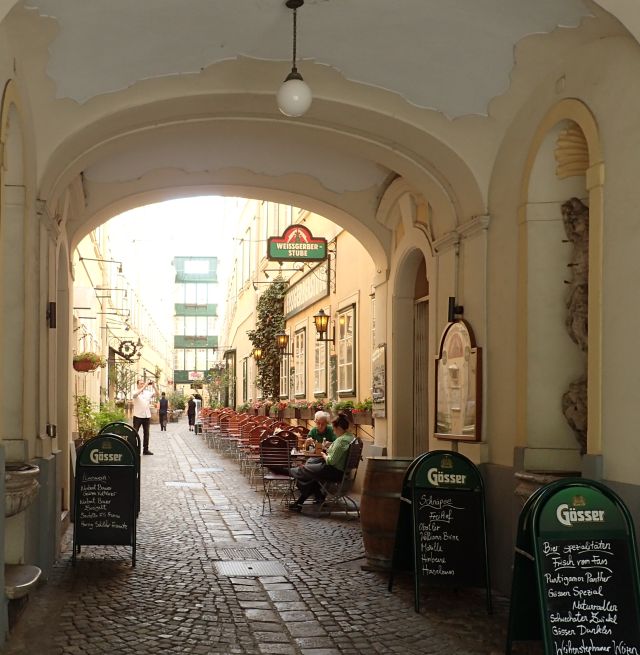
June 4: I admit it, I have a soft spot for secret corridors and inner court yards.  In this one a series of bistros, well light and very secluded and quiet.

Weissgerberber Stube, Sünnhof Landstraßer Hauptstraße 28

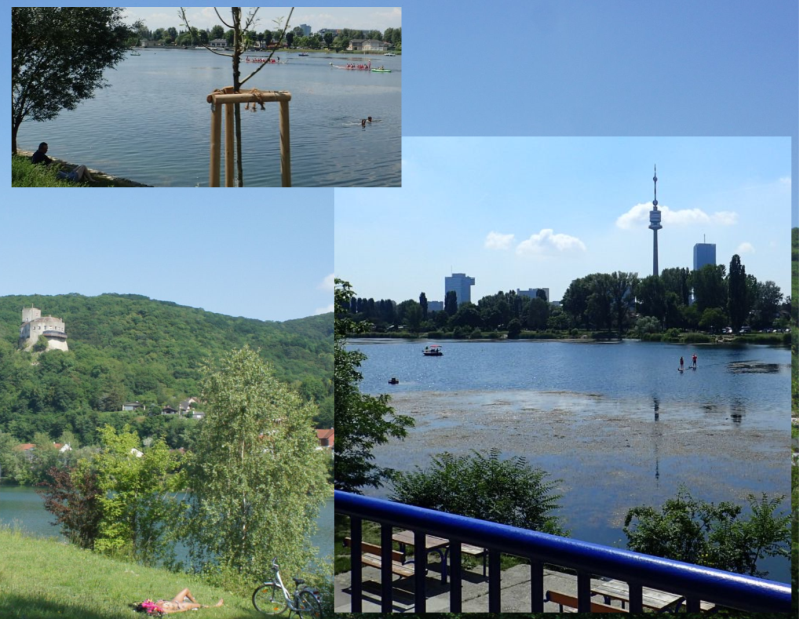
June 3: This is a montage of recreation along the Danube.  The background is taken upstream of Vienna while the two foreground pictures on an old arm of the Danube now residential and used for recreation.  In one picture I managed to get: swimming, cycling, paddle boarding, kayaking, relaxing, sun tanning, and a place for picnic – how is that for value for money!

Recreation on the Danube.

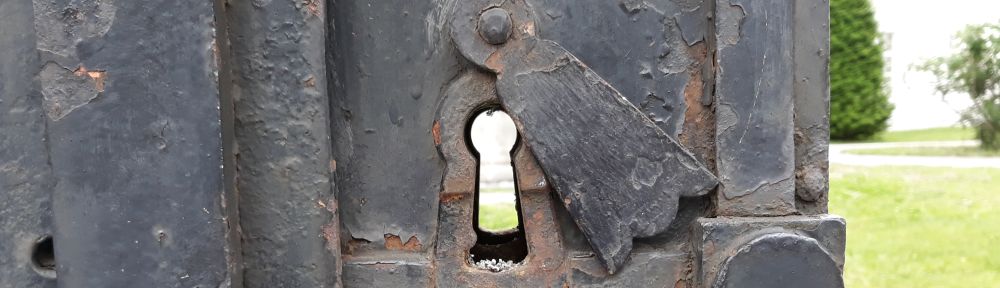
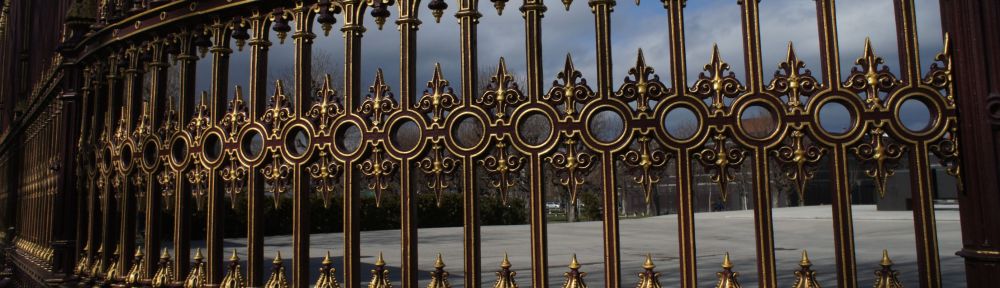
June 2: This is the aged gate in front of the Josephinum; Collections of the Medical University of Vienna.  I will need to go and visit this museum in the fall when I am looking for a place to escape an Austrian winter.  In the meantime, I have enjoyed walking by the neo-classic building and the long since dis-used gates and fence that once protected it.

A long dis-used gate protecting the Josephinum.

June 1: Really, old shoes, is that how you want to start June off?  Actually it is.  The pair on the right I brought to Vienna and figured they would last until I got back home.  The pair on the left I had to buy here.  According to the trusty Fitbit I have put on 1,151,950 steps since mid-March.  In context I target a minimum of 4 million steps per year so in about 1/5 of a year I managed to put on more than 1/4 of the steps.  Not bad.

The first casualty of Vienna… the old shoes on the right.

Vienna – Looking Back – Flak Towers

70+ years is a lifetime, literary, yet it is also the amount of time that has passed since the end of the Second World War.  Nevertheless it is still a prominent feature in our collective consciousness and certainly the war and the subsequent peace (and wars) have created the world we live in now.

This is a photo-blog about one reminder of this event that will probably continue to stand for easily another 70 years, the flak towers in Vienna.

Don’t Peek – Read this First

There are lots of better sources describing the flak towers, their construction and their future.  See below for a partial list of some of these but suffice to say there is not a lot that I can add to this information.  Nevertheless, some details before the pictures:

  • These things are massive and originally there were six of them in addition to others built in Germany.
  • Although each tower was of a different height, the upper platforms were the same heights relative to sea level.
  • The walls are 3 metres thick and the structural density is such that all but the largest WWII bomb would not penetrate the structure.
  • During air raids, tens of THOUSANDS of people would seek shelter in these structures.  Imagine being cheek and jowl with thousands of frightened, sweating and crying women, children, soldiers and a few men crammed into a small apartment block.
  • These structures cannot be demolished due to their strength, density, cost and potential for damage in nearby communities.  As well they have also become protected historical artefacts.
  • While these structures continue to stand the engineers, slave and force labour have long since passed away.  Hopefully for the last two groups in their own bed and many years on rather than at the site while building the tower.
  • So, look at the pictures of an engineering marvel created through human misery while consuming massive material that could have built homes, highways or hospitals instead.

A Jarring Reminder in a Few Images of Time Not that Long Ago

Fire control tower in Augarten Park.

Fence on a defence in Augarten Park

Base looking up at the fire control tower in Augarten.

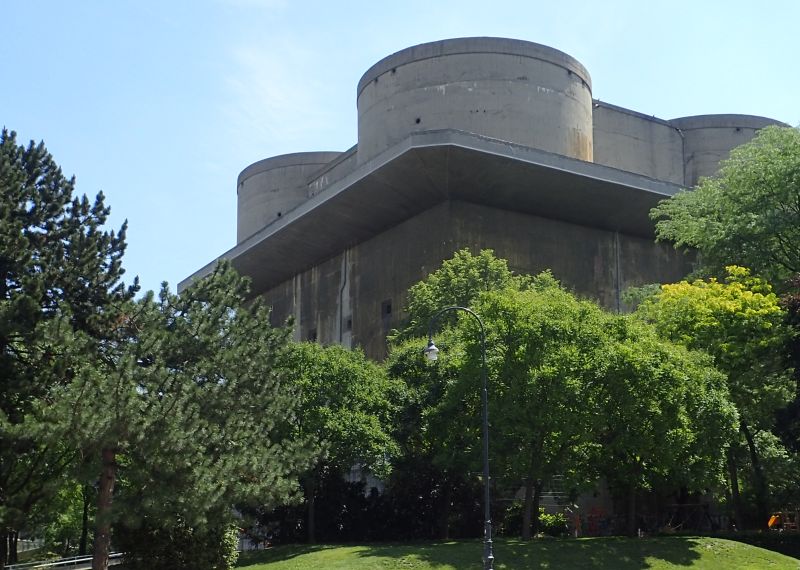
Main Flak tower in Augarten Park.

Main Flak Tower in Augarten.

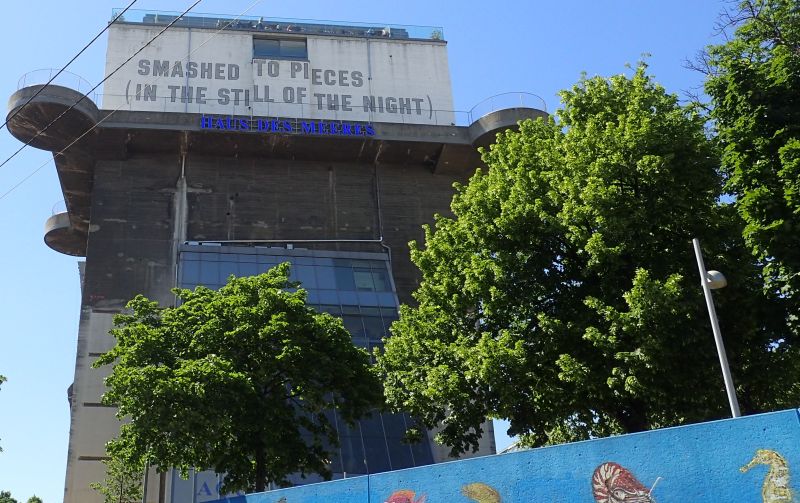
Flak tower 2-L new life in Esterházypark as an aquarium “Haus des Meeres”

Flak tower 2-L new life in Esterházypark as an aquarium “Haus des Meeres”

Augarten show damage as a result of children setting off an ammunition dump left in the tower.

Fire control tower in Arenbergpark.

Main Flak Tower in Arenbergpark.

The base of the fire control tower now makes for a shady and sheltered bike path as part of Arenbergpark.

Links and Further Reading

  1. BBC: Plans for Austria’s Nazi-era towers spark controversy.
  2. Wikipedia: Flak tower.
  3. Atlas Obscura: Flak Tower.
  4. War History Online: 37 images of the massive German Flak Towers: .
  5. Tour My Country-Austria: Flak-Towers; NAZI Concrete Heritage at Vienna’s Heart.
  6. Wien-Vienna.comFlak towers / Vienna anti-aircraft towers.
  7. War Documentary: Luftwaffe Flak Towers in Vienna.
  8. New Statesman: Secret history.
  9. Dark Tourism: AUGARTEN FLAKTOWERS.
  10. Interior Photos (in German): Fotos aus dem Inneren eines Wiener Flakturms.
  11. Vienna Review:

https://www.viennareview.net/on-the-town/city-life/stones-of-vienna/monstrous-monuments-viennas-giant-flakturme

https://www.viennareview.net/news/special-report/towers-of-burden

Consensus Challenges

Consensus is hard work and fraught with perils.  However if you do want to improve your organization’s decision making considering visiting these excellent resources noted below. In the end, consensus is worthwhile. It forces families, housing cooperatives or nations to talk; peace, security and cooperation is always the preferred option.

Further Reading and Sources

  • [1]. A Consensus Handbook Cooperative decision-making for activists, coops and communities. Accessed 2018-04-27: www.seedsforchange.org.uk.
  • [2]. Introduction to Consensus, Beatrice Briggs, 1997.

May 2018 – A Photo a Day

Based on a promise to ‘Pay Attention‘, this is one of six blogs with the good intention is to publish a photo a day of my six month adventure in Vienna with a caption and thoughts on the image. Note that the publication date and the date when the photos were taken are not the same. Enjoy my (manly) scrap-book for future memories… take that future dementia!

PS… Be patient and wait for the pictures load.  Also because May is a thematic month, it is best to view the images from the bottom to the top.

May 31: The last photo for May and, well small town fire halls share a similar familiarity even if they all come in different shapes and sizes.  See you next month whilst I ‘Pay Attention’.

Small Town fire hall – Zeiselmauer.

May 30: Some more public art.  The one on the left is from a bakery near my apartment, the bishop looming over tenants and passersby on an apartment building the abstract art covers a metro ventilation grill near one of the train stations.

Private and public art examples.

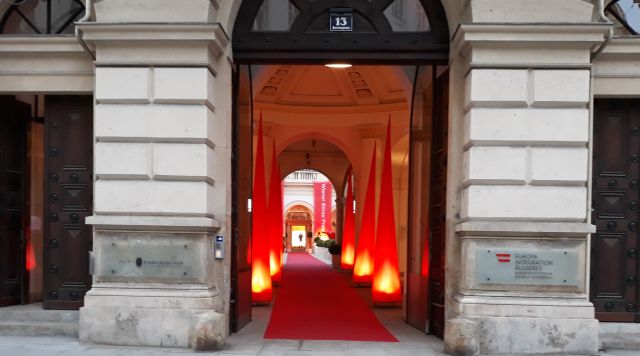
May 29: Behind closed doors on the street is often a passage leading to a central courtyard.  These courtyards could contain nothing more than an over grown garden or car park.  Sometimes though they contain beer gardens, a well maintained garden refuge from the summer heat or even a red carpet to a business display…

Business conference off Herren street

May 28: there are some very nice artisans in Vienna.  A few have made their appearances previous photos per day but today a twist with the Viennese coffee culture.

Coffee rings and ear rings.


May 27: A few more views of the Spittelau plant.  On clear days it is an icon visible from most parts of the city.

Three different perspectives on a burning bit of art work.

May 26: What better place to have public art than an… incinerator, yeah!  The festooned Spittelau waste incineration plant produces enough power for 60,000 homes by buring the trash from Vienna.

120,000 MWh of ART

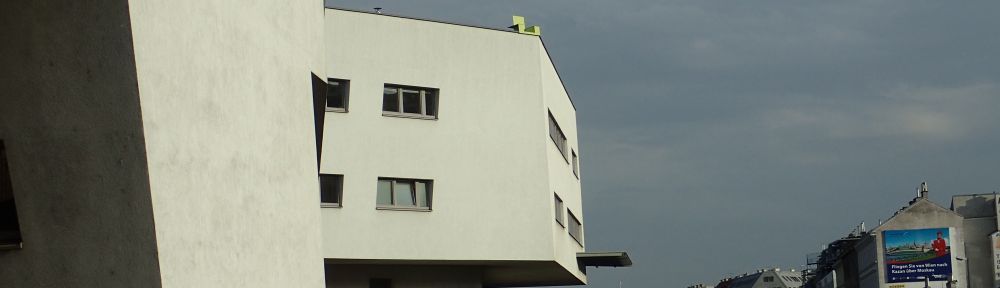
May 25: Perhaps the best view in the city?  Note the angular buildings set juxtapose to the more traditional buildings.

Best Seat in the house…

May 24: A very cool and practical application of bike-technology for a crowded city – a pedal powered UPS delivery vehicle.  I did not see an electric assist so looks like this fellow is getting a good daily work out.  Not so pleasant in the rain I suspect however.

Pedal Powered UPS

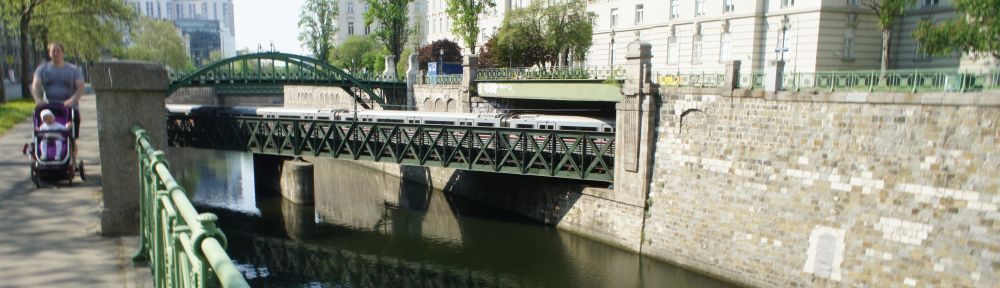
May 23: Design of course extends well beyond an intended work of art.  I have always admired this bridge over the Vienna river for its combination of functionality yet elegance.  For those who have been to Edmonton, a bit like the High Level Bridge, industrial beauty.

U-Bahn bridge over the Wien fluss.

May 22: Normally I am intrigued by the more gritty examples of public art, a slightly grimy mosaic for instance.  This set of statutes on top of the post office is a perfect example of well crafted sculptures looking down from you in all corners of Vienna.

Watch art from atop the post office.

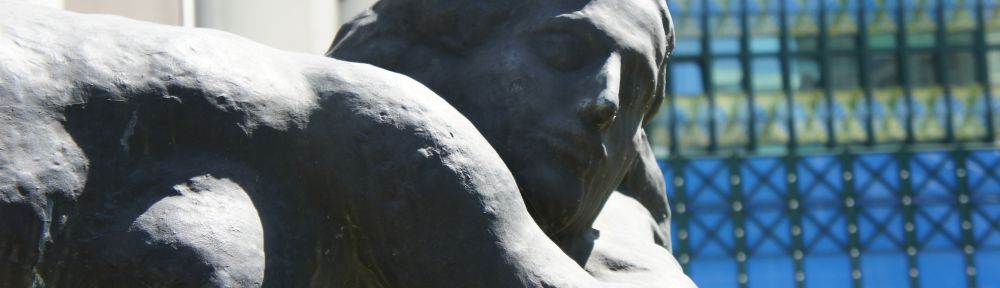
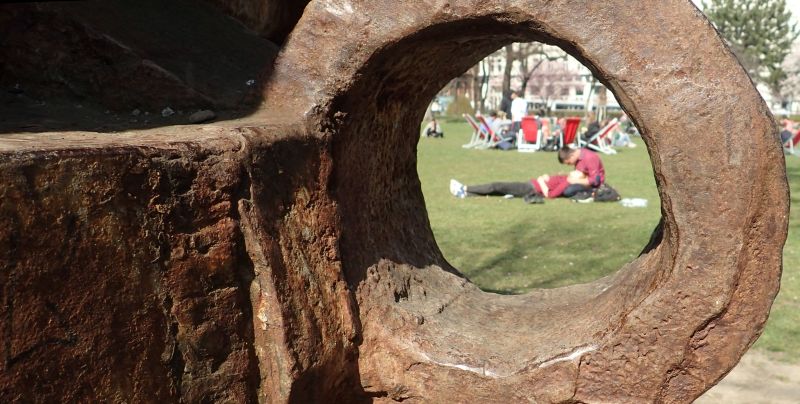
May 21: A glimpse of an intimate moment in the Sigmund-Freud-Park through a detail of an iron sculpture… and no, there is no deeper meaning to the photo, sometimes a sculpture is just a sculpture.

An intimate moment glimpse through public art.

May 20: Public Art in Vienna comes a number of forms, including the whimsical.

Seeing pink bunnies in the Inner City…

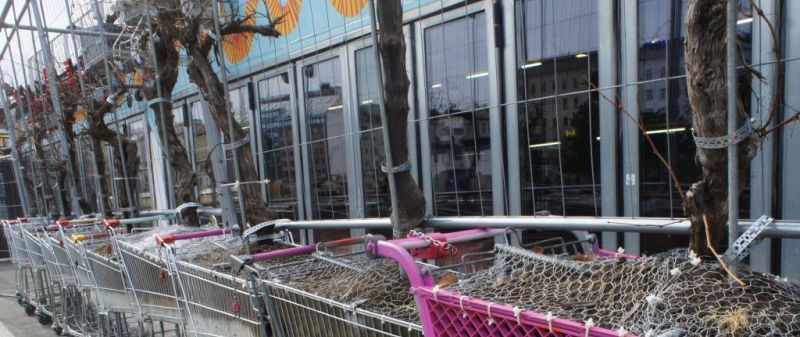
May 19: Grape vines grown in a shopping cart.  I have not gone back to look but I would think they are now in full bloom.

Mobile Grape Vines

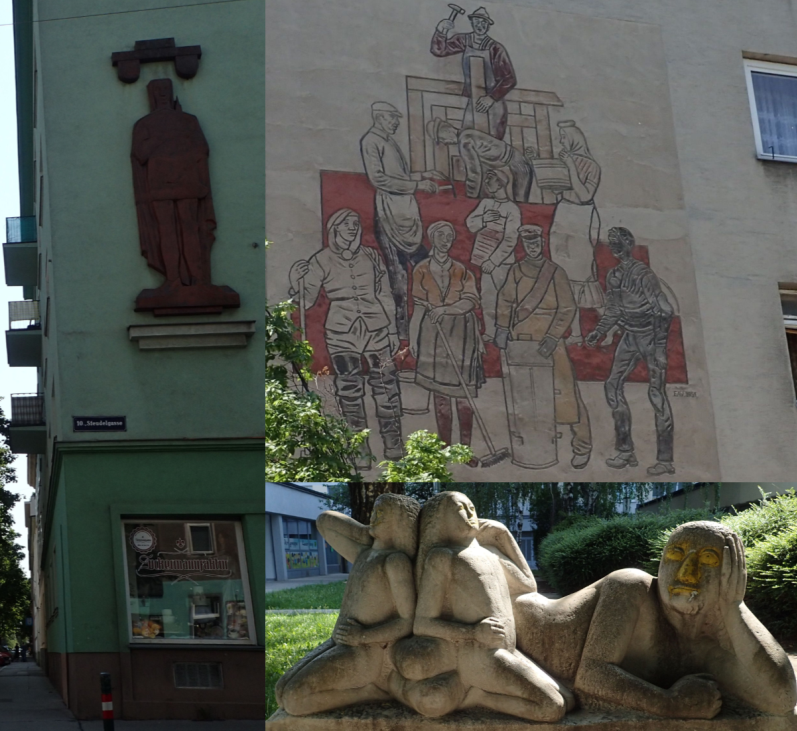
May 18: A return to the public art theme, two building murals (left and top right) and a sculpture near a kindergarten. I can’t decide if the yellow paint vandalism adds tor takes away from the piece.

Two murals and one sculpture

May 17: Another quintessence Vienna vista.  Not the succession of big buildings but the listing of the date of construction on the social housing on this building.  In this case, this one was built between 1932-33.

Vienna Vista of Buildings

May 16: More public art found on public buildings, this time south Vienna.

Examples of public art found on buildings in Vienna.

May 15: I saw this scene whilst riding this past weekend.  Vienna is not far on all sides from small hold farms and bucolic vistas.  This was two women cross the Schwechat River with a little boy and girl.  To get across one woman lead a pony while one of kids rode on the pony.  A beautiful warm day and wonderful moment for two little ones to play near the water and I imagine for one of the women (a friend, aunt, grandmother?) to share a love of animals and a bit of nature.

Crossing the Schwechat on a pony.

May 14: I am always on the look for things like public art and vistas in Vienna.  This slice is a very typical impression of the city.  Left to right, notice the facade on the building, a bit of greenery from the apartment owner, the modern non-descript brown building, the graceful older building with likely an addition put on after its construction and finally the greenery.

A cross section of Vienna.

May 13: Alas not all pictures are happy and this is one in which I say adieu (of sorts) to my much beloved Dahon-Mu, my folding bike.  Alas it turns out that the tolerances on things like the frame hinge are beyond the safety range for a person of my impressive characteristics (plain english, I am too large for the bike to safely handle me).  I managed to rent a bike from the good folks at www.citybiker.at.

Good bye Dahon-Mu, our brief time together was a lot of fun.

May 12: An introduction to the murals found on many public buildings and in particular social housing complexes. The image in the bottom right is an example of brutalist architecture on the Vienna River, note the hole made to accommodate the tree.

Public Art Murals and a bit of brutalism.

May 11: A break from local public art… a good old prairie evening thunderstorm a few days ago complete with hail, driving wind, lightening and a torrential downpour.  Could have been worse I guess, I could have been this carriage driver trying to get back to the stables. Across the street is the University of Vienna.

A prairie’esque evening thunderstorm.

May 10: Art is functional as well, off the Danube Canal.

Note the mosaic under the portal.

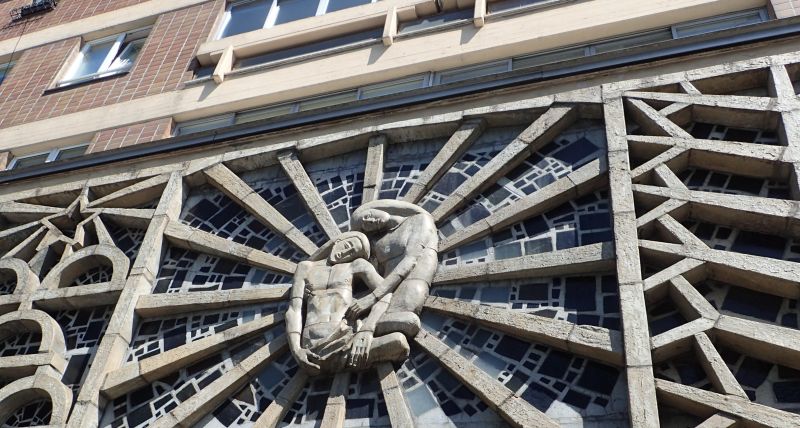
May 9: Art is not limited to free-standing statues, on much of the public housing (IN which many Viennese live) murals are common.  The first of many such images this one an intricate cement mosaic.

Intricate cement mosaic above an apartment buildings entrance.

May 8: Continuing with the theme of public art, the Virgin Mary on a bridge over Danube Canal.

Virgin Mary Statute

May 7: For the remainder of the month of May, a focus on the public art on display within Vienna.  Much of it on social housing and others part of government building installations.

Bronze statute of reclining woman with the Ministry of innovation in the background.

May 6: The last of the labour day series, a farmer and a local chatting south of Vienna near the farmer’s vineyards.

Farmer south of Vienna

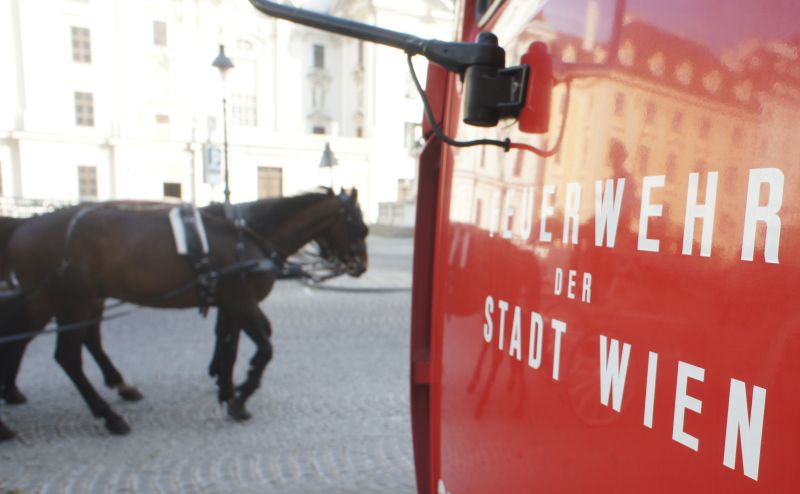
May 5 (cinco de mayo): Two for one deal, firetrucks in the inner city of Vienna.

Detail of an inner-city fire station

One of the numerous touristic carriages against a ladder truck.

May 4 (be with you): More labour day themes!

Used horseshoes for sale!

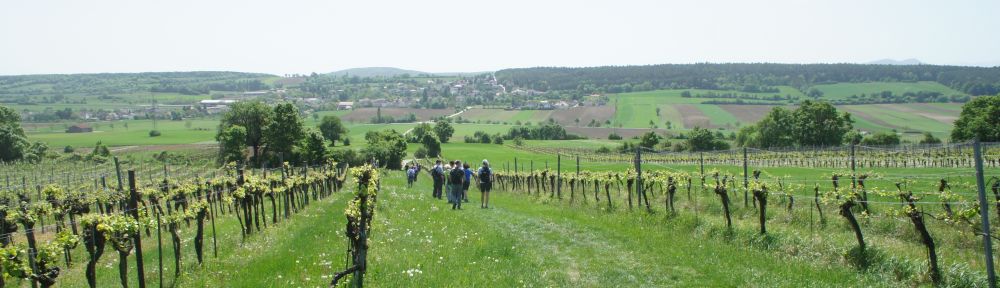
May 3: Continuing on a labour-day theme, a vineyard south of Vienna in early foliage.

Vineyard with early leaves.

May 2: Continuing on a workers theme, one of the most famous statues in Vienna of  Johann Strauß II.

Monument to Johann Strauss II


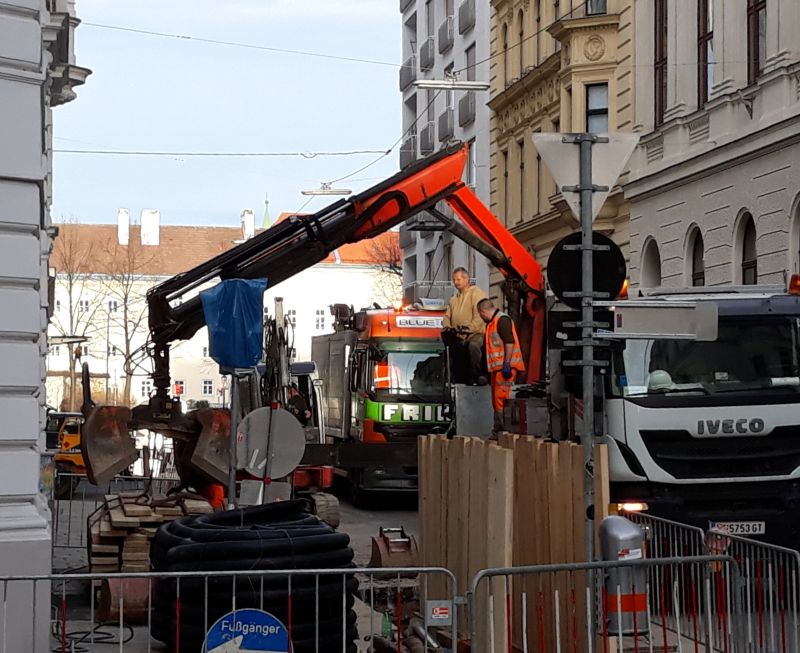
May 1, 2018: In honour of international labour day, a few pictures of work in Austria (and thereabouts).  The first in honour of my oldest brother and nephews, digging holes in Vienna.

Replacing water mains near my apartment.

April 2018 – A Photo a Day

Based on a promise to ‘Pay Attention‘, this is one of six blogs with the good intention is to publish a photo a day of my six month adventure in Vienna with a caption and thoughts on the image. Note that the publication date and the date when the photos were taken are not the same. Enjoy my (manly) scrap-book for future memories… take that future dementia!

PS… Be patient and wait for the pictures load…

April 30: The last photo of the first full month in Vienna of six months.

Hiking through the vineyards near Bad Vöslau

April 29: More on the theme of nailing into wood. This tree (behind the glass and named Stock im Eisen) is believed to be from the 15th century with numerous legends of its pedigree (including being the last tree of a sacred grove).  Now a seldom notice albeit prominant feature in Stephensplatz.

Stock im Eisen, Stephensplatz

April 28: Wehrmann in Eisen; I came across this unusual sculpture walking home last night.  Underneath about 500,000 nails is an original wooden sculpture create in 1915 in support of the war effort.  The first nails were pounded by the German and Turkish ambassadors, Austria’s allies in that conflict a century ago.  Taken with my phone, I may need to go back and try for a better shot with a better camera.

Wehrmann in Eisen, Vienna

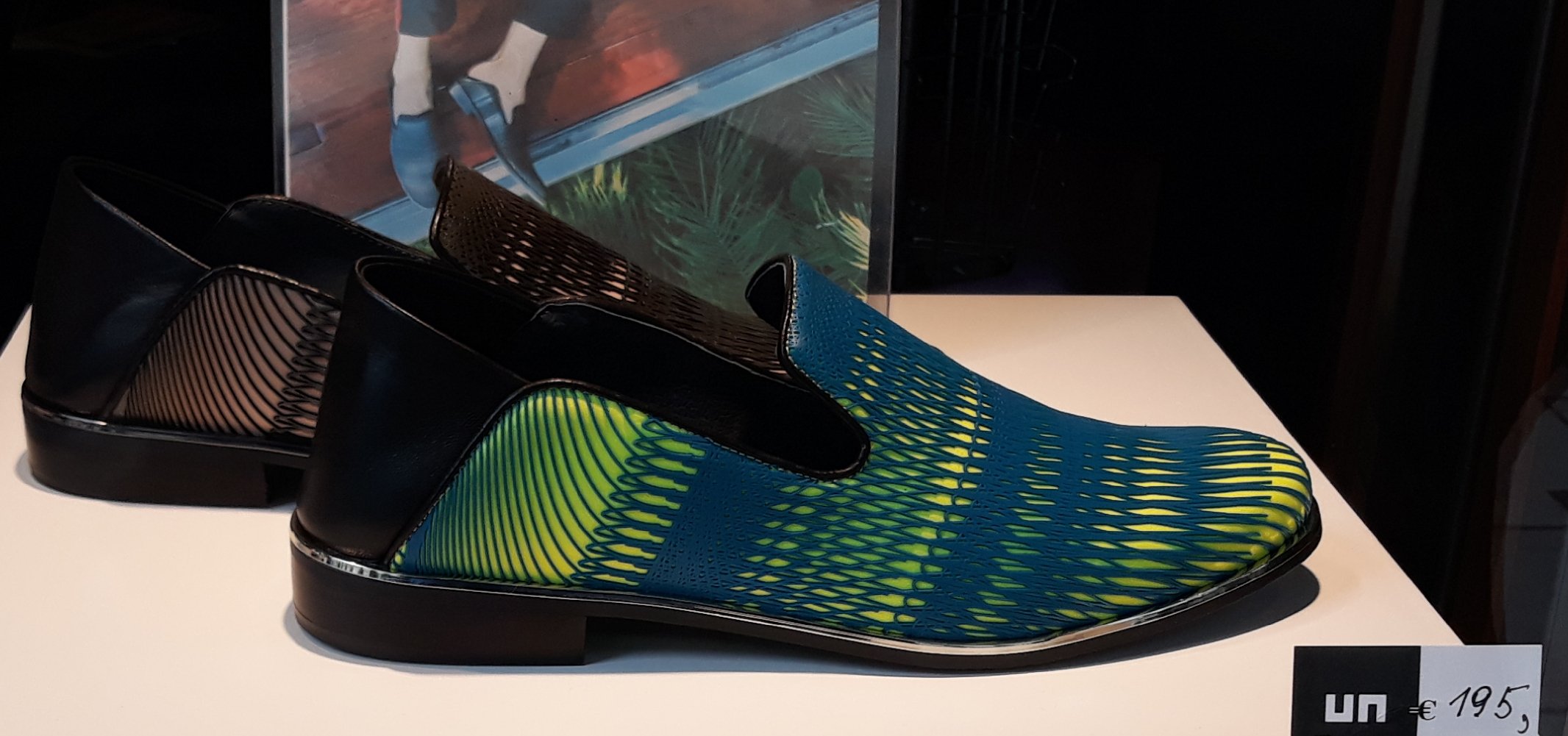
April 27: I have found the perfect pair of conservative accountant’esque shoes.  Near my office which is also home to some fabulously expensive shops selling things the rich do not really need but covet for that exact reason.

April 26: A quiet moment on the inner-city’s ring road.  Of course the reason there is a nice ring road is that it is where the city walls used to stand until a few hundred years ago.

A quiet moment on the ring road

April 25: Vienna is surrounded by woods and working farmland.  To this end, Vienna produces its own wine on the slopes both within and visible from the city centre.  This is looking east toward the Danube and across one of these vineyards.

North Vienna looking across vineyards east to the Danube.

April 24: these two gents retrieve junk from the Danube canal.  They either sell the scrap or they offer tourists a chance to throw the lanyard weighted with a magnet into the canal.  Donations are encouraged.  Note their faces were obscured upon request.

Fishing for metal in the Danube.

April 23: take a break cycling on the Danube north of Vienna.  A couple also enjoying a sunny and bright moment.

The Danube, north of Vienna

April 22: Did you ever have one of those days.  What started out as a brilliant plan to photograph 8 ‘scholosses’ in 8 hours was set asunder by the massive Vienna marathon and bike malfunction.

The fun category of runners turning west by the Opera.

April 21: Unfortunately the video did not turn out.  What is missing from this picture is the cacophony of sound.  Dozens of vegetable sellers singing/yelling about their wares.  You would be forgiven if you thought you were in Istanbul rather than Vienna.

Bauernmarkt Lebinizgasse

April 20: last weekend a huge bike event was in Vienna.  In addition to going around in circles there were also BMX jumps and dozens of displays and vendors.  A cyclist’s Nirvana.

April 17, 18 and 19

The Danube Island

Looking south on the Danube and end of the Danube island.

A cyclist rides past the stadium bridge with a back drop of spring leaves

April 16

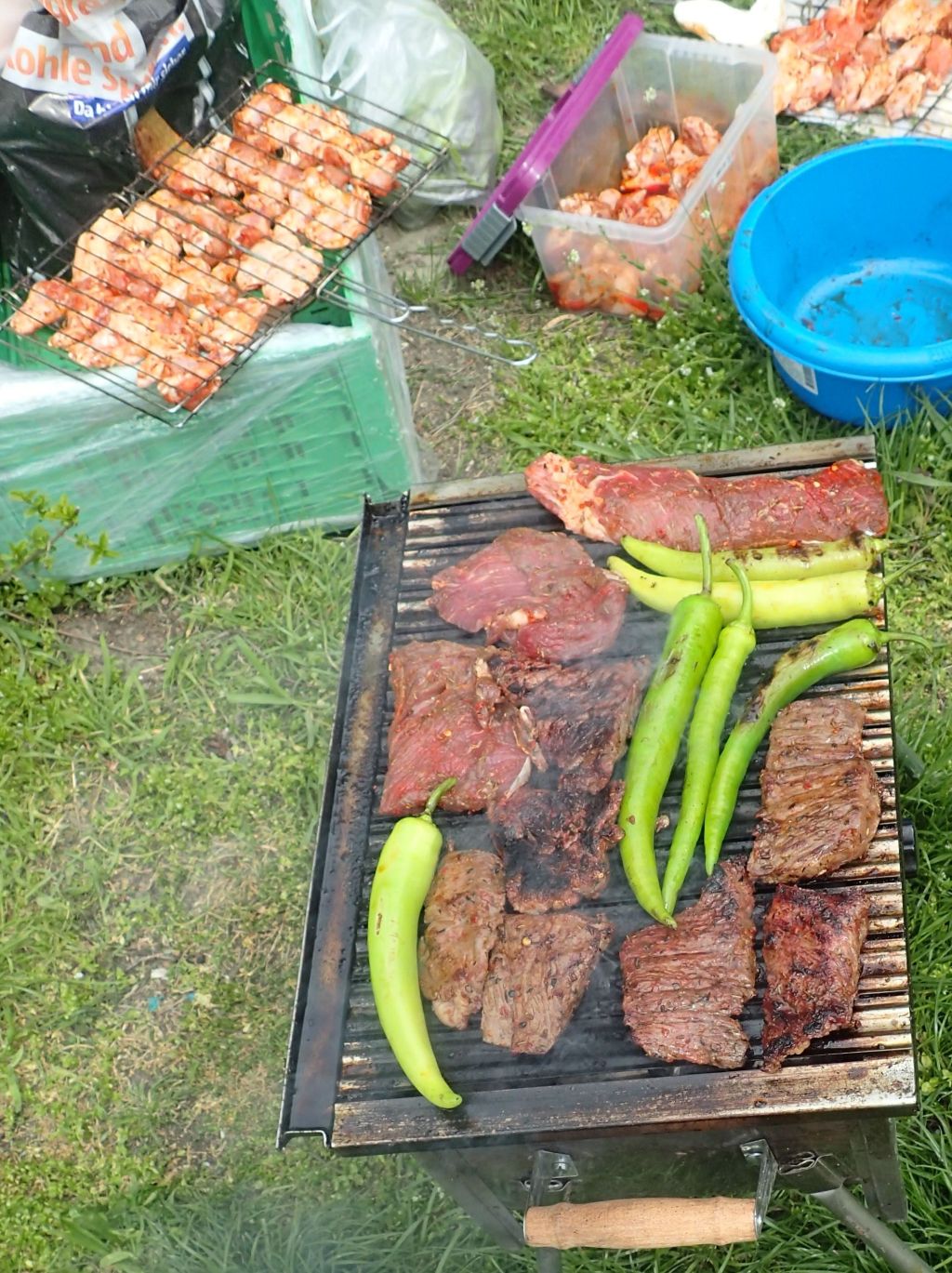
The fellow in the reflective vest has responsibility to assign grill spots.

Just one of hundreds of grills along the Danube on a Sunday afternoon. The vast majoring being ‘turkish’ the smells, families and kibitzing was wonderful.

April 8-15

Canada lost 16 active people in horrific traffic accident in Saskatchewan late on April 6. As a form of remembrance (the whole point of this blog series), the next photos are simply of beauty. Enjoy and hug your kids/parents today if you have them close by.

April 7

Sometimes the seemingly easiest things are the hardest. Take finding a shower squeegee. 10 stores later I finally found the last one in all of Vienna (only a slight exaggeration).

April 6

April Budding in the bushes noted en route to work.

April 5

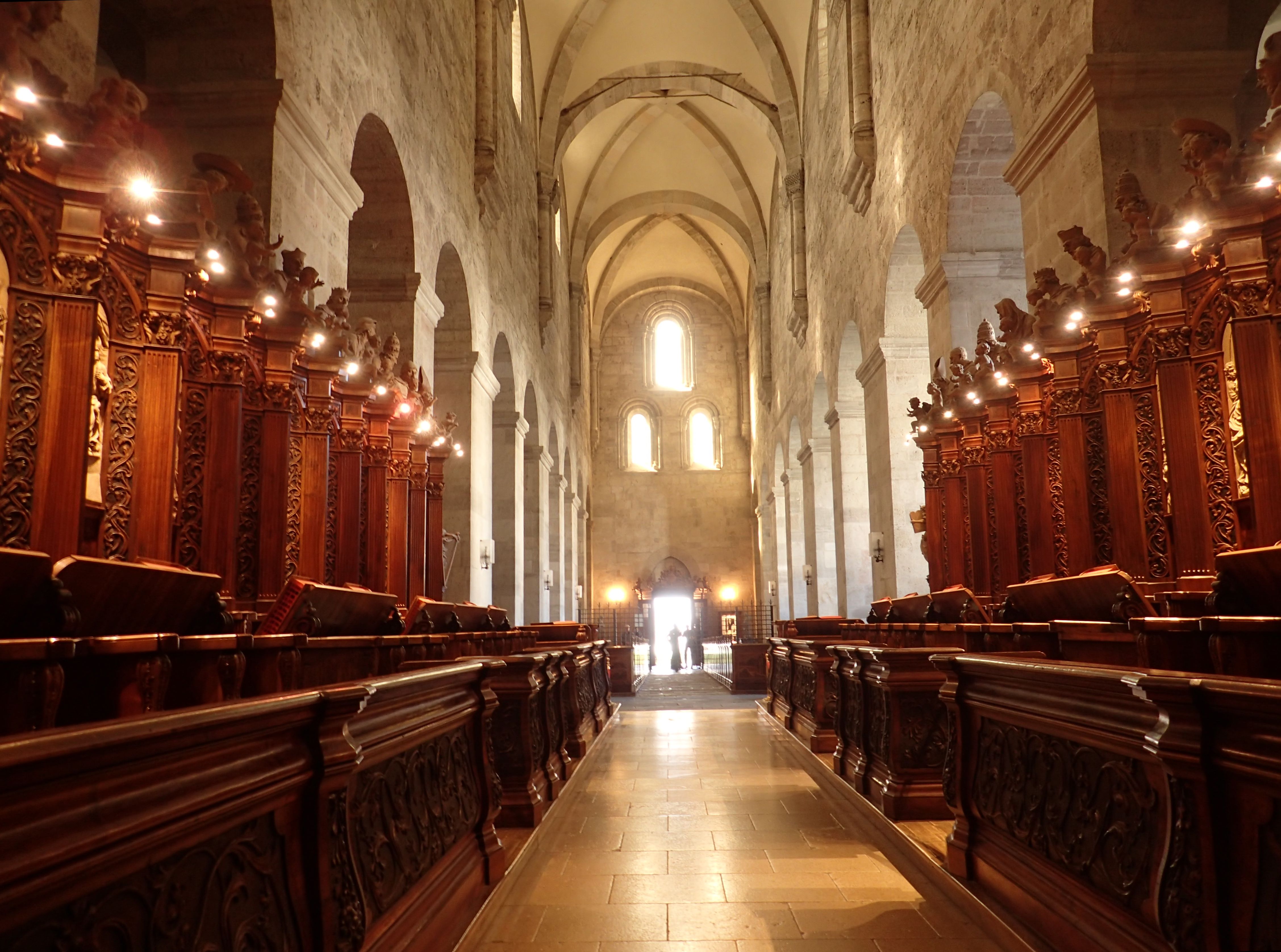
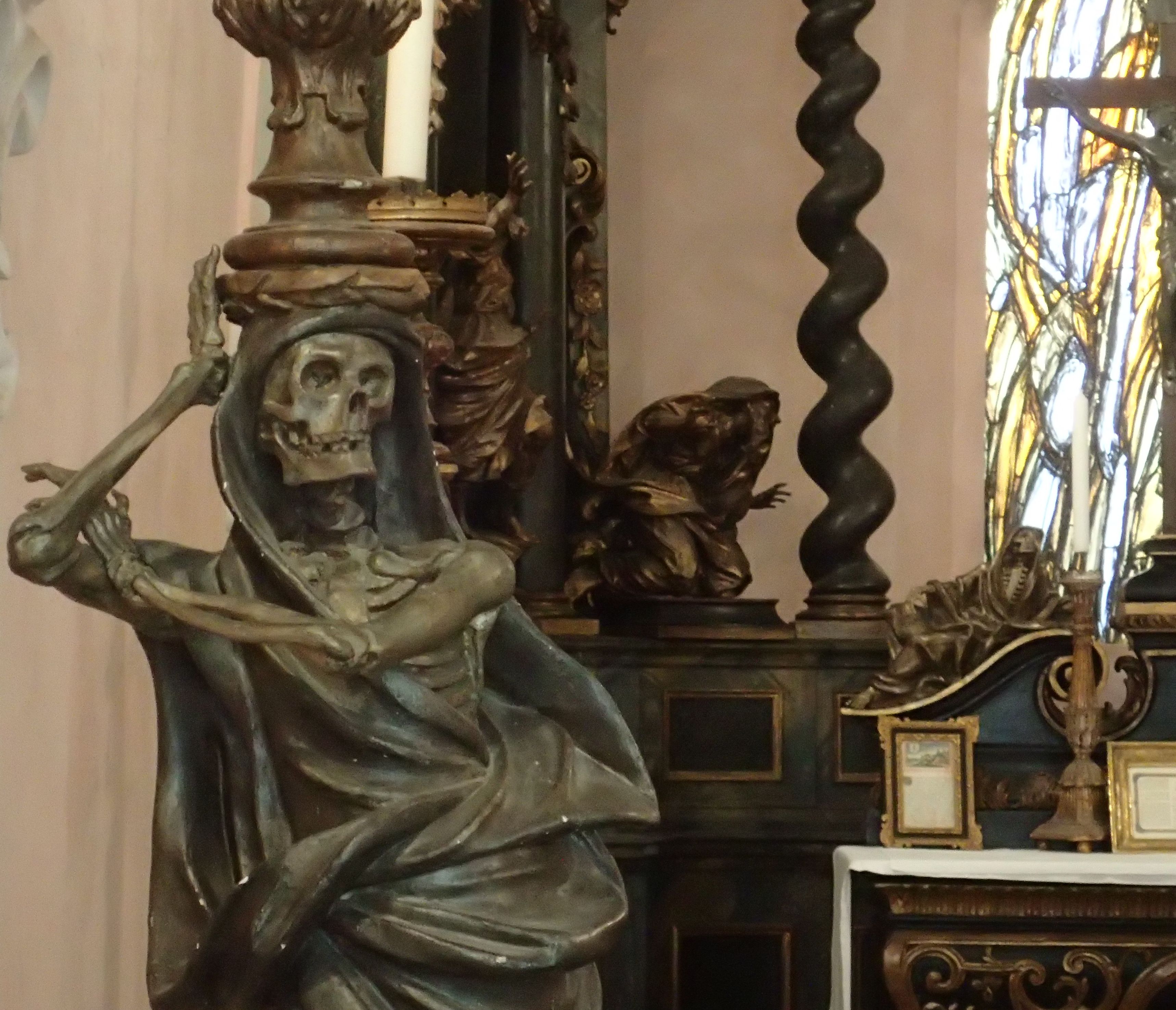
Candle stick holder in one of the chapels of the Heiligenkreuz Monastery

April 4

One of at least 3 grocery stores within easy walking distance from my apartment.

April 3

There is a lot going on in this photo. Firstly my trusty folding bike (thanks Rhonda!) on the Danube River with a barge sailing just out of left side of the picture. It is going under a major roadway containing automobile, metro and pedestrian traffic. In the background you can see the Vienna international centre as well as the office buildings springing up around this complex .

April 2 – Shopping on an Easter Sunday

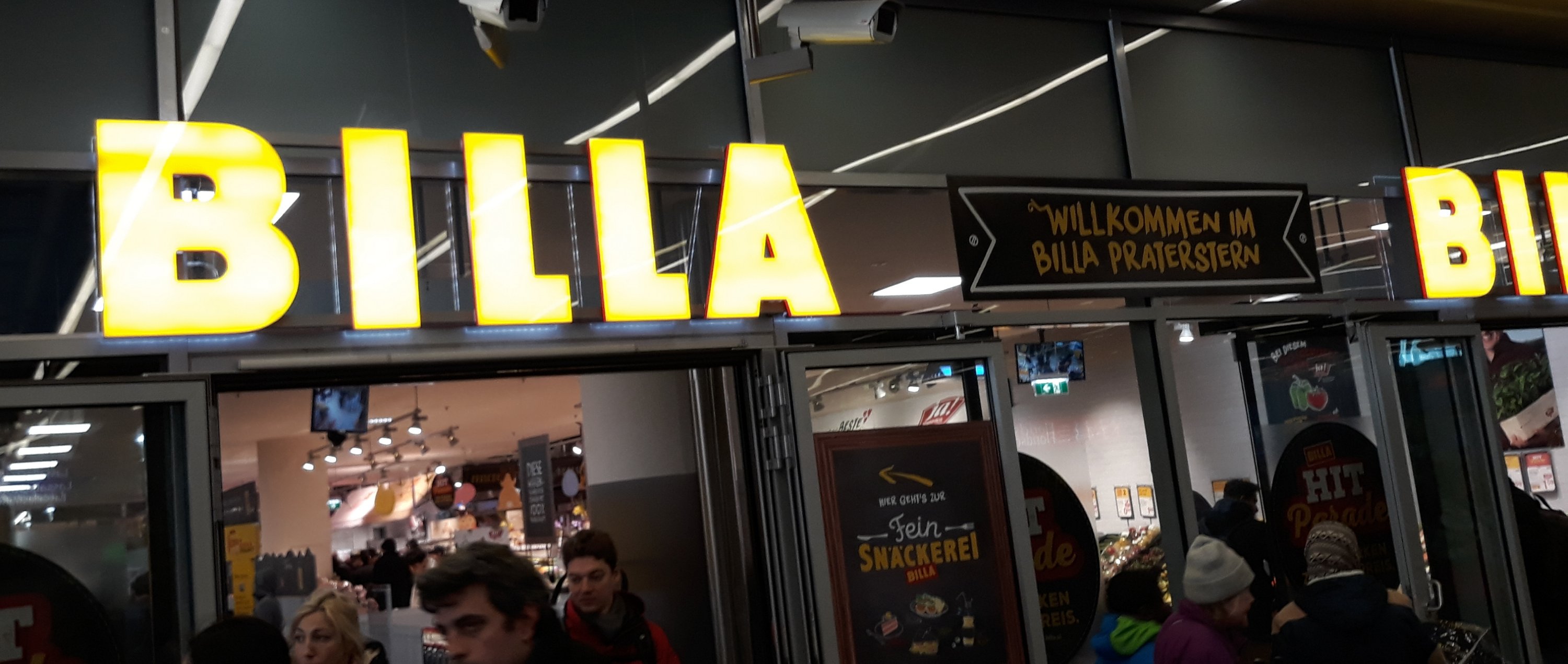
Walking into the Billa shown below in the Praterstern train station you could be forgiven thinking that a major story was looming for Vienna. Every isle is full of people and there is a frantic sense. Instead, this shop is simply one of the few that is open on Sundays. As a result, it draws people from all over Vienna for forgotten items or even a weekly shop.

One of the few grocery stores open on a Sunday in Vienna. This one is found in the Praterstern train station.

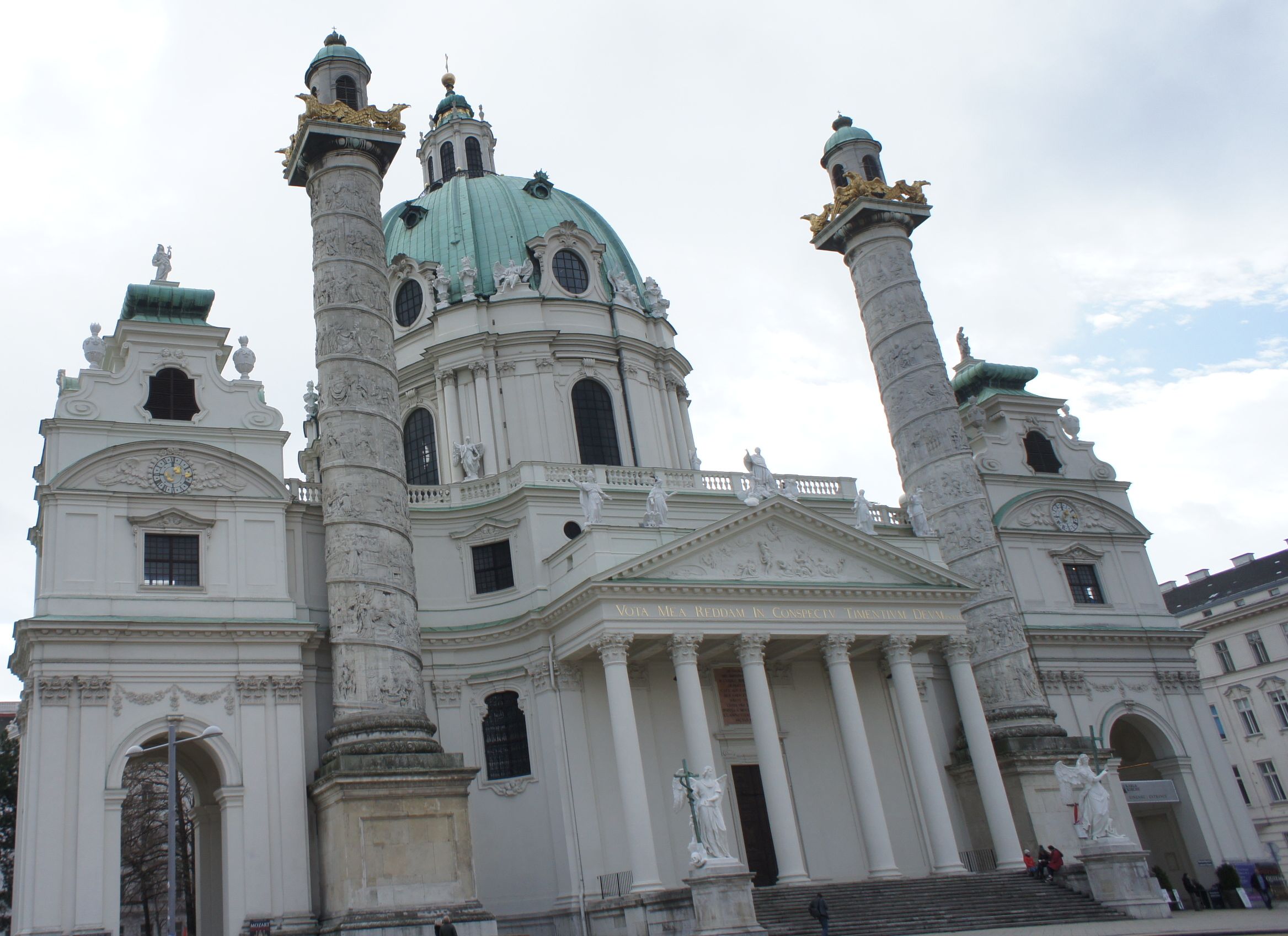
April 1 – Karlskirche

Karlskirche – the Centre piece of Karls Platz.

Vienna – A City of Water?

Viennese are (justifiably) proud of their drinking water; what comes out of their tap can go against most bottle water. Amazingly, it arrives via two separate gravity-fed pipelines.  Pumping stations are not necessary as there is a gentle incline from the source all the way to south-west Vienna.

The two water pipelines supplying Vienna, source Vienna Water works.

Water, Water Every Where… but not a drop to drink (because of E. Coli)

Vienna goes back to Roman times as the Danube was more or less the frontier between the civilized Roman World to the south and the unwashed masses to the north. Vienna was a glimmer in a Roman’s eye until they all high-tailed it south when the empire came crashing down about 4 AD.  Over the next 1,600’ish years it went from an abandoned army encampment to a metropolis of nearly 2 million.

All cities are constrained by environmental factors including access to drinking water.  Vienna is on two rivers, the large Danube and the smaller Wien.  The problem is the former has already travelled nearly 1,000 km by the time it reaches the city and cannot be consumed straight.  The other comes from the Vienna Woods but is not a reliable source of water because of its small watershed.  As a result, wells were the primary source of water but were subject to contamination due to poor sewage handling.

The 19th century

The 1800’s was an engineering epoch and the problem of water was solved, in fits and starts, by engineers.  The first water pipe was built at the start of that century but quickly was overwhelmed by a growing population.  A water filtration system from the Danube was constructed in the 1830’s but was also overwhelmed.  The first water pipeline was constructed in 1873 and serviced Vienna until 1910 when it was supplemented by a second line.

Of course the average home did not have a water tap, instead fountains and communal pumps were interspersed throughout the city and many of these still exist today.  The water is still very drinkable but is now primarily a source for thirsty tourists and people without a tap in their home (typically due to a lack of a home).
A very drinkable and public fountain near SchottenTor in the NW corner of the Vienna Inner City.

Water Rights and Management

The City of Vienna owns the head waters of the two pipelines.  As the water passes through Austria, communities the pipelines transit cannot access the water.  A bit of the old imperial system that continues to today in which resources flow to the capital through the outlining areas.

Nevertheless, Vienna is a model of good water management and the importance of not only maintaining the local infrastructure but also the sources as well.  An interesting thought as our world experiences climate change.

Sources

The above has been adapted from:

Six months of paying attention

For the next six months I want to try to pay attention. Okay a bit of background, I am living in Vienna for the next six months (see the ‘Why Are You Here‘ blog for more details) so my environment is easy enough to be cognizant of,but there is a wee bit more to paying attention but first Vienna.

A City That  Demands Attention

Vienna is a city that demands attention – looking West toward the Hofburg.

Walk through the inner city of Vienna and you see life. The city has not been hollowed out and shifted to the suburbs such as like many North American cities.  A good social safety net also means that the number of street people are few.  The city itself has been reborn since its levelling seventy+ years ago under Allied bombing.  In other words, no matter where you look, there is something to see.

But this is no Disneyland caricature, Vienna is a living city and is proud of its imperial past but also secure in its current republic.  The public buildings are imposing but used everyday for the business of government.  The public art has been on display for decades or centuries and serves to improve the lives of the current and future generations… well on and on – the point is that Vienna is a cool place to pay attention to!

More than Old Buildings – Avoiding New Technology

There is another reason that I want to consciously pay attention for the next six months, the corrupting influence of technology.  Okay, this is not a ‘Luddites Unite – You Have Nothing to Lose But Your Cat Videos‘ post.  My point is that we need to spend less time seeing the world through the camera lens of our smart phone and more enjoying the world’s splendor/horrors with our own eyes.  By taking at least a few minutes a day to look around, walk on an opposite side of the street from the norm or take a different route to work – we can provide a small challenge to our brain to pay attention.  By doing so we can also train our consciousness to look not in the context of a meme, post or headline but in a way that we were meant to – as part of a series of inter-locking communities.

What Matters Gets Photographed

So, here is my plan to actively look about – I will select a single photo a day and post in a running blog for a particular month.  Okay, I get the irony that I may be using a smart phone and technology to do this, but do so suitably harnesses the machine rather than being enslaved by it.  As a bonus, I will get an electronic scrapbook of sorts.  Heck, it might even delay dementia by going back and saying – ‘I remember that image, it is because I crossed to the other side of the street that one day and saw…’ 

Hopefully you enjoy my ‘scrapbook’ and keep an eye out for blogs such as this one: March 2018 – A Photo A Day.