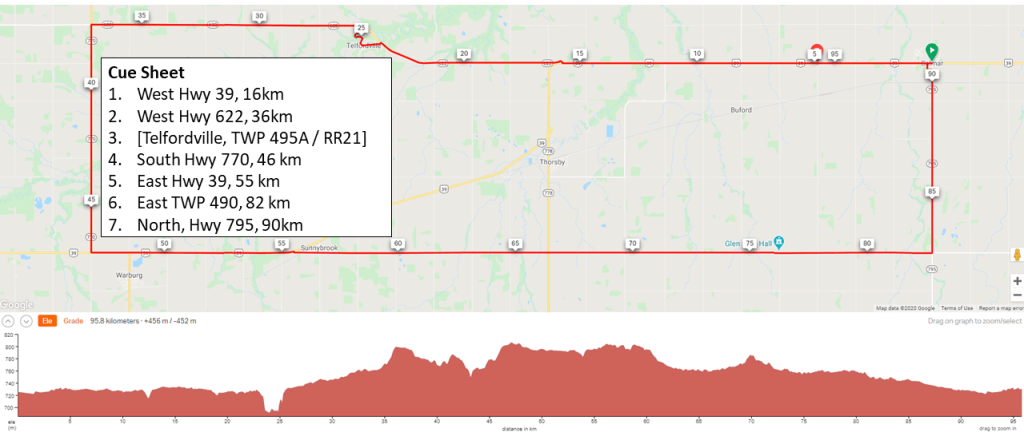
Calmar is a small town in central Alberta. Located in the heart of both the agricultural and energy industries of the province. Generally, the loops described below are on secondary paved highways with low to moderate traffic (except where noted). Options and side trips are provided.
New Year’s resolutions are dangerous affairs, so dangerous that most people quickly abandon them for the familiar arms of bad habits. It is with this in mind that I am sharing my resolution: I no longer plan to drive to work. Dear boss, don’t worry, I am planning on coming to work just that I don’t plan to drive there.
The Motivations on the Bus Go Round and Round …
There are of course a number of reasons to not drive:
Concern about climate change and reducing your carbon foot print;
Unable to drive for reasons beyond one’s control (blindness, illness)
Unable to drive for reasons in your control due to poor choices (drunk driving, loss of a license)
Trying to save money.
Other reasons.
I am comfortable enough with my parsimonious-ality to let you know my motivation is a combination of numbers #4 and #5. As for the other reasons (#1), I doubt my little Ford Ranger will make that much of a difference to climate change as compared to the 259 NEW GW of coal-fired generation plants China is bring online. Fortunately I am both capable and legally allowed to drive (#2 and #3). Besides, like the vast majority of people, I am an above average driver!
Transit Snobbery
Having just come back from Vienna with a world class transit system, I will be using a system that is definitely middle of the road. Not chickens in cages seated next to me but definitely not at the Western European standard either. My son swore off the bus when going to University with horror stories of them blowing past waiting passengers at bus stops, arriving late, excessively early and surly drivers. Hopefully my adventures are more pleasant.
U2 U-Bahn (metro) crossing the Danube heading into Vienna City Center
The Economics of the Bus
But back to my motivations and the first is economics and while the cash flow is positive it is not great, here is how driving versus the bus stacks up:
Factor
Driving
Bus
Bus Pass per Month
–
116.00
Gas Costs*/Month
130.00
–
Parking Pass**/Month
126.15
–
Insurance/Maintenance
$$$
–
Total Cost
246.15
116.00
Cost per Work Day$$
12.30
5.80
Driving time #
30-45 minutes/day
60-90 minutes/day
* I get about 7km/litre and have a ~45km commute per day. Assuming $1.00 per litre (currently gas is as $0.90) this works out to $115 – $120/day.
** Technically I don’t pay for parking but I am charged a taxable benefit of $145/bi-weekly. Assuming a 40% marginal tax rate this results in a cash cost of $126.15/month.
# These are highly variable, I have gotten to work on a quiet Sunday in 20 minutes and other times it has taken me 2 hours to get home due to the weather. Overall though, I suspect that the impact on time will be a bit of a wash of driving over transit.
$$$ I haven’t calculated this yet, see failing fast below before I change my insurance.
Assuming 20 work days per month ($$), the difference in cost is about $6.50/day or about $130.00 per month or perhaps a grand a year. Mehhh, not really big enough money to be spending 100% more time in my commute, so why would anyone want to give up a comfy(ish) Ford Ranger for a bus?
Reading, Riding and A-Rhythmic-Meditation
My motivation is the 3.2km walk from my house to the bus depot. 3,200 metres in the morning is about 3,000 steps (of a suggested 10,000 per day total) and 40 minutes in walking meditation. Once on the bus , I plan to read. While I can listen to books in my vehicle, taking notes while driving is not recommended. There is also something peaceful about letting someone else worry about the stop and go of traffic while you either read or stare into middle space. Finally, the most important reason involves a bike.
I hope to bike commute more this year. Not having a parking pass is like burning my boats; there is no going back! Okay, I can pay for expensive day parking but that metaphor is not nearly as good as smoldering boats.
Wish Me Luck and Failing Fast
So that is my new year’s resolution and given that I just dropped $116 on a pass to get started. If I can get through January, then February should be easier, etc.. Wish me luck and if not, see you on the road in February.
This week I ran a cycling program for my bike club called: “We Don’t Need No Stinkin’ Gears“. I have talked about gears and cycling for a number of years but this is the first time I pulled together a program that dealt with the topic en masse.
Audience and Do we Need Another Post?
A quick Google search indicates more than 500,000 hits on this topic – so why another post? Firstly as a reminder for me when I do this instruction in person. Secondly because the audience for this post is the person who is keen to learn but is trailing behind in a 20KM ride and the thought of riding 50KM seems absolutely daunting.
As always, if you have improvements (e.g. Phrank has no idea what he is talking about, don’t listen to him), comment away! As well, take a read of the 500,000 or so other resources on the internet; including some of the better ones I stumbled across, see the conclusion section below.
The Big Gear is Connected to the Little Gear
Bikes typically have two sets of gears: front and back. The front one is called the crank or the chain rings and the rear one is the cassette. The numbers of gears vary: 2-3 front rings 5-9 cassette rings are common. Looked at on angle, both sets of gears look like a cone with the top loped off. The front one has more lopping and a wider base and the rear one less so on both accounts.
The little gear on the crank is the first gear or number 1 with the reverse for the cassette. From there the numbers ascend until you run out of gears to count (e.g. 3 on the crank and 9 on the cassette). The chain connects the front and the back and transmits the power.
You Can Count on Your Gears
If you look at a bike, the first gear in the front, the small one, is closer to the bike. From there the second and third are further away from the bike. Just like in a car, a first gear is good for climbing hills. Similarly, the first gear on the rear is also number 1 and it is also good for climbing hills.
Here is the tricky bit, watch carefully….
If you look at the rear cassette the cone is reversed or inverted from the front. That is the big gear is close to the rim and the small (first) gear is furthest away from the bike. This gives the bike its mechanical advantage. For example, if you divide the number of teeth of the front gear by the number in the back you get a ratio of roughly how many fully pedal strokes it takes to turn the rear cassette once. The following graphic does a better job of showing this ratio. Assuming this configuration exists, for every turn of the front crank, the rear hub would turn somewhere between 0.8 and 4.0 times.
mechanical Advantage of a 3 ring crank X a 9 ring cassette. This gear configuration is for illustrative purposes only, your gear ratios will likely vary from the above.
The Missing Gears
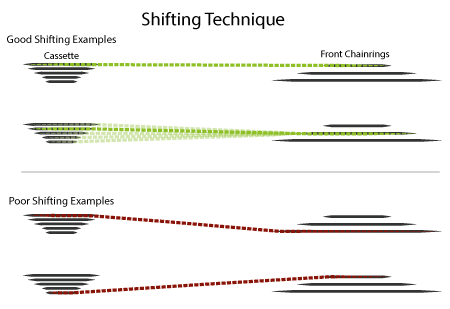
The good news is that you paid extra for that 27 speed bike… the bad news, using all 27 is inadvisable. Chains like to run in rings that are mostly parallel to each other. They can handle a bit of an angle but not too much. A cross geared bike will not only wear faster but is more susceptible for the chain jumping from one ring to another. This is why it is important to get used to shifting through both the front and rear gears – so you can maximize the 27 gear POTENTIAL of your bike.
Proper and Cross Chain gearing. Image courtesy of REI.com.
Cadence, Torque and a Little Downstroke will Do Ya
In an early blog, The Art of Riding Bikes, there is a discussion of the importance of cadence over torque. Torque is the big strong guy grinding up the hill. Cadence is the 90lbs lady passing him on the hill pedalling in a seemingly effortless manner.
You do need to apply torque to the pedal, some force is needed. The analogy I use is: ‘apply as much force to the pedal as you would to a soccer ball being kicked to a two-year-old’. Now, unless you like kicking balls hard at small children, this means a relatively light amount of effort.
Because the effort is less, something needs to compensate to provide power to the bike – this is where cadence and gears come in. Try to keep your cycle strokes the same with a consistent force allowing the gears to compensate for the terrain or wind. How many strokes? Aim for anything between about 70-120 per minute with an ideal of about 90. Your legs will tell you if you have too many revolutions per minute or if you can add a few more to the mix.
Put the Peddle to the … Little Metal Thing on your Cycling Shoe
The peddles are how we convert the up and down motion of your legs to the circular motion of the gears. What is the best pedal to use, the answer is one you are comfortable with. Before you stick to the tried and true flat pedal (available on kids bikes everywhere), to think about and consider adding toe clips, baskets or cycling cleats to your pedal ensemble. They will help you transmit more energy with very little or no additional effort on your part.
At this point in the discussion I usually get dubious looks about attaching a bike to the bottom of one’s shoe. To start, you will probably fall over due to unclipping at least once (ish) and it will take practice. Some very good riders I know have forsaken the clip and they do fine. A basket or cleat will take you further but you have to comfortable and trusting in the relationship.
A Shift in Cycling Style
Putting all of the above together takes practice. Shifting needs to become simple muscle memory that you no longer think about. To do this you need to get on the bike and start riding and shifting through the gears – both the front and the rear. On a flat stretch, consciously practice working from the first gear front/back to the highest gears (e.g. 3/9) in the rear.
By becoming comfortable with shifting you can then better anticipate and be shifting up or down an instant or two before you need to. By doing so, you can maintain that constant cadence and torque discussed above which in turns allows you to cycle for longer time periods and thus distances.
Alas you will run out of gears on some future hill that is a bit too steep. At this point you have one of three choices. Firstly get off and walk. Due to a missed gear, a steep hill or other reasons (my dog ate my homework and so I had to walk my bike); sometimes the walk is the best answer.
Your second option is to traverse the hill. Assuming the path way is wide enough, cut an angle back and forth across the hill rather than straight up it. This will add some distance but cut down the angle of attack.
Send Your Nether-regions a Post
The final hill climbing technique is the post. This is where you stand in the pedals and lift your tender bits off of the seat. As an added bonus, the method also allows for blood to return to the pelvic floor thus reducing the discomfort of a allow a saddle to come in contact with your No-Sunshine Zones. Posting is a short-term solution as you are switching from low-torque-high-cadence model to a high-torque-low-torque model.
Conclusion, Further Reading and Good Links
Once again, this post is meant to be used as a memory jog for me and a learning aid for the people I am standing in front of. If you want to learn more, the internet has a plethora of material including posts that are a lot more technically accurate than the above (including strange algebraic symbols).
Visiting Hoover Dam has been on my bucket list for a long time. In fact, after visiting Vegas in 2010, I said that I have only two reasons to ever return: visit the dam and hike the desert. On this ride I got 50% of my reasons to return.
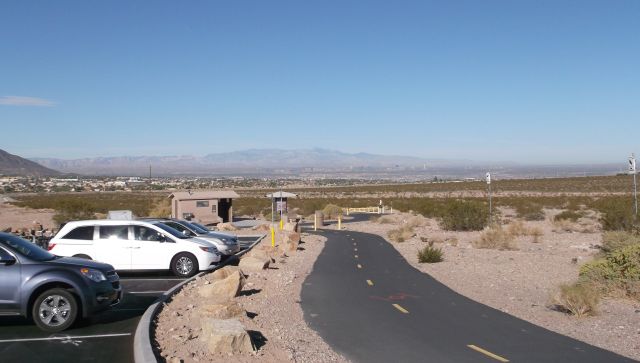
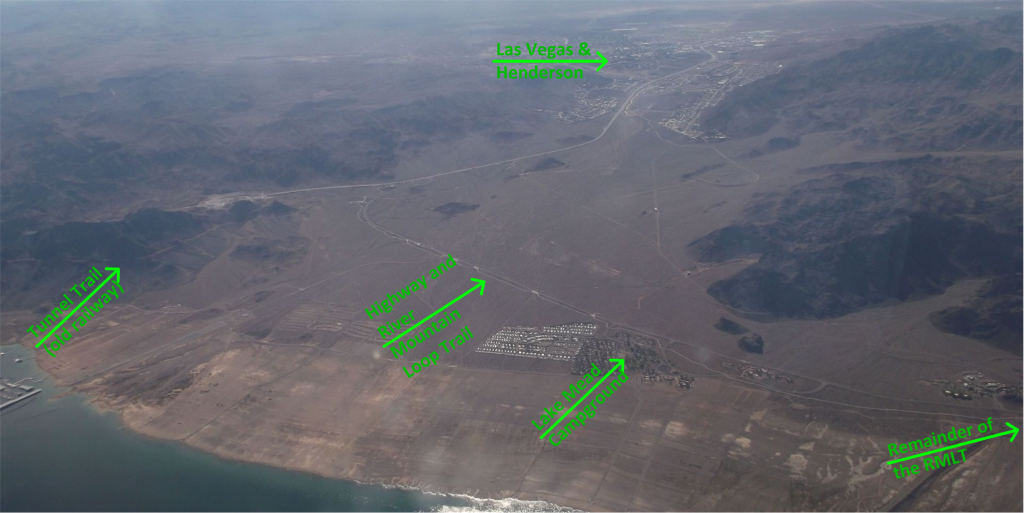
Located near the Clark County Museum (a reference only fans of Pawn Stars would get); this is a large parking area in the 8-o’clock position of the River Mountains Loop Trail. As it turns out, it is also a relatively high spot on the trail (635m) given the descent we experienced and the grinding ascent later in the day.
2014-10-31 – Equestrian Staging Area
Descent Into Boulder and the Dam Ride
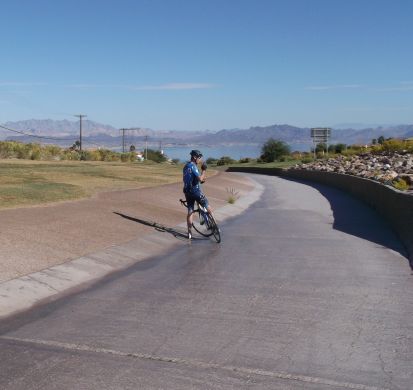
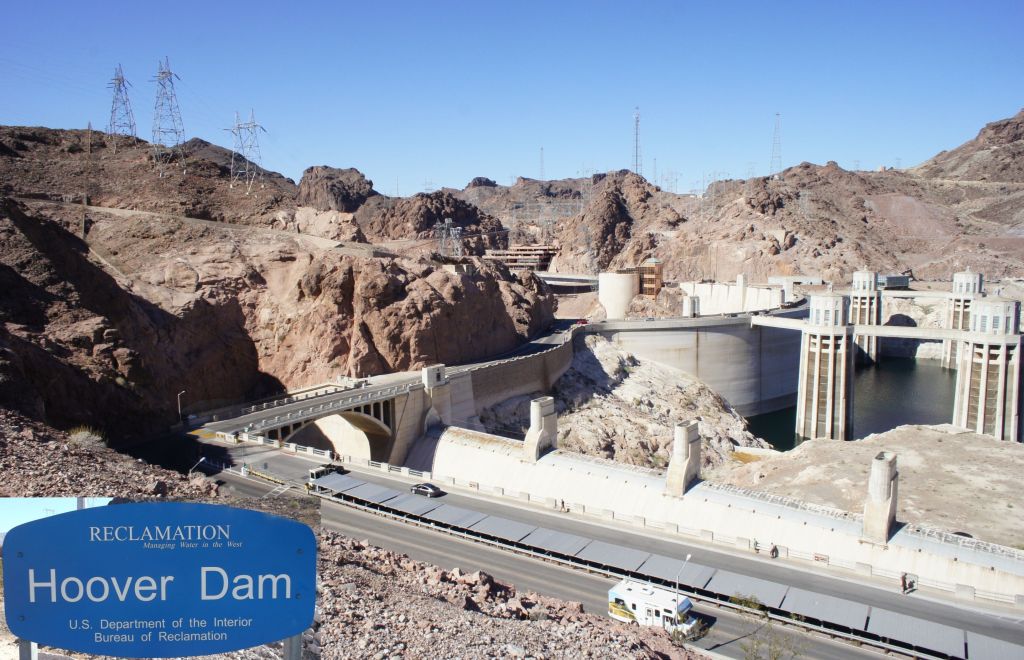
Riding clockwise along the River Mountain Loop, our general direction was toward Boulder Nevada. The descent into the Hoover Dam saw a loss of more than 150M down to 387M at the top of the Dam. En route, a section of the trail doubled as a flash flood spill way (aka skate-board turn pike).
2014-10-31 – Descent into the Hoover Dam via the spill way (aka turnpike)
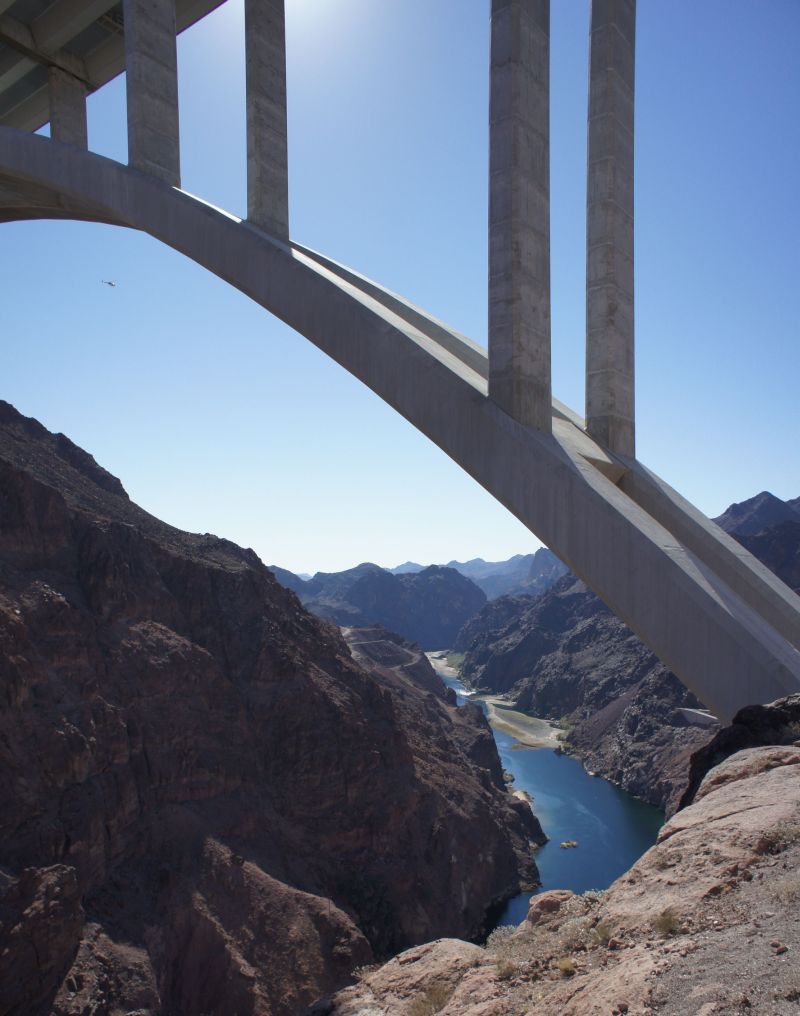
The actual descent toward the dam included by-passing the new bridge, clearing a security check point and seeing the US-federal government fineness pull over a seemingly innocent looking car. Both the ride and K-9 units were quite exciting.
2014-10-31 – The New Bridge
2014-10-31 – Descent and the K-9 Unit
2014-10-31 – From the Arizona Side
Ascent Out of the Dam – the Climbing Begins
For every descent, there is usually an ascent; and despite delaying at dam level, we began to make our way up again. Fortunately a parking garage and elevator shaved five-stories of climbing off of our return to the River Mountain Loop. Unfortunately the rest was either ride or push; including the initial ramp from the parking garage to the Tunnels Trail.
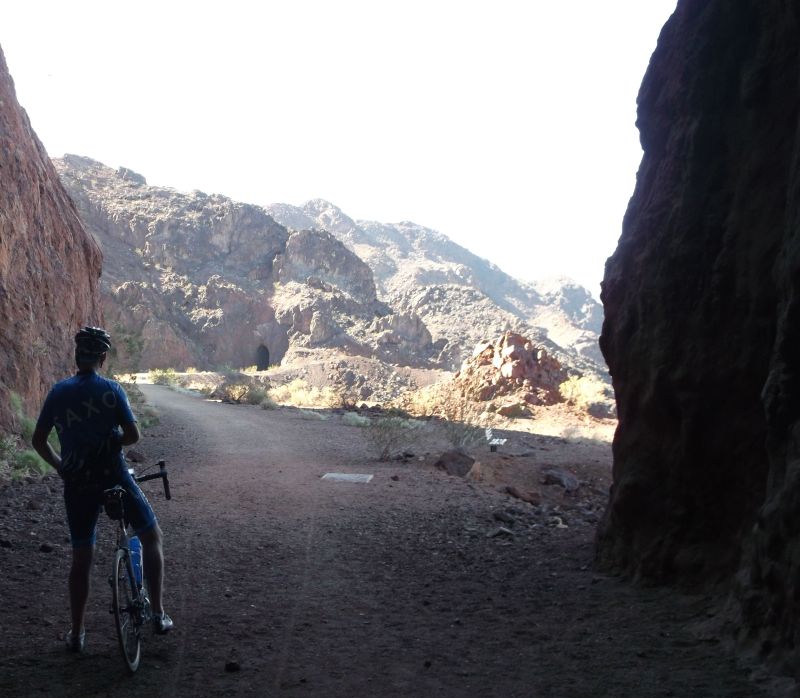
… the gravel Historic Railroad Tunnel Trail hugs the hills on the southern shoreline of vast Lake Mead. The rail-trail offers panoramic views of the manmade lake and snakes through five railroad tunnels on its way toward Hoover Dam. After the dam was completed in 1935, the railroad ceased operation, and in 1962 the tracks were removed; the trail opened in 1995.
Riding on the rail way bed was fun but we were glad to be descending rather than trying to climb through the loose gravel. Five tunnels give a brief respite from the heat and vistas down to Lake Mead were around most corners.
2014-10-31 – Leaving one Tunnel and Starting Another
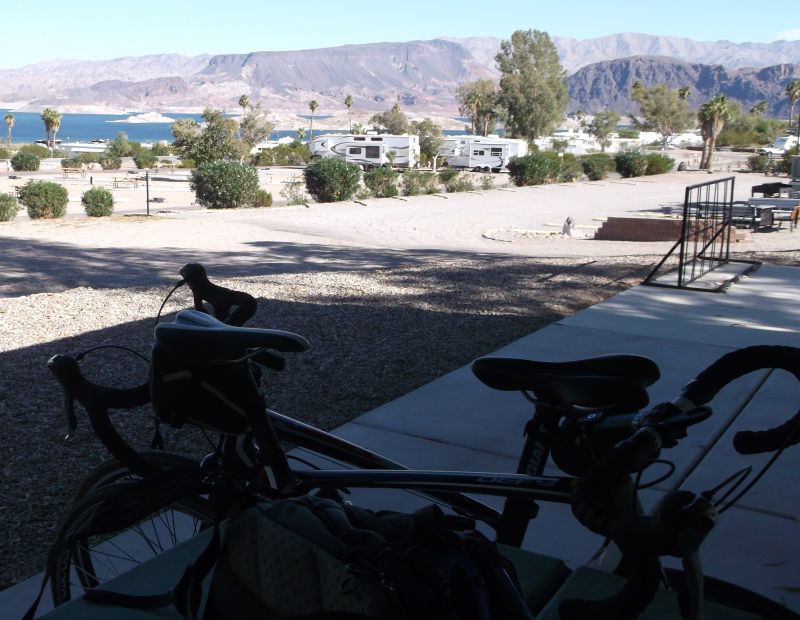
A quick snack at the campground just off the River Mountain Loop Trail brighten our spirits, fluids and energy levels. Little did we know how much we would need of all three over the next few hours.
2014-10-31 – Lake Mead from the Campground
River Mountain Loop Trail
After the campground, civilization quickly fell away (well except for the excellent asphalt trail we were riding on) to be replaced by desert vistas and rocks. Also making its presence known were long hill climbs up and out of the Lake Mead valley. Making the effort more challenging were the +30C temperatures which saw water being sweated out faster than it could be consumed.
2014-10-31 – The Desert and the Ascent
Completing the River Mountains Loop Trail
Six hours, about 4 litres of water and 74+ km later, we returned to our starting point. Dehydrated and exhausted – we still had enough energy to hit the Vegas strip during a very crazy Halloween Night. Supper at Gordan Ramsay’s Burgr Bar and stroll afterwards capped off an excellent day of riding and bucket list kicking!
I started writing trip logs (a much more manly term than scrap booking) on adventures about 20 years ago. I have tried a few different formats such as a log book, word document, and a desk top publishing tool. Given that I have yet to re-read many of the trip logs, perhaps a blog is way to go as a method to remember where I have been and what I did once I was there.
By way of a note to myself, because this blog will be available on the www (including to spammers and nasty people who visit my site); I have purged most personal details and tried not to post too many pictures showing faces, focusing on landscapes instead. Look to Facebook and secure to see more personal content.
With these caveats in place, here it goes, my first blog-trip-log!
Cycling Vegas – an Overview
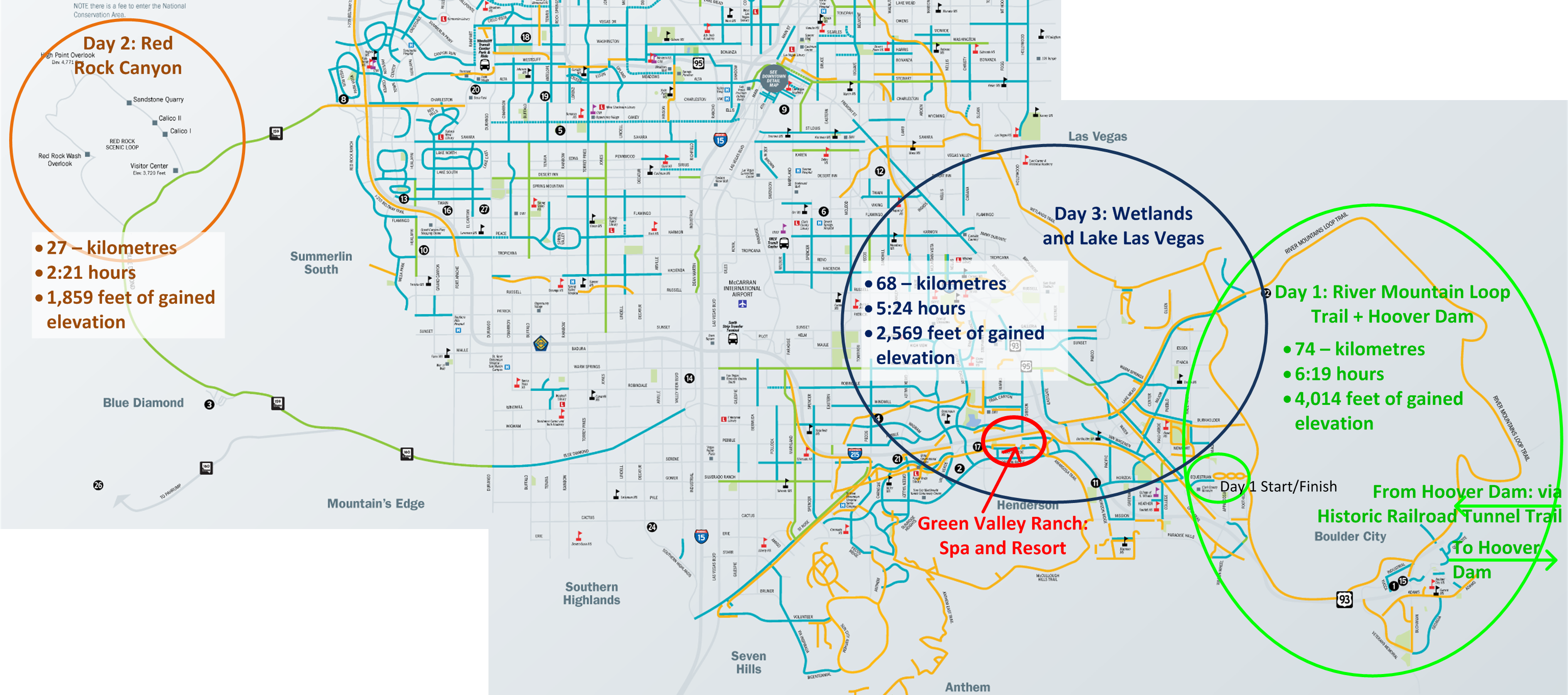
Las Vegas, sin city is also Spin City. Unknown to many visitors, Las Vegas and environs is a cycling destination. Beyond the Strip, bike lines, canyons, the Hoover Dam and desert vistas await. The Edmonton Bicycle and Touring Club (EBTC) ran a 5 day event that combined 3 days of riding and a bit of what Las Vegas is best known for. The trip left on October 30, 2014 with a November 3 return. Using a hub/spoke model from the Green Valley Ranch in Henderson Nevada (GVR), this trip was an intermediate ride meaning a moderate level of physical condition and cycling experience.
The trip details are available and Frank’s Packing List – Vegas 2014 for the trip are provided (mostly) for my future reference and so I don’t need to go and find that lost log book of adventures.
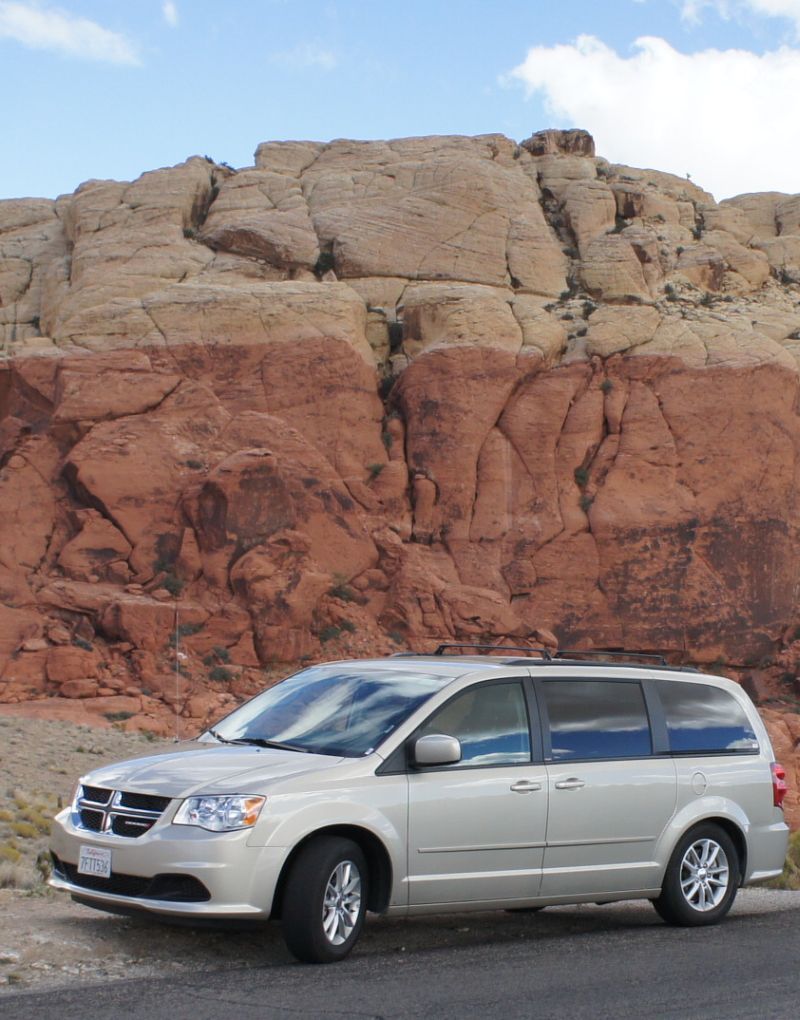
Billed as an EBTC ride, (un)fortunately, only the two organizers, Frank and G., signed up. They travelled to Las Vegas via West Jet on October 30 and picked up their rental van. As a turns out, the Dodge Caravan was a great investment as it both permitted transportation and a safe place to stow the rented bikes.
A great place to stow bikes and cruise the Vegas strip.
The bikes were were rented from J.T.’s Bicycles in Henderson Nevada at a cost of about $150USD for each – which included an emergency repair kit (tube, multi tool, C02 pump) and putting on the pedals and saddles that we had brought with us.
2014-11-02 – Our Trusty Steads
Both G. and I liked the bikes although the smaller frame and bent handle bars took some getting used to on my part. I was hoping for a third granny gear on the front sprocket for hill climbing but was this was not available. As a result, G’s powerful lungs carried him to the top of the ascents where as I huffed and puffed my way up, typically having to traverse the trail or road to reduce the hill slope.
With bikes, a van to store them and place to sleep (read on for my Tripadvisor.com review of GVR) – we were ready for our first day of adventure, Hoover Dam. But where to cycle, time for a quick overview of riding in Vegas.
Riding in Vegas – An Overview
There are a LOT of bike and shared trails in and around metro Las Vegas. I looked for an exact number (and could not find it) but did discover, there are lots. This trip focus on three different sections of these trails: River Mountain Loop, Red Rock Canyon and the Wetlands/Lake Las Vegas.
Three Cycling Days – 2014 Las Vegas
G and I rode primarily in the eastern portion of the metro-Vegas area with the exception of Day 2, Red Rock Canyon. There are still lots of the bike trails to explore including numerous Rail to Trail routes. It looks like my bucket list just go bigger!
Day/Date
Ride
Distance and Elevation
Day 1: October 31
Hoover Dam and the Loop
74 – kilometres
6:19 hours
4,014 feet of gained elevation
Day 2: November 1
Red Rock Canyon
27 – kilometres
2:21 hours
1,859 feet of gained elevation
Day 3:November 2
Wetlands and Lake Las Vegas
68 – kilometres
5:24 hours
2,569 feet of gained elevation
Totals
169 – kilometres
14:04 hours
8,442 feet of gained elevation
OK priced, clean, safe and very far sans auto
Trip Advisor review of Green Valley Ranch I stayed at GVR for a 3-day bicycling holiday over the 2014 Halloween weekend; so yes, there is more to do in Las Vegas than gamble away your kid’s college fund. Assuming that you have a vehicle or that you plan to spend the entire trip depleting your child’s educational future, GVR is a good location for accessing points throughout Las Vegas due to the proximity of the freeways.The hotel was clean and grand in that Las Vegas faux reality sort of way. The staff were all friendly with nary a grump in the bunch (even the tie and jacket security guys would give you a nod hello). The pool would keep the kids entertained for a few days and there is a small garden beyond the pool in which the freeway noise is only a low throbbing. I did not see any signs of soccer, a playground set or the like – so other than the pool, GVR is at best neutral on the kid friendliness scale.Keep this scale in mind if you don’t have a rental car because you are otherwise kinda stuck at GVR. There are some high-end shops nearby but the expect to cab, drive (or bicycle) to a nearby non-trendy grocery or drug store.In side the casino there is a food court that seems surprisingly over priced. The buffet is a good value, at least for the two breakfasts we head there. $8 for all you can eat with a good variety and quality short beats a $20 cab ride for a box of corn flakes.Overall, GVR seems to occupy the market space between the fancy strip hotels and the low-mid econo-casinos that dot Vegas.Overall, I rate it “OK priced, clean, safe and very far sans auto”. Stayed November 2014, travelled with friends
Full Disclaimer: I am not an expert on cycling. I have never raced, mountain biking seems like too much bother and I don’t ride in -40C. Nevertheless, I am passionate about cycling because it has allowed me to see things and meet people in contexts that generally promote conversations, beer drinking and long-term memories (okay, the last two sometimes clash). Before reading on, insert the standard caveats about checking with a physician before starting a physical exercise program. This blog is not intended to replace medical advice. Use at your discretion and always employ common sense.
Maneuvering a bike over an unusual bridge crossing the Wienfluss (river) just outside of Vienna Austria.
I like to share this passion and I have run ride programs. One individual from a program asked the question about whether she bought the right bike and why she seems to be so slow. I responded in email but to help to thwart the eventual hardening of the brain cells (too much cycling and eventual beer drinking), I thought I would throw the advice out here to for public consumption. Feel free to weigh in (but please correct me gentle).
The Three Things to Keeping Up with the Group
Riding with a club gives you a chance to see the super-duper triathlon types and the newbies who simply want to keep up. This advice is more for the newbie in which 40km seems daunting and 80km or more seems impossible. So, to keep up with the group you need to focus on three things: physical conditioning, equipment and technique.
Physical Conditioning
Guess what triathletes, you have this one nailed! In the other corner are folks like me who discovered a winter bulge where one did not exist last fall (or at least I was better at ignoring it). To ride with a group, the better fitness level the better but most people who can walk for a few hours, climb moderate hills, etc. can do well on short to moderate (40-80km’ish) rides. So even if you have mystery winter bulges, carry on to the next two things.
Well Maintained Equipment
To bicycle you need, well, a bicycle. Myself I tend toward the touring hybrid variety as I like to carry stuff in panniers (saddle bags), water bottles accessible while riding and fenders for my commuting bikes. Like anything in life, the more you spend, the better quality you get and the less you will experience in break downs, etc. A reasonable starting price for a new hybrid is about $500 and a good one can be had for the $750-1,000 mark. If you are now experiencing sticker shock, remember how much a golfer pays for a good set of clubs. As for where to buy, MEC is a good starting point or any local bike shops (a plug for my local shop, Crankys in St. Albert). My experience is avoid department stores, chains or anywhere where the mechanic looks like a high school student working part-time.
Alternatively buy a very good used bike. Pay a bit of premium by buying it through a reputable bike shop or a club sponsored bike swap, such as this one – bike swaps.
A word of caution though, bikes are like mushrooms, before you know it your one bike will soon be 2, 3 or more!
Buying the bike is only the beginning, maintaining it is even more important. Bikes are remarkable bits of machinery, they can be forgiving but when the fail – they generally do so as far from home as possible. As a result having some basic knowledge is critical. In particular you should know how to: change both tires (front and back), wash your bike, clean and lubricate a chain and do basic lubrication of the bike. Adjustments, bearings, etc. I leave to my friendly bike shop. If you are like my wife, you can also leave everything to your husband.
Okay, you are at least minimally fit and you spent your kids college funds on a new bike – now you can keep up, right? Maybe but probably not. Cyclists are generally a lazy lot who like to get places while spending as little energy of their own energy as possible (and looking dazzling in spandex). As a result, the following six techniques are critical.
Technique number one, cycling is about RPMS, not torque. You may have seen the big guy grinding his way up a hill while a petite young lady zips past him. If you have, you have seen the difference between revolutions per minute and torque. When riding, you want to ideally be spinning the pedals at the same cadence (revolutions per minute) and with the same effort (light, think of gently kicking a soccer ball to a 3-year old) whether you are on the flat, the up or the down hill. To do this, you must know how to use your gears so that your cadence and torque can remain consistent.
Technique number two – be kind to your delicate bits. Get a comfortable saddle, riding shorts and then take the time to let your more delicate parts get used to it. ‘Time in saddle’ is something you have to do each and every cycling season.
Technique number three – Learn to post. Post means getting up on the pedals and riding for a distance with your delicates hovering over the instrument of torture. Posting a few times an hour (or thereabouts) allows the blood to flow back to the pelvic floor and other nether-regions (not to be confused with the Netherlands).
Technique number four – pedal baskets or shoes. There is only one point of energy transfer between you and the bike – the pedal. The conventional pedal is a mediocre connection device as most of the force is only spent in the 1 to 5 o’clock position of the down stroke. With baskets, shoes, etc, the energy transfer is possible through the entire rotation. As a bonus, posting is alot easier with your feet attached to the pedals.
Technique number five – jettison weight. I have to admit, I have a hard time with this one as I like to carry tools, extra water, a snack, a second camera, clothing (well you get the idea). Unfortunately every gram of weight has to be paid for by your effort. If you can leave stuff (and winter-bulges) behind.
Technique number six – Hydration and Nutrition. Thanks to Joe who provided the advise below. My own rule of thumb is to only snack on rides (e.g. no big lunches) and lots of fluids. Joe’s advice is even more targeted:
Proper hydration and nutrition come into play long before you get thirsty or hungry. Start when you leave the parking lot and take a sip every 15 minutes, consider a quality sports drink or easily digestible carbs to conserve your glycogen. Do not eat at least 2 hours before the ride starts, since it takes that long to stabilize your blood sugar, otherwise the insulin will rob you of energy at the start.
Ride, Ride and Ride
Finally, like anything else, get out there and ride. Not only will it reduce your winter surprises, give you time in saddle – you will also get to meet interesting people, go places – and hopefully drink some beer.
Thanks to Other Contributors
Garet H, reminding me about the benefits of posting and Greg P. reminding me about my weight (errr, carrying weight) and Joe M. about hydration and nutrition.









 Organizational Biology