Lifecycle Management of IM and IT

Note to the Reader, this Blog was superceded by this Re-Do Blog on the IM/IT Lifecycle.

The previous blog introduced the SWOT+4 Planning Model. The value of the model is the ability to focus on specific elements of IM/IT planning. Once an organization is successful with one part of the model, it can move on to other areas needing improvement. This blog will introduce a tool to evaluate the robustness of an organization’s IM/IT lifecycle. Intended to be an introduction, future blogs will drill down further.

The Role the IM/IT Lifecycle Model plays in the SWOT+4 Model

The Role the IM/IT Lifecycle Model plays in the SWOT+4 Model

One of the first areas of model to evaluate is internally focused on the IM/IT needs and capabilities of the organization. In the SWOT+4 model these are represented by the organization’s IM/IT strengths and weaknesses and specifically questions 2 and 3:

  • Q2. ORGANIZATIONAL IM/IT: How can/does/should IM/IT support or impede what is important to the organization; does the organization have the right IM/IT and if not, when will it get it? (Answered by IM/IT Lifecycle Steps 01 through 16)
  • Q3. IM/IT CAPACITY: How well does the organization DO IM/IT, is it getting better, worse or about the same? (Answered by IM/IT Lifecycle Step 00)

Context for the IM/IT Lifecycle Model

The IM/IT Lifecycle Model is an adaptation of the Asset Lifecycle Model (source pending).  While the Asset Lifecycle Model focuses on the management of tangible assets, the IM/IT variation is concerned with the acquisition of things like computers and technology systems.  The governance, system and audit functions at the bottom of the model are used to answer questions #3, what is an organization’s IM/IT capacity?  All the other steps answer question #2, what are the organization’s IM/IT needs and are (or when/how will) these needs to be fulfilled.

Information Management/ Techology Lifecycle MOdel

Information Management/ Techology Lifecycle MOdel

IM/IT resources move through the model from left to right and may use more or less of each step depending upon the nature of the system being acquired.  Of note is step 03, the Project Management Office (PMO).  This replaces the requirements specification in the Asset Lifecycle Model but is broader and ideally encompasses other steps.  For example, a good PMO methodology incorporates procurement processes such as issuing requests for proposals (Step 04), managing resulting vendor contracts (Step 05) and managing the vendor provision of assets, software, licenses or consulting services (Step 07).

Direct Attribute Costs (Step 09) and System Business Operations (Step 10) are purposely overlapped. Direct Attribute costs are the resources the organization brings to bear to implement a system. Examples can include the dedicated project staffing or costs to retrofit a data centre to accommodate new servers supporting an application. System Business Operations by contrast are the costs and effort to commission the system and bring it online. From an organizational perspective, Step 10 asks (and answers) the question, does the IM/IT resource meet the business needs identified for the asset?

Enterprise Resource Planning and the IM/IT Lifecycle

Included in each step are possible metrics as well as the information system such as the organization’s Enterprise Resource Planning (ERP) tool that may support the step. For brevity, the following ERP components are used:

  • (1. Budgeting): the planning, monitoring and resource allocation functions.
  • (2. Procure to Pay): from requisition to payment including the treasury management functions.
  • (3. Asset management): the receipt, installation, maintenance, tracking and disposal of assets.
  • (4. Accounting to Reporting): the proper accounting, record keeping and reporting (internal and external) of assets.

The purpose of this blog was to introduce the IM/IT Lifecycle Framework and place it in context to the SWOT+4 Model. In future blogs, I plan to drill down on each of the Steps and provide examples of systems, standards and best practices across organizations.

What do you think? Does your organization use a systematic method such as the IM/IT Lifecycle to plan, implement and manage your IM/IT investments? Where do your systems potentially lie within the model? For example, does your organization have a systematic PMO function or do you even know what is in your application fleet? Drop me a note and send me a comment with your perspectives.

The SWOT+4 Planning Model

Information Management/Technology (IM/IT) is expensive. As well, the advantages it provides are fleeting and easy to imitate (or worse steal). An organization must strategically and operationally plan for its investments in IM/IT. The problem is, what exactly should be in the Strategic or Operational plan, and what are the questions the plans are trying to answer?

Over the past 20+ years I have being pondering these questions. Being a visual person, I have developed what I am calling the SWOT+4 IM/IT Planning Model. It is a bit busy but here it goes. At the centre is the SWOT matrix. Overlaying the SWOT matrix are the four-central IM/IT questions and on top of the questions are the respective planning tools to answer the questions.

SWOT+4 Planning Model

SWOT+4 Planning Model

At the core of the SWOT+4 model are the organization’s Strengths, Weaknesses, Opportunities and Threats. This 2×2 matrix is a mainstay of strategic analysis. Although familiar to virtually everyone, in brief it is a method to view a situation from two key dimensions: internal versus external and positive versus negative. For example, Strengths are internal-positive attributes whereas Threats represents the external-negative possibilities.

Unfortunately, the SWOT tool is incomplete when it comes to evaluating an organization’s IM/IT. For example, is a change of technology an opportunity or a threat? Are the existing IM/IT systems a strength or a weakness? The answer to both questions is – it depends. As a result, I have used a Four Question Model for IM/IT Planning over the years as an analysis checklist. In order of priority the questions are:

  1. ORGANIZATIONAL PLAN: What is important (e.g. priorities, plans and strategies) to the organization? This is at the centre of the model and crosses all four SWOT considerations. Included in this question are things like the organization’s vision, its mission, business plan(s), budgets and all things strategic.
  2. ORGANIZATIONAL IM/IT: How can/does/should IM/IT support or impede what is important to the organization; does the organization have the right IM/IT and if not, when will it get it? This is an internal consideration although it touches the external dimensions of the SWOT model to represent amongst other things benchmarking and industry best practice. This question is ideally answered by both the strategic documents discussed above and the IT Department’s operational plan(s).
  3. IM/IT CAPACITY: How well does the organization DO IM/IT, is it getting better, worse or about the same? What about the fleet of applications or physical resources; is the organization still running Windows 3.1, Office 95 or has it been able to adopt leading/bleeding edge technologies. How about the organization’s Bespoke and COTS applications, are they on current versions or getting long in the tooth? These questions are internal considerations for the organization.
  4. IM/IT FUTURE: What is on the organizational event horizon that will affect or change the above? There are both threats and opportunities in this respect for an organization. Hacker activists, lower technology costs, legislation (e.g. privacy or technical) and changing industry standards are all examples of future changes that may be positive or negative.

Finally two typical planning tools are overlaid on the SWOT and 4 questions. The bottom and foundation is the organization’s business or strategic plan. IM/IT may have its own strategic plan or it may piggy back on a larger corporate plan. Irrespective, the plan should be able to answer the questions of (q1) what is important and (q4) what is on the horizon for the organization? The IM/IT operational plan focuses on the questions of (q3) current capacity and (q2) near term organizational IM/IT activities.

The delineation between the plans is not clear and ideally they should overlap each other rather than having a gap. The operational plan purposely extends into the Threat quadrant of the organization and the Business Plan relies on organizational strengths to capitalize on opportunities in the environment.

Beyond the Box

What do you think? Is the SWOT+4 Planning Model a muddled mess or does it provide a conceptual basis in which your organization can begin to structure its IM/IT planning. What is the value proposition to understanding and using the model well? I believe the model can support faster technology adoption, lower cost of implementation and ownership and better leveraging of IM/IT assets. Stay tuned as I am hoping to drill in a bit more into the model in future blogs. For example:

  • How a lifecycle approach can be used to measure IM/IT Capacity (q3)
  • The roles and technologies involved in delivering Organizational IM/IT (q2)
  • How much IM/IT should be in an organizational plan (q1), and
  • Where to buy a good crystal ball for the IM/IT Future (q4).

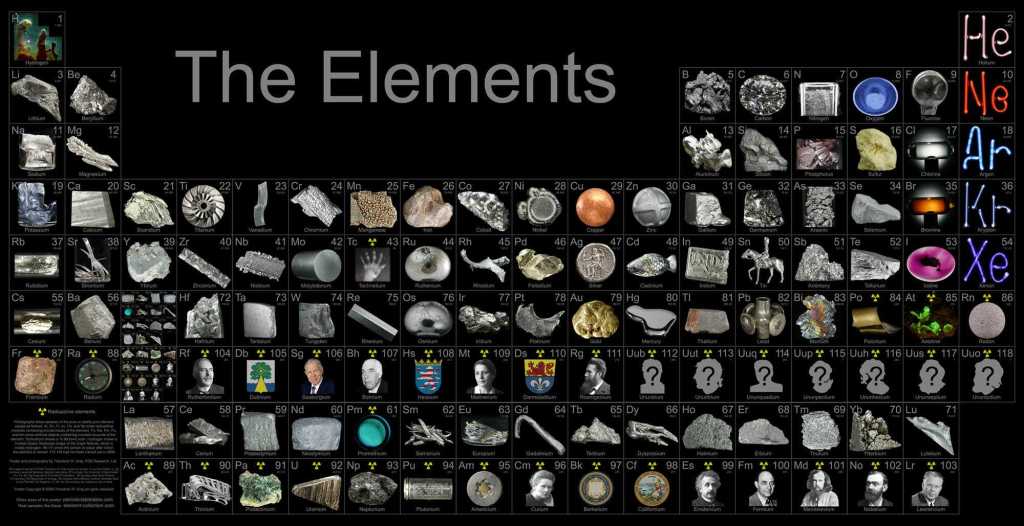
The Disappearing Spoon – Good Chemistry

As part of my ongoing attempt to remember what the heck I read, a quick blog on a recommended read:

Title: the Disappearing Spoon, And Other True Tales Of Madness, Love, And The History Of The World From The Periodic Table Of The Periodic Table of the Elements.
Author: Sam Kean
Recommended Read (out of 5, 5 being highest): 4.5
My thoughts: In general I am a student of history and in particular I enjoy reading about the history of science.  To me science is one of the greatest human achievements.  It allowed ourselves to move to a rationale state away from the tyranny of myth and legend.  This book is about one of the greatest of all human achievements, the creation of the periodic table.

YAWWNNN you may think but the history is full of humanity at its best and worst.  At its best is the sharing of knowledge that allowed for an obscure Russian, Dmitri Mendeleev, to effectively lift the study of matter out of an understanding that really had not changed since the Greeks.  It is about the sharing of that knowledge so that one person’s breakthrough is done by standing the shoulders of giants.

Of course goody-goody-two-shoes scientists are great when it comes to inventing silicon chips for smart phones or sulfa drugs to treat diseases; but flawed scientists and skull drudgery are much more interesting and this book is full of them.  And, they are all linked back to the periodic table.  Two great examples

  • During World War I the Germans managed to claim jump and generally harass the owner of one of the very few Molybdenum mines in the world.  Added to steel, this alloy can withstand the excessive heat in artillery guns because it melts at 4,750F.  It was not until 1918 that the US federal government realized that the mine was stolen from one of its own citizens – and that the metal – critical to the war effort, had been sent to Germany.
  • When I think of Marie Currie I imagine her as a saintly woman scientist suffering the indignities of a sexist period in our history.  It turns out that she was also a bit of femme fatale.  Thus she would pull fellow scientists into dark closets – see her glowing vial of Radium. Curious from concerned wives of the scientists would ensure the observations did not last too long!

The Disappearing Spoon should be required reading for high school or perhaps first year college chemistry course.  Not only is full of interesting characters – which were also brilliant – it is also a book that allows one to understand the current configuration of the periodic table from the ground up.

The individual who discovered or the image of the element

The individual who discovered or the image of the element

From Chapters: Why did Gandhi hate iodine (I, 53)? How did radium (Ra, 88) nearly ruin Marie Curie’s reputation? And why is gallium (Ga, 31) the go-to element for laboratory pranksters?*

The Periodic Table is a crowning scientific achievement, but it’s also a treasure trove of adventure, betrayal, and obsession. These fascinating tales follow every element on the table as they play out their parts in human history, and in the lives of the (frequently) mad scientists who discovered them. THE DISAPPEARING SPOON masterfully fuses science with the classic lore of invention, investigation, and discovery–from the Big Bang through the end of time.

*Though solid at room temperature, gallium is a moldable metal that melts at 84 degrees Fahrenheit. A classic science prank is to mold gallium spoons, serve them with tea, and watch guests recoil as their utensils disappear.

Writing as a Team Sport

On the off chance that you have been wondering where my blogs have gone, I have been putting the finishing touches on an article to be published (hopefully) in the next issue of the FMI Journal.  Writing, especially when you do if for free, is a labor of love and you don’t do it alone.  Beyond relying on one of the best editors/critics in the world, my wife Margreet, this time around I also had some help from former colleagues.

This is the first time I have used what I am calling a ‘friendly-peer-review’.  Certainly friends and colleagues have read prior articles and provided comments, but this time around I asked for help in a more systematic manner.  The result was a much better article with perspectives that would never considered or with bad bits beaten out with bats.

Thank you for the Use of Your Brain

Of course no good deed ever goes unpunished and to that end, the following are folks who have helped me with the friendly-peer-review.  Hopefully I can return the favor in the future.  Also, if you are on the list and are logging this as professional development, feel free to refer to this post and notice below.

Person

Organization

Aaron F. Alberta Health Services
Conor O. IAEA
Leanord T. Deloitte Canada
Neel G. IAEA
Neil P. Government of Alberta
Richard I. Government of Alberta
Shawn M. Western Economic Diversification Canada
Steven S. World Intellectual Property Organization
Stewart S. Private Contractor
Terry E. Private Contractor

To whom it may concern, the above individuals were asked to perform a friendly-peer review of an article intended to be published in the Financial Management Institute of Canada journal, FMI*IGF Journal. The estimated time to perform this review was between 2 to 3 hours. All of the above individuals demonstrated a firm grasp of the subject matter and helped to createnet-new original thought and critique through this peer-review which will be reflected in the final article. I welcome contact if further confirmation is required.