I recall sitting in a board meeting for a non-profit I was involved with years ago and the budget process came up. Specifically the word ‘budget’ meant to different things to different board members.


I recall sitting in a board meeting for a non-profit I was involved with years ago and the budget process came up. Specifically the word ‘budget’ meant to different things to different board members.
I spent my professional accounting career in the realms of strategy, governance, information technology, public sector and peripheral fields such as risk or project management. Although I have not done financial analysis in awhile, it is still fun to dust off the old neurons and see if they still work.

This weekend, September 26-27, 2020, is important for the Canadian retailer, MEC (formerly the Mountain Equipment Cooperative). A British Columbian court will decide if MEC should be sold to a private equity firm [1]. A grassroots group, SaveMEC, has raised funds and support to oppose the sale. It hopes to send 10,000 letters to the creditors to convince them to delay the sale for a fortnight while alternatives are sought. This blog is 1/10,000 of this support – and some thoughts on alternatives.

Objectives are a cornerstone of organizational control and risk management. So far so good, but how do you know if you have a good objective? More important, how do you know if you have a real-stinker on your hands?

You would never confuse ketchup with the ketchup bottle. Ketchup is that blood substitute on your new white shirt while the bottle is the thing that slipped resulting in the white-shirt-blotch. If we can keep ketchup straight, why is it so hard with information?
Continue readingOrganizations need to pick winners and losers. For example, a government must decide to whether to fund project X, Y or Z; a corporation only has the capital to build asset A, B or C.
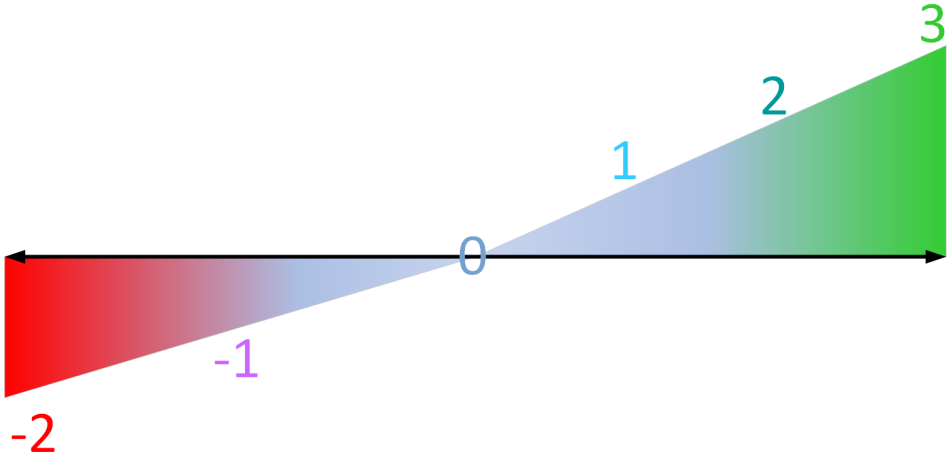
Most organizations have developed a portfolio selection and management methodology. There are typically 2 parts to such a process: a set of criterion and a scoring scheme to rank the criteria. In this blog, I want to focus on the second challenge, the scoring.
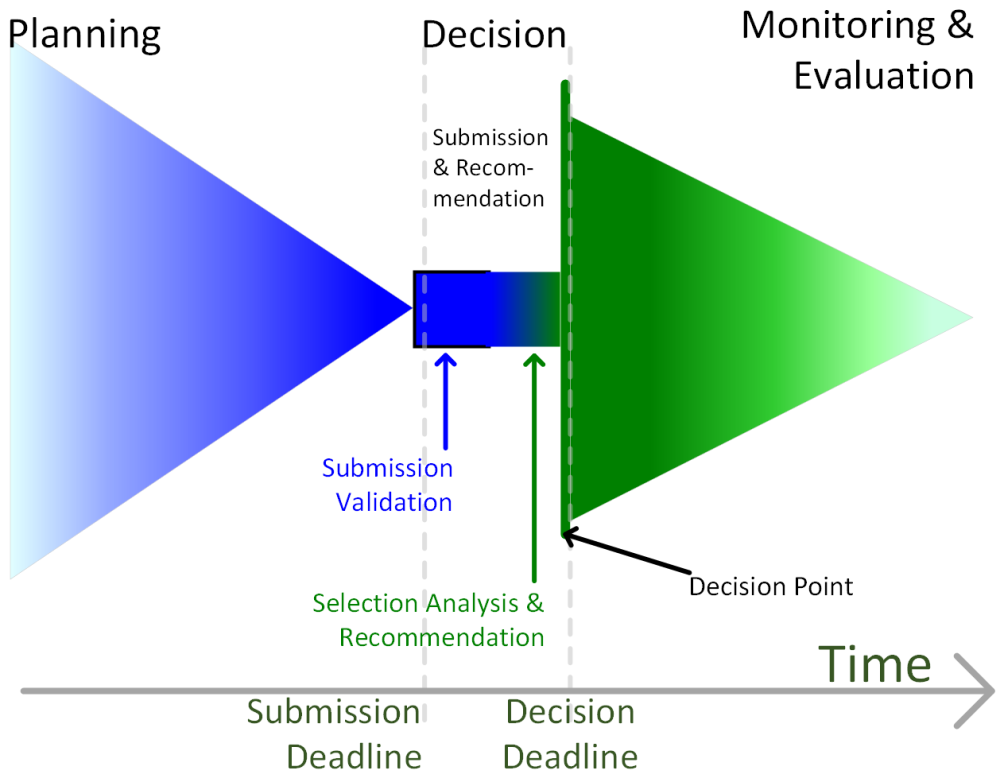
How does a ‘requester’ know that a ‘submitter’ has provide a correct, complete, accurate and relevant ‘submission’? A framework to evaluate the planning, receipt, and evaluation of submissions.
Most people have heard of the mnemonic SMART. What you may not know is that this heuristic will turn 40 next year. Written by George T. Doran, it was first published in 1981 [1].

This is a blog continues the series, ‘The RBM Plan!‘ looking at the challenges and criticisms for RBM. This topic allows an organization to design a RBM program tailored to their circumstances while hopefully escaping the mistakes and errors of other organizations.
Continue readingIn my last blog, I introduced the ‘NOW-Event-Map‘. This model combines both a forward looking strategic planning model with a retrospective performance reporting model. At the center of the map is the enduring concept of ‘NOW’. At the end of the prior blog I promised some thoughts on how the map might be used – besides as an academic thought exercise.


