Three Months of IPOOG’ing

The IPOOG model supports event planning and nonprofit management. It structures time tracking time and prioritizing tasks. This is an interim report on using the time tracking aspect of the tool over the past three months. Future improvements will be based on peer feedback.

Continue reading

Factoid Bingo – Details, Details, Details

In a previous blog, Factoid Bingo was introduced. Think of this blog as sort of an annex. It records details that bog the main blog down. Poke around and use the details noting that it is written primarily as a memory jog for myself.

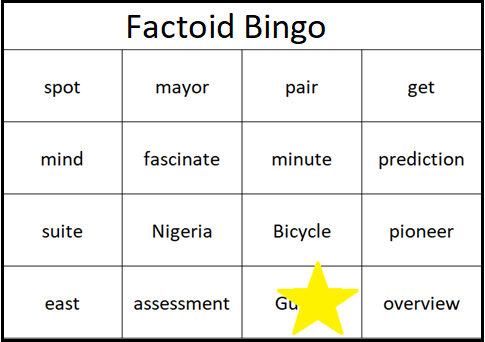
Sample play card for Factoid Bingo, on square claimed (Guitar) with a sticker.
Continue reading

Factoid Bingo

Factoid Bingo helps a large(ish) group of people introduce themselves to each other. Best played in person, the game shares an interesting fact about a person via a randomized list of Factoids. In the game, each player tries fill the card by finding the owner of the respective facts. Prizes are given for blackouts, lines and to the introverts in the group.

Continue reading

Four Assets for Families

Families find themselves in a Financial Literacy program to deal with a money emergency or (preferably) to prevent such an emergency. Ideally, the family learns about better money management – but do they learn what role money should play in their lives?

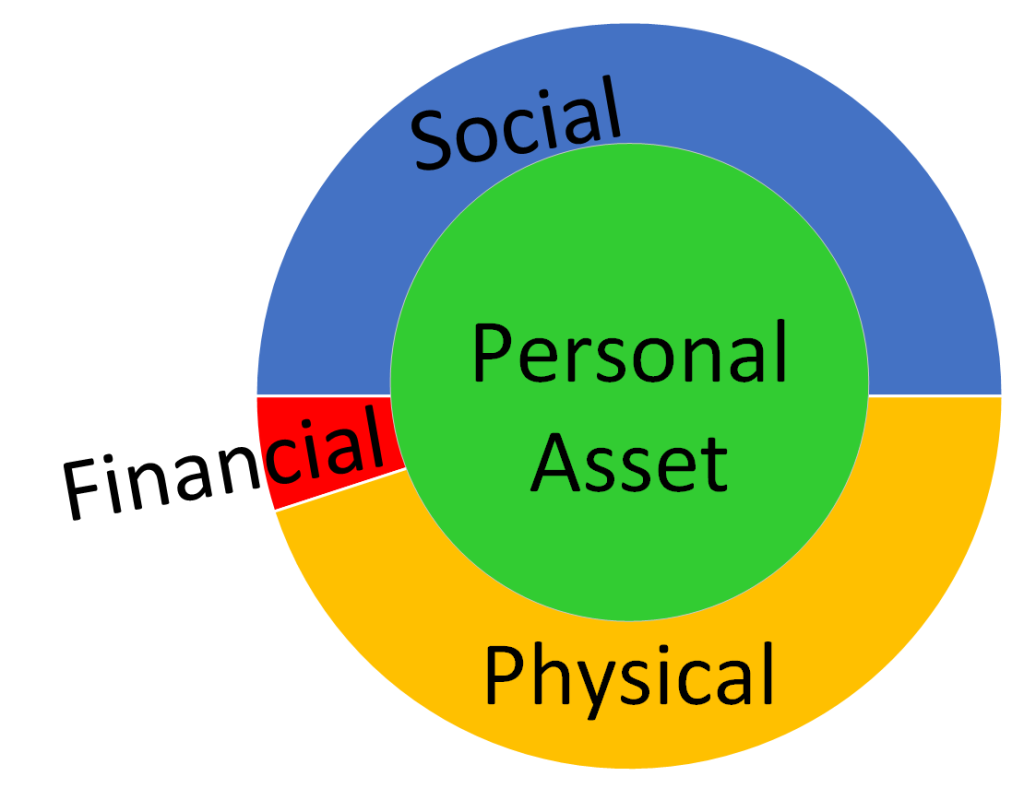
Model showing four asset blocks that pertain to all individuals as they navigate society. The blocks are Personal, Social, Physical and Financial.
Four Human Block Asset Model (4Human-Block)
Continue reading

2×2 Goals

What does Albert Einstein [1], a gold medal-winning Olympic Athlete, the lottery, and Afroman’s hit song ‘Because I Got High‘ have in common? They can be mapped to the 2×2 Goal matrix and help financial literacy course participants better understand how to set and attain their goals.

2×2 Goal Setting: Realistic X Effort
Continue reading

SAMI Financial Literacy Goals

Most people have heard of the marshmallow test. Ask a young child if they want one marshmallow now or two in a short while. The test was designed and originally delivered in the late 1960’s and early 1970’s, it showed a correlation between a young child’s ability to delay gratification and their future success [1].

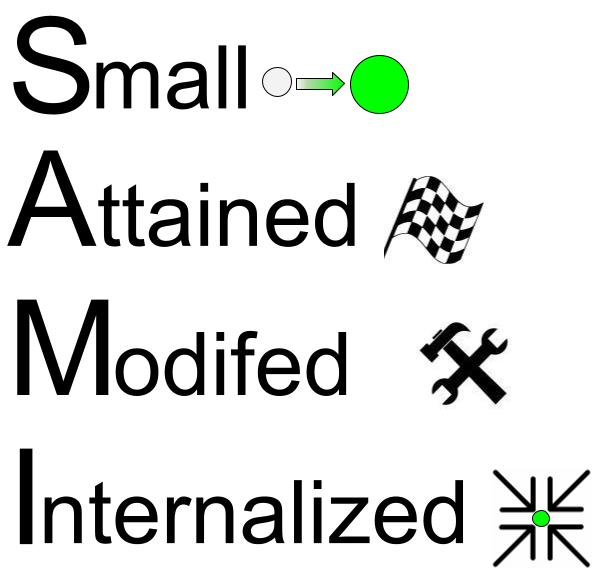
Graphic representation of the SAMI Goals.
SAMI Goals (Small, Attained, Modified and Internalized)
Continue reading