Organizational Biology

How organizations really work

Organizational Biology

Thinking Positive About a Negative Score

Organizations need to pick winners and losers.  For example, a government must decide to whether to fund project X, Y or Z; a corporation only has the capital to build asset A, B or C. 

Most organizations have developed a portfolio selection and management methodology.  There are typically 2 parts to such a process: a set of criterion and a scoring scheme to rank the criteria.  In this blog, I want to focus on the second challenge, the scoring. 

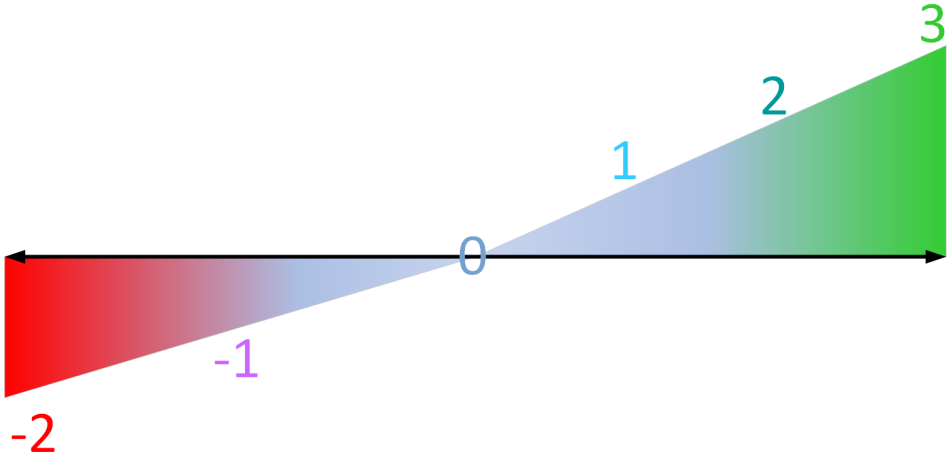
Balancing scoring Model is composed of two right-angled triangles sloping a center vanishing point which represents the value of zero.  At the left, the triangle dips below a black line 2 units into the negative.  At the right the triangle rises out of the line 3 units.  -1, 0, 1 and 2 value points are between these two extremes.
The +/- Scoring Metric
Continue reading

Facebook and the Mall

I recently used FaceBook’s marketplace for the first time (I know, I am a VERY late adopter).  It was easy to post an entry, the interface was intuitive, communications through their messenger application was fast and it was simple to flag when the item was sold. 

Technically it was not a sale as I gave it away.  I offered for free a pair of working computer speakers I had been dragging around with me for about 10 years but was loathe to simply throw out.  

Speakers – free to a good home.

Facebook and Freebies

By giving away those speakers, I delayed their entry into the recycling system or more than likely the landfill.  They will end up there someday but at least for awhile they are being used – and this is where Facebook could improve its Marketplace … and earn some kudos.  

Why Not Support Free?

Facebook facilitated this delay to the dump and it should take credit for this.  Right now their interface is tailored or biased towards selling but could easily promote the freebie.  This would build user loyalty and a sense of real-community via the online community. Heck, they could run statistics of so many ‘cubic feet, pounds or number’ of items diverted from the waste pile in such and such a city. How is that for a triple bottom line!

Supporting the Local Shopping Mall

One more suggestion for Facebook, something that can help them grow the marketplace, build local communities and sustain itself as its user base grows older – a shopping mall lock box.  

I met the person I was giving the speakers to in a local shopping mall food court.  I don’t want strangers coming to my home and it is always better to meet in a public place.  Of course this was contingent on me waiting at the mall and the buyer driving to my location.  Why not remove time from the equation and build local spaces at the same time.  

Meet You at the Lock Box

Here is the idea.  Facebook partners with a few shopping malls to install lock boxes in their public space.  The seller goes, places the item in the lock box and logs the transaction on Facebook.  The buyer, on their own time picks up the item from the lock box.  Insert security protocols, etc. to manage the transaction. 

The payment is made electronically when the lock box opened and the buyer takes the item out.  If it is not what they wanted, the put it back and cancels the transaction.  

Facebook would take a small transaction fee, e.g. $0.50 which it shares with the mall.  The mall gets some revenue, walk in traffic and can have its tenants cross promote on the sale.  Based on the category, different stores would advertise to both the seller and the buyer. For example, for the above speakers, the stores selling electronics could promote their computer departments.  

3 L’s and Conclusion

Insert liabilities, logistics and lawyers – but heck, this is only a thought exercise.  In the meantime, I will use Facebook to get rid of other working stuff I do not want to throw away.  To close, anyone have Mark Zuckerberg’s home phone number?

In other words, making a difference in our society and the environment (reducing consumption, materialism, reuse/recycling) can be as simple as creating the interface to do it efficiently. What say you Mark Zuckerberg?


RHI – Economic Outlook 2019-09-10

In my ongoing efforts to remember conferences I attend, some notes on the Robert Half CEO Insights session on September 10, 2019.  The Overview is found below and my notes are as follows: 

  • Disruption in the Alberta 
    • Harder to do business. 
    • Professional service business compete with the internet. 
    • Increased global investments in Alberta.
    • Historically, Alberta has not been sufficiently stressed to diversify.
  • Challenges in current operations
    • Demographic changes.
    • Disruptions are become more intense and common.
    • Downturns can be beneficial in turns of improving the muscle of management and the organization.  
    • Culture is instrumental to the sustainability of the organization. 
  • What does the future hold?
    • Interpersonal interactions will become increasingly important.
    • Align the complement of people to move into new opportunities.
    • The role of artistic and craftsmanship will become more important. 
    • The challenges of multiple mediums in remembering which channel did you use.  
  • What role can the not-profit or social sector play
    • Social enterpreneurship is becoming more important.  
    • Increasing it is more than ‘cutting a cheque’; providing expertise or support for particular campaigns.  
    • The arts community helps to attract talent to the Edmonton.
  • What are the expectations of customers in regards to technology
    • Primarily efficiencies.
    • An innovation application funnels into a ‘Shark-Tank’ like program
    • Need to support innovation including taking time away from revenue generation to explore the opportunities
    • Failure needs to be encouraged, nurtured and properly managed.
  • Other thoughts
    • MELCOR is undervalued and a potential investment. 
    • Technology is a collaboration based industry.  
    • Canada is increasingly seen as having unstable politically and over-regulated; stay tuned for the Fall federal election. 

Event Overview

  • Assessing the Impact of Alberta’s Economic Challenges, Shifting Organizational Cultures & Ongoing Tech Disruption 
  • In our rapidly evolving economic landscape, the future continues to be full of uncertainty;
  • but tapping into the insights and learnings from today’s business leaders can provide a roadmap to success.
  • Topics: 
    • The impact of politics on the current business landscape.
    • The positive relationship between company restructures and corporate culture.
    • Managing change for your teams in uncertain times.
    • IT innovations and competitive advantage.
    • Laying the foundation for future growth
  • Panelists:
    • Aroon Sequeira, Chairman, Sequeira Partners
    • Darin Rayburn, President & CEO, Melcor Developments Ltd.
    • Jeremy Hayward, President, solūt

Professional Development: Verified and 2 hours

The United Nations – Pension and After Service Health Fund

Most people never have to consider the challenges (and enormous benefits) of choosing to be an international public servant.  That is an employee of an international organization.

For the duration of your employment you don’t typically pay taxes, nor do you pay into a national social security network such as the Canada Pension Plan or a health insurance program. When you are younger this seems like a great deal but what happens when you leave the service or when you retire?  Do you have a pension, health insurance or other social benefits when you are no longer an international public servant?

The answer is… it depends and this is a look into the most well-known of the international organizations, the United Nations, and their post-employment employer benefits programs.

Pension Plan or Provident Fund

The United Nations offers a pension plan but some organizations (and nations) have taken a different direction, Provident Funds. Effectively a provident fund is a savings account

When I was contracting for NATO, for example, I recall staff being able to withdrawal from their provident fund to buy homes or pay for the children’s education.  Obviously the details of each fund is very different but that is a potential advantage to an employee of a provident fund is the ability to make use of the resources earlier rather than waiting for retirement.

Unfortunately provident funds are seldom portable between organizations. Another challenge is that risk is not distributed.  Thus for a person and family who remain healthy, they may retire and leave a nice inheritance to their children.  Conversely if you/family become ill earlier in your life your provident fund may be quickly depleted.

A benefit to the employer is controlling the liability associated with the provident fund.  They truly are a define contribution scheme meaning that the long-term liability ends after each monthly fund payment. On the other hand, a friend of mine moved to Malaysia and knows stories of older people having to go back to work after gambling away their lump sum provident fund payment.  But back to the United Nations!

After Service Health Insurance (ASHI)

The United Nations offers two types of after-service benefits to its employees, a pension and health insurance.  As a career organization, this makes sense and the portability of both of these programs is excellent.  The pension fund is a defined benefit plan with a five year vesting periods.  With ~$54B USD fund, the pension is generally considered to be fully funded although has been under criticism for its investments, governance and performance (e.g. see: The UN General Assembly Urges The 54 billion pension fund to shape up).

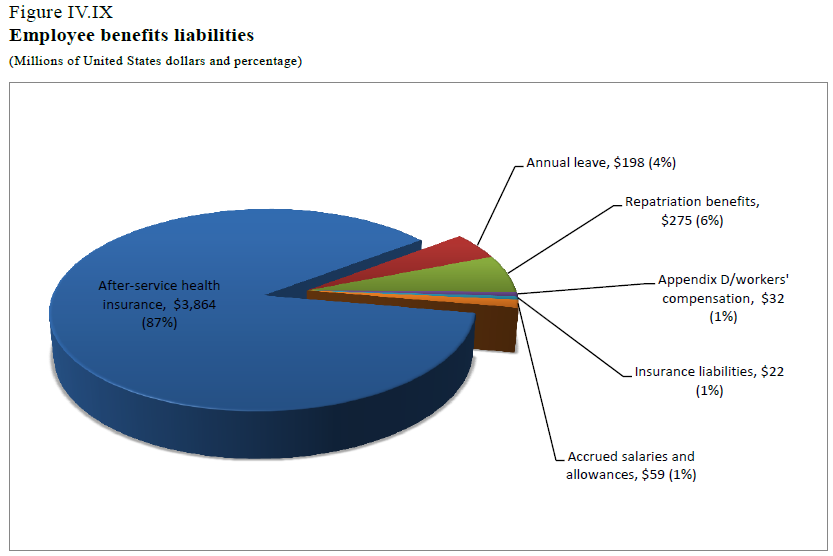
ASHI is another matter and represents a significant cost and liability to the United Nations.  The following graphic provides a visual image of why this is a critical issue given that this one benefit represents nearly 90% of the total employee benefit liabilities.  ASHI and the other long-service employee benefits have grown to the largest liability for the UN primarily because of ‘pay-as-you-go’ philosophy.  All sources from the 2016 UN Financial Statements.

Analysis of UN long service employee benefits (2016 financial statements)

What can the Alberta Government learn?

The UN’s ASHI’s deliberation has a direct parallel to the current challenges of an aging population and funding medical needs.  One of the primary challenges is moving from a pay-as-you-go to a fund-as-you-go model.  Given the accumulation of public debt and the inclination in the western democratic tradition to focus on shorter time horizons, this solution may be a challenge.  Nevertheless, the UN experience can be an excellent analog to inform public policy in Alberta (and Canada and elsewhere) on managing citizen (and public servant) costs.

Pin the Tale on the Disruption

This is a conclusion of a previous blog series entitled ‘Seven Days of Disruption‘.  These blogs discussed a variety of potential disruptions that could affect the public service.  During a Financial Management Institute conference entitled ‘Disruptive Writers‘ on November 22, 2017, 110 presenters, attendees and volunteers were asked to rank one of 18 disruptions as having the greatest impact on the Canadian Public Service over the next 10 years.  This blog will describe the game ‘Pin the Tale on the Disruption‘ (in case I want to use it in the future) and describe the results of the game including the response rate.

The Results of the Game

The number one identified disruptor (+15%) was the emergence of Artificial Intelligence.  Four disruptors were given more than half of the scoring, these four were:

  1. Evolving Artificial Intelligence
  2. Growing debt Overhang
  3. Cyber Insecurity
  4. IT Revolution 2.0 and the Rise of the Machines

Despite the inclusion of sociopolitical disruptors (e.g. Canadian regionalism, Canada in the age of Trump or De-Population Waves), technology disruptors represented more than a third of the scoring and were in first, third and fourth place respectively.  While hardly a scientific or statistically sound survey, the game ‘Pin the Tale on the Disruption’ should help public service leaders plan and align operational and tactical plans over the next decade.

Results of ‘Pin the Tale on the Disruption’ – FMI Event 2017-11-22

How the Game was Played

  • As part of the pre-conference notes and as a physical hand out, each participant were given 12 dots and a listing of disruptions to vote on.
  • Participants could also ‘make your own disruption’ if they thought one or more were missing (note, no additional disruptions were noted).
  • Dots were applied before the conference and during the break.
  • Instructions were provided upon registration, informally at each table by event leader and then en masse at the start of the session.
  • By apply dots, attendees received a ticket which entered their name in a draw for a prize (note, the tickets were inadvertently forgotten so prizes were given out via other means).

Future Notes on How the Game Went

  • Approximately 1,200 dots were distributed and 757 dots were applied for a response rate of 63%.
  • This response rate is lower than expected (with an ideal around 80%) and could be improved via better floor walkers and in-event promotion.
  • The moderator and the game coordinator had a good rapport.
  • Identifying and having a roving microphone in advance to encourage audience participation would have been ideal.
  • A pre-game run through with the moderator and participants would have been beneficial.

Blog Annex – FMI Event Description:

Disruptive Writers. 

This FMI event will focus on real and potential disruptions and how to navigate change.  Three local authors have each written about this topic from very different perspectives.  These authors will describe their books and their journey to becoming authors.  

Day 6 – Regions, Resources & Populism

This is the last list of potential disruptive factors that could influence the Canadian Public Service over the next decade or so.  See the previous blogs for the previous set of disruptions and Seven Days of Disruption blog for the entire set.  These are in support of November 22, 2017 FMI Conference – Disruptive Writers.

  • Quebec and Regional Tensions (editor)
  • Resource and Commodity Supply, Demand and Price (adapted from 2015)
  • Rising storm of populism; Canada and Cultural War in the Age of Trump and the Progressives (adapted from 2016 and editor)

Quebec and Regional Tensions (editor)

A full generation has grown up without ever hearing about Quebec separation, referendums or regional tensions.  Can it last?  The first challenge is geography, Canada is big – very big.  Many Canadians will never visit all of the provinces and territories, how can you sustain a country in which geography conspires against a sense of affiliation.  The next challenge is economics.  Canada has been sustained in the past half century by a wealth transfer from the Western Provinces to the vote rich eastern regions.  Despite multi-billion dollar provincial deficits, Alberta is still a ‘have’ province and will contribute to the ‘have-not’ areas.  Finally there is tribalism or regional identity.  Quebec has been the center of this with two referendums and the 1999 Clarity Act being central activities in the twenty years from 1980 to 2000.  Northern Canada, with the creation of Nunavut, seeks its own path to prosperity.  Atlantic Canada continues to struggle economic although recent mineral discoveries have brightened these prospects. So, will Canada continue to exist and prosper as it moves toward its bicentennial or will it be tore asunder by its size, politics and economics?

Resource and Commodity Supply, Demand and Price

Adapted from A.T. Kearney 2015: The resource “super-cycle” of the early 2000s saw global prices for energy, minerals and agriculture prices hit 30-50 year highs.  A new global resource “slump cycle” began in 2014, characterized by a dramatic oil price drop.  These underlying dynamics mean that the resource slump cycle will continue into the foreseeable future. Past resource cycles have continued on average for 13 to 15 years, because it takes time for supply infrastructure to realign with demand dynamics. Therefore, the current mismatch in demand and supply is likely to persist until 2027–2029. Renewable energy is a wild card as it is expected to continue to attract steady investment despite lower prices—likely as a result of less costly technologies, government regulations, and consumer preferences for cleaner power.  As a major exporter of minerals and an energy super power, this slump will particularly hurt the Canadian economy and the ability to maintain government tax revenue.

Canada and Cultural War in the Age of Trump

Adapted from A.T. Kearney 2016: A populist, worldwide backlash to globalization and neoliberal economic policies continues to spread in the wake of the Global Financial Crisis due to a broad range of underlying structural issues, from digital information proliferation to wealth inequality. This backlash is creating policy instability and raises the risk of a potentially hostile environment for globalized business models.  A.T. Kearney defines populism as a mass political movement that harnesses “the power of the people” to reject the elite and the status quo. Populism is usually concentrated around a charismatic leader, and often includes advocating for more redistributive economic policies—or even illiberal tendencies to concentrate power in a single individual.  The impact for governments is navigating protectionist trade partners; volatility in civil, constitutional, policy and regulatory endeavours, and the risk of knee-jerk reactions resulting in the break down of civil society.  Compounding this challenge is the ‘dumbing-down’ effect of social media converting civil discussion and complex thought into 144 character sound bits and simple likes and memes.

Editors Note: There is a description that a cultural war is underway in the United States between ‘progressives’ or left and ‘populists’ or right.  Hillary Clinton, Bernie Sanders and the Democratic Party are progressives with Sarah Palin and being populists.  Generally the left accuse the right as being fascists (for more on how this may be topsy turvy, see: ‘The Big Lie: Exposing the Nazi Roots of the American Left‘) and the right accuses the left of destroying liberal democracy through masked thugs and censorship of institutions such as universities.  In Canada we have less of this possibly because our political system allows for a more nuanced reflection of opinions (e.g. we have left of center NDP, right of center Conservatives and the center-left Liberal Parties. Nevertheless, what is the impact of this cultural war coming to Canada and can our democratic institutions survive the battles?

Day 5 – Islandization, IT and Post-Consumerism

This is the second last list of potential disruptive factors that could influence the Canadian Public Service over the next decade or so.  See the previous blogs for previous disruptions and Seven Days of Disruption blog for the entire set.  These are in support of November 22, 2017 FMI Conference – Disruptive Writers.

  • “Islandization” of the global economy (2017), NAFTA Negotiations and the rise of protectionism (editor)
  • IT Revolution 2.0 and the Rise of the Machines (adapted from 2015)
  • Post Consumerism (adapted from 2016)

“Islandization” (2017), NAFTA Negotiations and the rise of protectionism (editor)

Adapted from A.T. Kearney 2017: After a quarter century of rapid globalization, restrictions on immigration, trade, and other cross-border flows are now increasing. A new phase—which we call “islandization”—has begun, marked by growing levels of nationalism, protectionism, and parochialism. While the United States is at the center of this trend, many of the countries leading the globalization charge are also quietly islandizing, creating a dramatically different operating environment for global businesses and governments.

Editors Note: Returning to the Great Depression, one of its acknowledged causes of its prolongation was the establishment of trade barriers between advanced economies exactly at the time when economic activity was needed the most.  At the same time, exporting jobs and manufacturing skills undermines an economy and a tax base.  In other words trade like most things is something to be managed with no exact ‘pre-set’ value.  Canada is a directly beneficiary of being a trading nation even if most of it goes south to our NAFTA partner.

IT Revolution 2.0 and the Rise of the Machines

Adapted from A.T. Kearney 2015: The Internet of Things (IoT) is a fast-growing constellation of connected “smart devices,” such as smartphones,  self-driving cars,  household appliances, industrial robots and smart electrical grids. With continued dramatic growth in connectivity, these machines increasingly transmit information to one another and take real-world actions without humans in the loop. Beyond gizmos and conveniences, IoT may lead to dramatic change for societies, economies and governments.  For example, if self-driving vehicles take off, what are the regulatory, economic and employment impacts of giving up this human activity?

Editors Note: Industrial robots are an important IoT growth and China is forecasted to become the world’s largest user of industrial robots by 2017.  This means greater competition for manufacturing jobs and industries in Canada.  Beyond productivity, the IoT also contains significant cyber-security and privacy concerns for consumers and citizens.  As a positive, the innovation and productivity gains are central to the miracle of human development we have seen over the past two hundred years.  The Industrial, Green, Fossil Fuel and Information Revolutions have all created greater material wealth for humans… notwithstanding the negative corresponding negative impacts to the planet and our fellow species.  In other words, two hopes: 1) we can manage the rise of the machines to generally improve the human condition and 2) our robot overlords treat us better than we have treated some of our fellow animals and humans.

Post Consumerism

Adapted from A.T. Kearney 2016: Consumer values and preferences in developed markets are shifting toward buying fewer physical goods and valuing experiences over possessions. While this is creating new business opportunities for service providers, it also raises important challenges for traditional consumer products groups and retailers.  Concurrent with this change is the emergence of the Amazon.com who are effectively competing for a shrinking pool of consumption.  The OECD reports that the rate at which member countries consume physical materials has begun to decline and that at present “OECD countries generate 50 percent more economic value per unit of material resources than in 1990.” While this change is generally good for the environment (and likely good for the soul – editor) it may also pose challenges to governments as retail outlets fail and small business retailers cannot compete with either Amazon or online digital experiences.

Editors Note: Remember Abraham Maslow and his hierarchy of needs?  If post-consumerism turns out to be a ‘thing’ it certainly would validate Maslow’s work?  There is some tough sledding though including unwinding a century of modern marketing and an economic structure based on consumption.  Nevertheless our landfills and planet would probably thank us.

Day 4 – Debt, Immigration and First Nations

This is the fourth list of potential disruptive factors that could influence the Canadian Public Service over the next decade or so.  See the previous blog for the first set of three and Seven Days of Disruption blog for the entire set.  These are in support of November 22, 2017 FMI Conference – Disruptive Writers.

  • Growing debt overhang (2017)
  • Immigration and Changes to the Canadian Values and Characters (editor)
  • Indigenous Power (editor)

Growing debt Overhang

Adapted from A.T. Kearney 2017: Driven by historically low-interest rates, debt levels around the world have risen dramatically and now stand at all-time highs. These debt obligations are on increasingly shaky ground as a result of both their sheer size and key policy shifts under way in the United States and China. An adjustment—orderly or more likely otherwise—will occur in the near to medium term.  Concerns are for debt in governments, corporations and households.  Canadian Government total debts is less than its G20 peer countries but still well above 85% of national GDP (source wikipedia).  Unfortunately Canada trails its G20 peers in corporate and in particular household debt.  Household debt is also worryingly high with Canada at the epicenter of this debt buildup. Canada is among the developed markets in which household debt rose 2 to 3 percentage points in 2016—in large part due to a rise in mortgage lending and housing markets that seem to be overheating. Household debt now stands at over 101 percent of GDP in Canada.

Editors Note: The Great Depression of the 1930’s is often attributed to the accumulation of debt both at a personal and national level.  Credit purchase of goods and mortgages were both relatively new financial tools which fueled a rapid expansion of the US economy in the 1920’s.  Beyond consumables, the stock market was also a beneficiary of leveraged purchases.

At a national level, Europe was still reeling from the effects of the First World War.  The massive allied debt owed to the United States and its unwillingness to forgive this debt made the allies less forgiving in turn for German war debts and reparations.  Add in protectionism and an entire house of cards folded with the correction of the stock market in October 1929.  Interestingly many of the same conditions have parallels in our own time.

Immigration and Changes to the Canadian Values and Characters (editor)

Canada has been a net beneficiary of immigration since humans first started to leave Africa tens of thousands of years ago.  However when most people think of immigration it is not of Bering Straight land bridges but instead of the initial waves of mostly European settlers from the 16th to the end of 20th century.  Since the 1970’s, government policies and changing demographics have seen immigration sources move from European sources to being from all parts of the globe.

A greying Canadian population will mean that immigration must continue even to maintain our current population let alone allow from natural growth.  Despite a Canadian government policy of multiculturalism, what is the impact of displacing a predominantly Euro-centric population and set of cultural values with a more global set of values?  As well, are there risks of a ‘Balkanization’ of Canada such that a Canadian citizen may grow up in an enclave without ever leaving the culture (or perhaps language) of their ancestral home.  Are there risks of a loss of Euro-centric values of liberalism and individual freedoms if in migration was attracted to these norms in the first place?

Indigenous Power (editor)

Human colonization of the North American continent started many thousand of years ago with either the current first nations or perhaps even an earlier wave of human migration.  Irrespective, the people who make up Canada’s first nations have a long standing claims and association with the land. In many parts of Canada this association was articulated in a series of treaties. The Truth and Reconciliation Commission and more recently the National Inquiry into Missing and Murdered Indigenous Women and Girls are two recent government efforts to make for a better arrangement between Canadian society as a whole and the First Nation segment.  For Canadian governments and the larger society, the questions of how to resolve land claims (including competing claims for the same territory), integrating this culture while still maintaining the liberal principles of equality for all.  As well, there is the question of what is the end game for all of the players?  What does resolution look like and exactly what will it cost to achieve this state?

Day 3 – Greying Population, AI and Extremism

This is the third list of potential disruptive factors that could influence the Canadian Public Service over the next decade or so.  See the previous blog for the first set of three and Seven Days of Disruption blog for the entire set.  These are in support of November 22, 2017 FMI Conference – Disruptive Writers.

  • Depopulation Waves (2015)
  • Evolving Artificial Intelligence (2015)
  • Geopolitical Realignment (2015) and Continued Global Violent Extremism (2015)

Depopulation Waves

Adapted from A.T. Kearney 2015: As global population growth slows, some countries’ populations are already shrinking. Global population growth is decelerating from 1.8 percent in the 1980-2000 to just 1.1 percent in the 2000–2025 period. The three main drivers of depopulation are aging, international migration, and high mortality and morbidity rates.  Depopulation presents a range of challenges including labor shortages, weaker consumer demand, lower tax revenue and higher health care costs as the greying population lives longer.

Editor Note: Additional impacts to the above are a massive transfer of wealth from the baby boomers to their children.  Of course this wealth is only of value if the economic and social structures continue to exist to support them.

Evolving Artificial Intelligence

Adapted from A.T. Kearney 2015: Artificial intelligence (AI) is already used in sectors as distinct as finance, journalism, and engineering, and it continues to find new applications. For instance, AI is used in security trading dark pools, writes breaking news articles, and dominates humans in many games (such as chess, backgammon, Scrabble, and even Jeopardy!). It is also being leveraged in an attempt to cure cancer (as part of the Big Mechanism project being run by the Pentagon’s Defense Advanced Research Projects Agency [DARPA]) and make lethal decisions on the battlefield through its integration into the weapons systems of several countries. Increasing investment in deep learning technologies will enable AI to expand to even more sectors.

Editor Note: This topic has been explored in detail both in the business press and in fiction (anyone remember HAL from the movie 2001: A Space Odyssey?).

Geopolitical Realignment and Continued Global Violent Extremism

Adapted from A.T. Kearney 2015: Global economic and political power is increasingly diffuse thus compli­cating leadership efforts within the international system. In the years since the Global Financial Crisis, the United States and other Western powers have receded from the global stage  while rising regional powers have increased their political influence.  These changing power dynamics are decreasing the effectiveness of global political institu­tions. These institutions have transformed little in the past 60+ years and are failing to accommodate shifting power dynamics.  Global arms spending, has grown in recent years after decades of decline following the conclusion of the Cold War.

Today’s most pressing issues, including security concerns, are global in nature but cooperation has proved increasingly difficult in the current international environment. The international security architecture has been slow to address global terrorism and transnational organized crime. Moreover, lack of trust in govern­ments and businesses complicates international efforts to prevent cyber threats.

Editor Note: Canada has been a direct participant and beneficiary in the international movements of the second half of the 20th century.  From being a founding member of the United Nations and NATO to conceiving the concept of peace keepers, Canada has been described as ‘punch above its weight’ in international affairs.

Day 2: Power, Cyber-Security and Renewables

This is the second list of potential disruptive factors that could influence the Canadian Public Service over the next decade or so.  See the previous blog for the first set of three and Seven Days of Disruption blog for the entire set.  These are in support of November 22, 2017 FMI Conference – Disruptive Writers.

  • Changing Nature of Power (2015)
  • Cyber Insecurity (2015)
  • Dawning of a new urban transportation age and the Canadian City (2017 and editor)

Changing Nature of Power (2015)

Adapted from A.T. Kearney 2015: In today’s world, power is increasingly fleeting and diffuse.  It is disseminated across individuals empowered by new technologies such as search engines and social media; to lower levels of government, including cities; and to start-ups and user-driven networked organizations. The rise of the global middle class is leading to greater individualism and expectations for service from their governments and from businesses, with consumers having never had a broader freedom of choice. Global trust in most institutions reached an all-time low in 2015, with governments continuing to be the least-trusted institution.

Editor note: So What?  The answer is that trust is foundation of a society and an economy.  It profoundly reduces the transaction cost in both.  Public institutions support this trust by enforcing social norms. In a strange twist, public institutions are sometimes powerless at the hands of a small but vocal group of individuals.

For example, an August 2017 discussion on free speech at Ryerson University was cancelled because the University was concerned about safety and security.  Described as domestic terrorism by one of the panelists, this is an example of public institution (Ryerson) self-censuring thought and discussion with a resulting degradation of its own power and trust.  While the individuals involved may congratulate themselves on forcing their view points onto an entire institution, they should also recognize that they are sharing a common heritage with the black, brown or red shirts who dominated politics a century ago.

Cyber Insecurity (2015)

Adapted from A.T. Kearney 2015:While the upside of the Internet is enormous, cyber threats continue to multiply. Estimates put global cyber crime losses at somewhere between $375 billion and $575 billion annually.  All connected devices and systems are vulnerable to attack. Computer systems, for example, are vulnerable to ransomware. The growing IoT also lacks strong security systems and is highly vulnerable to data theft.  To make matters more complex, the cyber arena is a growing domain of warfare between countries, in which businesses can be caught in the crossfire. The “Darknet”—parts of the “Deep Web” that are not discoverable by traditional search engines—remains a serious criminal threat, especially with the rise of crypto-currencies. It is cloaked with encryption software that provides anonymity to users. The Darknet is used as a source of cyber attacks, as well as a place to buy and sell ransomware and other cyber weapons. Another business risk of the Darknet is that it provides a marketplace for stolen data collected through cyber attacks, augmenting hackers’ motivation to continue conducting such attacks.

Editor note: Governments see online services as a way to provide better government for fewer resources.  The Singapore, Scandinavia and the United Kingdom are acknowledged leaders in this effort although the Canada Revenue Agency has also made great strides in allowing for a digital experience.  Nevertheless, governments have a number of challenges including the Facebook-effect, the Shiny-bauble problem and resource asymmetry.

Facebook Effect – You are the Product

The Facebook-effect is the problem of comparing government services to a for profit service such as Facebook.  If Facebook can provide service xyz or make its offerings free, why can’t a government?  There are of course a number of answers to this.  Firstly Facebook is not constrained by the same legal, moral and democratic frameworks.  Facebook has an entirely different revenue model.  For social media, the user is the product.  Thus your likes, shares and contributions builds up a profile of you as a person which can then be monetized.  For governments such monetization of a citizen would be outrageous.  Finally, Facebook can fail while governments are expected to be enduring.  If Facebook ceased to exist tomorrow it would be inconvenient but a new social media product would take its place (anyone still using MySpace?).

The Shiny-Bauble Problem

Governments like to implement new things.  Ribbon cutting and shovel turning is good press and leads to the primary objective of any government – staying in power.  As a result, governments get distracted by the Shiny-Bauble which have a short-term effect or solution that has little enduring value and may cause long-term harm to a society.  The worst thing about Shiny-Baubles is that they may become entrenched in a society by a small group who benefit from the government largess.  In other words, the only thing worst than a Shiny-Bauble is trying to turn one-off.

Resource Asymmetry

Governments often have fewer and less enabled resources to delivery digital services or fight cyber-threats than the legitimate and illegitimate competitors.  The above Facebook discussion is one aspect of this resource asymmetry and consuming valuable government resources pursuing a Shiny-Bauble is another.  A darker example of asymmetry is that the bad guys only need to look for and exploit a single weakness in a government’s cyber environment.  At the same time, a government must fight all threats while trying to provide services.

Dawning of a new urban transportation age and age of renewables (2017 and editor)

Adapted from A.T. Kearney 2015: The global urban population has risen steadily over the past two decades. According to the United Nations (UN), there were about 2.9 billion urbanites in 2000, but that number has increased to 4.1 billion and will hit 4.5 billion in 2022. The number of megacities, defined as cities with 10 million or more inhabitants, rose from just 17 in 2000 to 29 in 2015, and the total is projected to rise to 36 by 2025. Hyper-urbanization is heightening congestion levels in cities around the world. The age of the automobile may be ending as cities adopt innovative new technologies and use more traditional mass and individual transit methods to enable smarter and more sustainable urban transportation and growth.

(Editor) Public transit and electric vehicles are two ways that urbanization will change the face of a city but tele-commuting and promoting walk/bike-able cities are another.  This raises a challenge for Canadians as much of our housing stock has been built since the mid-20th century and the economics and logistics for all of these mitigating solutions will require significant government investment and coordination.  It will also require a change in cultural norms and expectations as owing a home has become central to financial and personal-security well-being.