A dark ‘game’ used in select Financial Literacy circumstances to teach how compounding interest works as well as the value of paying down debt.


A dark ‘game’ used in select Financial Literacy circumstances to teach how compounding interest works as well as the value of paying down debt.
In the previous blog, “Four Human Assets“, this model was introduced. In this blog, four lives demonstrating the importance of balancing the ‘4Human-Assets’.

Accountants define an asset as: “…a resource controlled by the entity as a result of past events and from which future economic benefits are expected to flow to the entity.” [1]

One of the challenges of teaching financial literacy is developing an assessment of where individual students and the entire class is at in regards to their knowledge and habits. The following self-assessment tool is a non-scientific method to perform this evaluation.

One definition of financial literacy is: “… having the knowledge, skills and confidence to make responsible financial decisions.” [1]

Human resource costs can represent a large portion of an organization’s budget. They also come in a variety of shapes and sizes: hourly, salary, permanent, temporary, contracted, etc. This blog provides a range of methods to estimate these costs. A key feature is that there is not a one-size fits all solution.

I recall sitting in a board meeting for a non-profit I was involved with years ago and the budget process came up. Specifically the word ‘budget’ meant to different things to different board members.

For most people, we accumulate (or not) wealth slowly, year over year. We work, save, spend, borrow and then go back to work. For the (un)lucky few, wealth comes suddenly which can give rise to Sudden Wealth Syndrome (SWS).

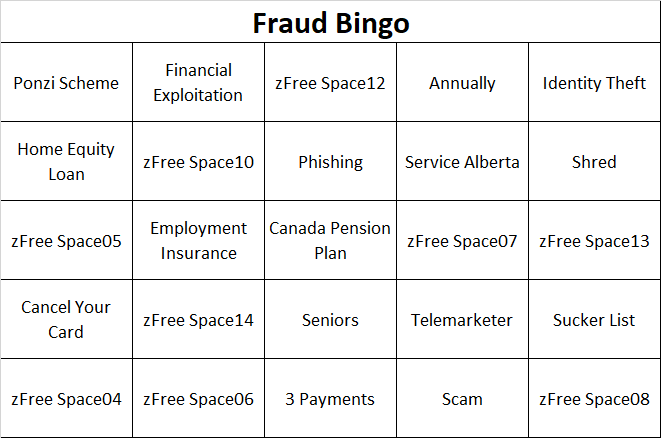
Central to most financial literacy programs is fraud awareness. How to keep the bad guys from getting your money, possessions or good name. Who Wants to be a Fraudster? is a variation of the classic bingo game in which participants match a term or concept to a fraud related question.