Thinking Positive About a Negative Score

Organizations need to pick winners and losers.  For example, a government must decide to whether to fund project X, Y or Z; a corporation only has the capital to build asset A, B or C. 

Most organizations have developed a portfolio selection and management methodology.  There are typically 2 parts to such a process: a set of criterion and a scoring scheme to rank the criteria.  In this blog, I want to focus on the second challenge, the scoring. 
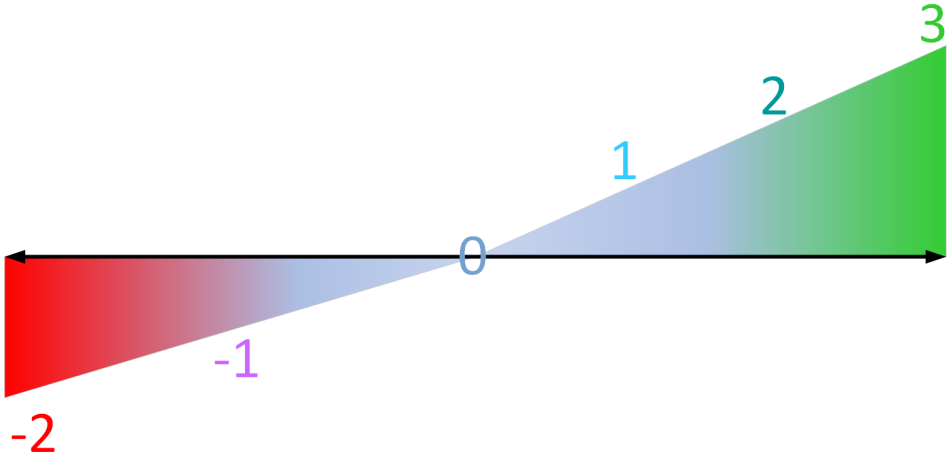
Balancing scoring Model is composed of two right-angled triangles sloping a center vanishing point which represents the value of zero.  At the left, the triangle dips below a black line 2 units into the negative.  At the right the triangle rises out of the line 3 units.  -1, 0, 1 and 2 value points are between these two extremes.
The +/- Scoring Metric
Continue reading

A Valid Validation Map

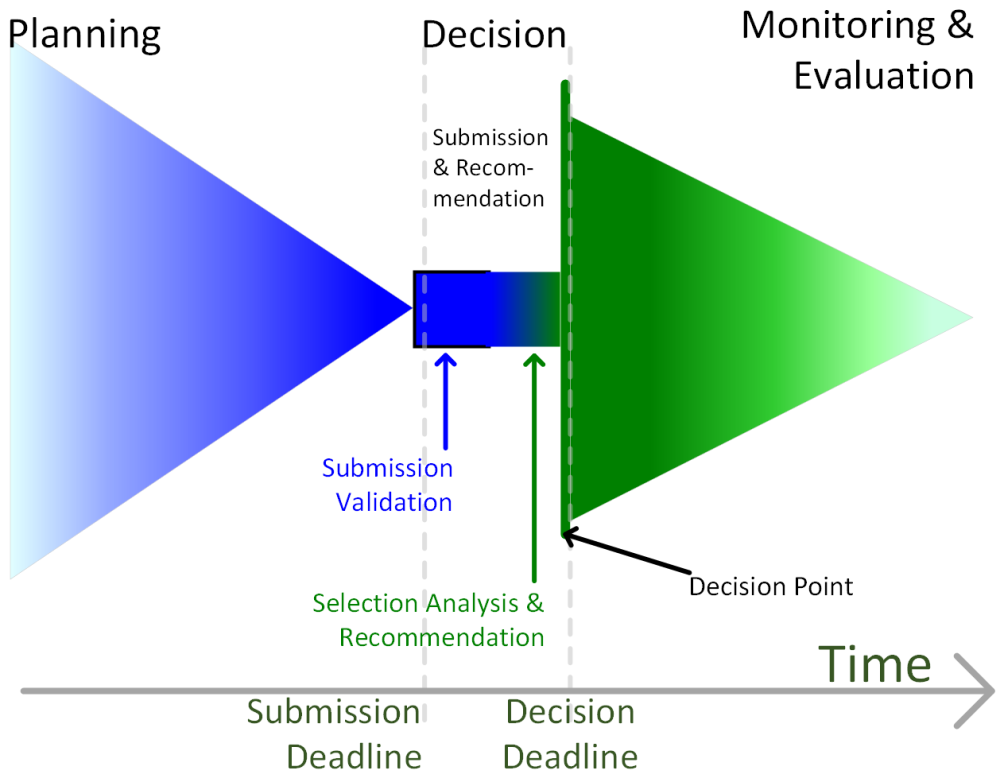
How does a ‘requester’ know that a ‘submitter’ has provide a correct, complete, accurate and relevant ‘submission’? A framework to evaluate the planning, receipt, and evaluation of submissions.

A blue triangle, with its apex on
Submission Validation/Decision model of the NOW-Event.
Continue reading

RBM – A 4-Letter Word: 1 of 4?

This is a blog continues the series, ‘The RBM Plan!‘ looking at the challenges and criticisms for RBM.  This topic allows an organization to design a RBM program tailored to their circumstances while hopefully escaping the mistakes and errors of other organizations.

Continue reading

The RBM Plan!

Results Based Management (RBM) is a fixture in international organizations and used to varying degrees by governments world wide.  For Canadian business professionals or accountants, RBM is an unfamiliar term although they may be better acquainted with RBM’esque concepts such as portfolio investment management or continuous improvement.  

Continue reading

Using the Now-Event Map

In my last blog, I introduced the ‘NOW-Event-Map‘.  This model combines both a forward looking strategic planning model with a retrospective performance reporting model.  At the center of the map is the enduring concept of ‘NOW’.  At the end of the prior blog I promised some thoughts on how the map might be used – besides as an academic thought exercise. 

Three arrows are over-layed on the NOW-Event Map.  The inner most arrow is clockwise and links real time events to operational plans.  The second area is also clockwise and links monthly or quarterly information to tactical planning.  The final arrow is counter-clockwise and links all results to the strategic and visioning planning activities.
The interaction between results and planning.
Continue reading

A Logical Framework

I am brushing up on a few concepts and processes that I have used in the past and may very well need to use in the future.  One concept concerned a business philosophy of Results Based Management (RBM) and a tool RBM uses for project design, the Logical Framework (LogFrame).

Matrices of the Logical Framework.  Rows are in ascending order: Goals, Purpose, Output and Activities.  Columns, left to right, are: Summary, Indicators, Verification and Assumptions.
Logical Framework Matrix – Overview of Columns and Rows
Continue reading