I recall sitting in a board meeting for a non-profit I was involved with years ago and the budget process came up. Specifically the word ‘budget’ meant to different things to different board members.


I recall sitting in a board meeting for a non-profit I was involved with years ago and the budget process came up. Specifically the word ‘budget’ meant to different things to different board members.
In a previous blog, Co-Opetition at 20-Something, I gave myself a memory jog for the book of the same name. One of the reasons I was re-reading this book was to know what the concept has to say about Co-Opetition and Non-Profits [1].
Continue readingIn my ongoing effort to remember what I have read, some notes (aka memory jogs) on the book “Co-Opetition”, by Adam M. Brandenburger, Barry J. Nalebuff [1]. First published in the mid-1990’s, this is not a new book. But, with increasing global competition and the rise of the virtual business place due to COVID, perhaps one that should be revisited.
Continue readingAs a member in MEC, I exist in two different forms. I am a customer for a retail outlet and I am a member (shareholder) in a cooperative.

I spent my professional accounting career in the realms of strategy, governance, information technology, public sector and peripheral fields such as risk or project management. Although I have not done financial analysis in awhile, it is still fun to dust off the old neurons and see if they still work.

This weekend, September 26-27, 2020, is important for the Canadian retailer, MEC (formerly the Mountain Equipment Cooperative). A British Columbian court will decide if MEC should be sold to a private equity firm [1]. A grassroots group, SaveMEC, has raised funds and support to oppose the sale. It hopes to send 10,000 letters to the creditors to convince them to delay the sale for a fortnight while alternatives are sought. This blog is 1/10,000 of this support – and some thoughts on alternatives.

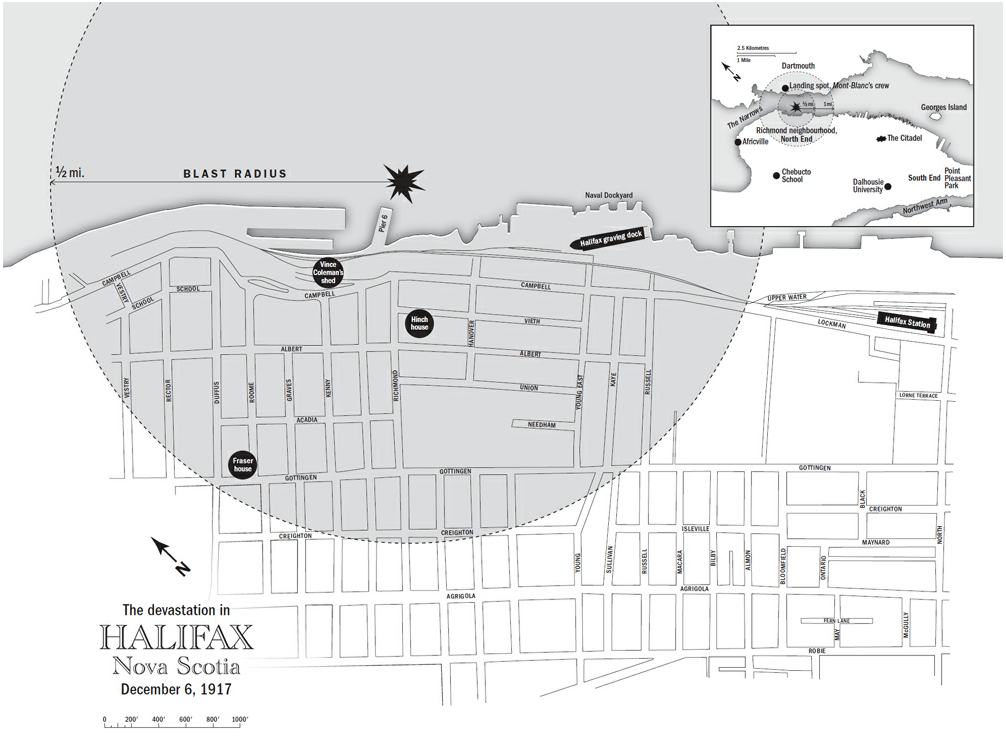
In my ongoing efforts to remember what I have read, some notes on the book, The Halifax Explosion by Ken Cuthbertson.
For most people, we accumulate (or not) wealth slowly, year over year. We work, save, spend, borrow and then go back to work. For the (un)lucky few, wealth comes suddenly which can give rise to Sudden Wealth Syndrome (SWS).

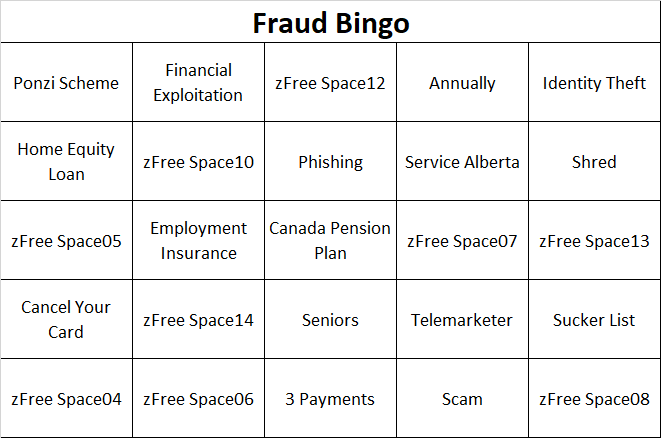
Central to most financial literacy programs is fraud awareness. How to keep the bad guys from getting your money, possessions or good name. Who Wants to be a Fraudster? is a variation of the classic bingo game in which participants match a term or concept to a fraud related question.
A core premise of adult learning is that the individual must have influence over the content of the instruction. In a workshop setting, this can be done by asking participants to rate both their knowledge of a topic and the relative importance a topic is to them relative to the time and attention available in the session.
Continue reading Organizational Biology