An UN-Interlude on RBM

In the ‘The RBM Plan!‘, I detailed a number of blogs in a series, this is the third.  It is a brief visit to see how the United Nations are doing with their RBM implementation after nearly 20 years of effort and what other organizations can learn from this experience.  

Benchmark created by the United Nations. Composed of four vertical groupings and five horizontal layers.
United Nations Benchmark Framework for Results Based Management. Usage per UN Copyright restrictions for personal use.
Continue reading

A Brief History of RBM

The blog introduces Results-Based Management (RBM), emphasizing its significance in public sector reform as outlined in “Reinventing Government”. It discusses the historical context of RBM, its endorsement by key organizations, and the challenges of implementing standardized practices. The focus is on ensuring effectiveness and accountability in public expenditures for optimal results.

Continue reading

The RBM Plan!

Results Based Management (RBM) is a fixture in international organizations and used to varying degrees by governments world wide.  For Canadian business professionals or accountants, RBM is an unfamiliar term although they may be better acquainted with RBM’esque concepts such as portfolio investment management or continuous improvement.  

Continue reading

Using the Now-Event Map

In my last blog, I introduced the ‘NOW-Event-Map‘.  This model combines both a forward looking strategic planning model with a retrospective performance reporting model.  At the center of the map is the enduring concept of ‘NOW’.  At the end of the prior blog I promised some thoughts on how the map might be used – besides as an academic thought exercise. 

Three arrows are over-layed on the NOW-Event Map.  The inner most arrow is clockwise and links real time events to operational plans.  The second area is also clockwise and links monthly or quarterly information to tactical planning.  The final arrow is counter-clockwise and links all results to the strategic and visioning planning activities.
The interaction between results and planning.
Continue reading

Now-Event Map

The ‘Cone of (Un) Certainty’ has been a fixture in strategic planning for a few decades [1].  In reviewing these models I was struck by the assumption that planning ends…. and well that is it. To correct this, I would like to propose a planning model entitled: ‘The NOW-Event Map’. which considers both planning and delivery.  

Graphic showing the differences between planning, execution and results. Left, blue cone of opportunity. Centre, a white circle with a black dot in the middle indicating the concept of 'now'. Right, successively smaller stakes of triangles indicating the reduced relevance of results over time.
The NOW-Event Map
Continue reading

CESO Cultural Course

Some notes on a course I recently took as a volunteer with the Canadian Executive Services Overseas or CESO.  Overall, a good course that was not too preachy and had useful information when working in different cultures.  Highlights are as follows. 

The David by Michelangelo, perhaps a quintessential example of art and culture.

Continue reading

A Logical Framework

I am brushing up on a few concepts and processes that I have used in the past and may very well need to use in the future.  One concept concerned a business philosophy of Results Based Management (RBM) and a tool RBM uses for project design, the Logical Framework (LogFrame).

Matrices of the Logical Framework.  Rows are in ascending order: Goals, Purpose, Output and Activities.  Columns, left to right, are: Summary, Indicators, Verification and Assumptions.
Logical Framework Matrix – Overview of Columns and Rows
Continue reading

Customer Experience – Not just for Techies

Customer Experience is one of those buzzy terms that is typically associated with technology.  Wikipedia has this definition: “customer experience (CX) is the product of an interaction between an organization and a customer over the duration of their relationship.

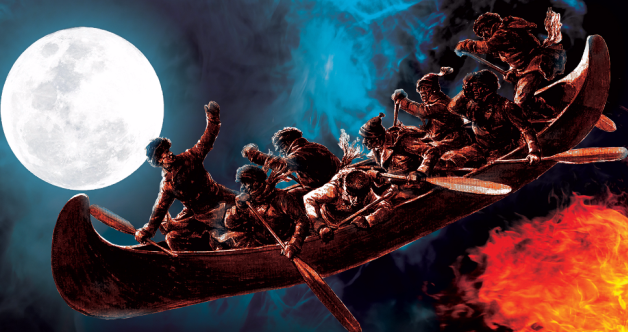
Flying Canoe Volant
Continue reading

A Retiring Read

At a certain age, retirement becomes a possibility.  Canadian author Lyndsay Green’s book: “Ready to Retire?: What You and Your Spouse Need to Know About the Reality of Retirement” is written for men thinking about pulling the plug on work.

This is Ms. Green’s fourth book [1] about aging and perhaps it is good that it was written by a woman.  Male-bashing is a fast-growing sport in our society and a man who can afford to retire even more so.  In other words, Ms. Green could have written a virtue signalling book by demonizing men who have worked and saved for their golden years.  Instead, she has looked at such diverse areas of men’s lives as their health (mental and physical), relationships, finances and what does it mean to be a retired male in the early part of the 21st century. 

Snow in Vienna, December 2018.

Nary a Finance in Sight

This is not a book about Freedom 55 or reverse mortgages.  Instead, it is about what happens when work stops and the next phase commences.  It starts on a depressing note with the dreaded 4 D’s that plague retired men: Drinking, Depression, Divorce and Death

Money (or lack of it), is often NOT the cause of the 4 D’s. Most of the men in Green’s book and statistics she provided indicate that while income drops, expenditures also drop or are offset by savings [2].  

The D’s arise out of a sense of loss: job, social-networks, self-worth and purpose.  Two of the cultural touch points used in the book are Arthur Miller’s play: Death of a Salesman and the Jack Nicholson movie About Schmidt.  While the play is a metaphor for retirement gone wrong, the movie is a metaphor about coming to grips with aging.  

Working At Retirement

Part of getting a grip on retirement is the transition after work stops.  Some men who have retired return to the workforce, others work part time or volunteer in a near full-time capacity.  In addition to improving their financial position, this type of work helps them to fill in the losses of retirement (not to mention, get away from their wives or, just as likely, give their partners some much need solitude).  Part-time work may include re-negotiating the current role in an organization or completely re-inventing one’s self.  No matter what the form, paid or not, working post retirement is critical for a long and healthy life: [3].

Gene Cohen, the late professor of psychiatry, spent decades studying people over sixty and helping them get more out of their later years. In his book The Mature Mind: The Positive Power of the Aging Brain, Cohen reports that the people who were the most satisfied with their retirement were those who had found meaningful volunteer experiences

Friends, Homes and Retirement

A source of the 4 D’s is loneliness.  For many men, their social network revolves around work.  Men often expect to spend more time with their spouses as the center of the social relationships while the same women plan to spend more time with children, grandchildren, relatives and friends.  

The home itself can become a battle ground as men attempt to change the physical space and rhythm of the house upon retirement.  Nevertheless, most couples work out the flow.  When this does not occur, divorce does occur with the wife typically precipitating the split.  

A Book About Men … and Women

Ms. Green does a great job of weaving into the narrative the stories and perspectives of the wives and partners of the men she interviewed.  She did this in a confidential manner so that not even a husband might know which of the individuals referenced was his wife. 

Nevertheless, the men who took part in the interviews nearly all have supportive wives and themselves are supportive of the women in their lives. Most of the men have taken over the domestic chores so their wives can return to work, go to school, volunteer or to just share the workload.  

Concluding With a Wise Support Group

In summary, a man’s retirement can be the start of a decline or can be the start of the best/last chapter in his life.  How this will turn out depends upon his mind set, his plans and his support network after the pay cheques stop.  Nothing particularly new in this advise but still very worth the reminder.

Select Further Reading

[1] For example, You Could Live a Long Time: Are You Ready?

[2] Fred Vettese and Bill Morneau; The Real Retirement; Why You Could Be Better Off Than You Think, and How to Make That Happen,

[3] Gene Cohen; The Mature Mind: The Positive Power of the Aging Brain.

Daniel Klein; In Travels with Epicurus.

Roger Housden; How Rembrandt Reveals Your Beautiful, Imperfect Self, 

UK report The Seven Myths of Population Aging: How Companies and Governments Can Turn the “Silver Economy”.

CPA Achievement Award – 2020 Version

This is the second year that I have been able to review the accomplishments of fellow Alberta Chartered Professional Accountants (CPA) through the society’s achievement awards.  Last year, I documented my CPA evaluation criteria, and other than some minor tweaks, am largely using the same scoring method.  

Life is a journey (eastern Austria taken August 2018).
Continue reading