Please Email Me a Car

The following are my notes so I can use the technique again (in about a decade or so) or for your benefit.  As an aside, I have used this technique 3-4 times with success.  The first time was in 1995 when I bought a Geo Metro via fax (times change!).  See the further reading section for other methods and techniques. 

My grandmother (right) and great grandmother looking at a new purchased vehicle circa 1911.
Continue reading

Imagine No Photographer

Recently, I had a discussion with a co-worker (we will call her Carol) who had a family friend who passed away.  Carol mentioned that this person was a world traveler and was a keen amateur photographer.  

What Happened to the Photos?

Carol wondered what happened to his image library.  Having never married, he did not have children who might have shared an interest or been subjects in the photos.  Perhaps an admiring nephew or niece took them or perhaps they are in a land fill somewhere by now.  

If lost, what a waste.  This person spent a lifetime capturing images some of which were possibly of historical significance.  Rather than tossing the boxes of slides or hitting delete on the gigabytes of images, could they live on after the photographer’s eyes have shut for the last time?

The Living Images Photo Library

I think yes, and here is my proposal: a non-profit stock image organization that receives images and makes them available on the internet for subsequent use.  hTe working for this organization is the “Living Images Photo Library of the World“.  

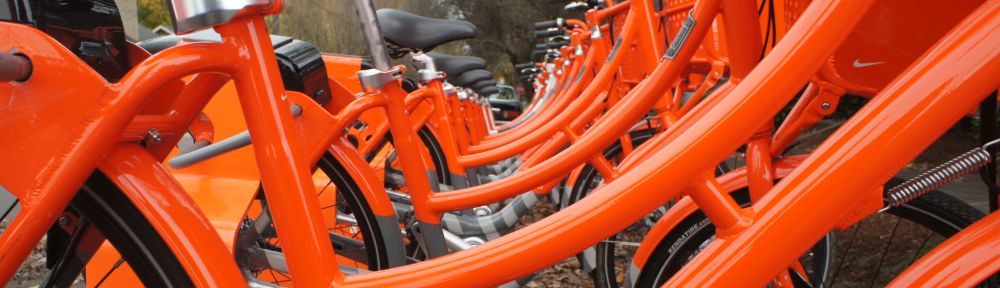
Bikes in Portland Oregon… and an example of bequest to a stock image library.

When this friend passed away, his boxes of slides would have been digitalized, categorized, labeled and made available for others to enjoy or use.  There are lots of details and issues involved here including: 

  • Ownership: the image rights are passed on to this organization in trust in perpetuity.  An appeal process for family members or subjects would be established.  
  • Model rights: some ground rules would need to be established at a global level if there are people clearly visible in the image.  For example, a public street scene would not require a license but an photo of a single individual may require a release.
  • Content Appropriateness: there are some obvious subjects that would not be accepted accordingly to currently accepted norms.  
  • Cultural Appropriateness and the PC:  Because the library would be available globally, some cultural appropriateness rules would need to be developed.  What is perfectly acceptable in Canada may need to be suppressed in Upper Somewherestan – and vis versa.  At the same time, the organization may need to fight against western cultural hegemony particularly as expressed in political correctness.  
  • Medium: assuming that only digital images are accepted, the person or the estate would need to digitalize from the physical mediums such as negatives or slides. 
  • Who Pays: as a non-profit, it would need either ongoing cash donations, support of organizations or government support.  Ideally, using the images would be cost free for personal or non-profit use (e.g. education) but fees would apply for government or for-profit use. 
  •  Taxonomy: like Wikipedia, I see volunteers looking at the images and categorizing them.  Artificial Intelligence is probably close to doing this as a first pass.  The owner may want to do this as part of bequeathing the images.  

Would You Give Away Your Pictures/

What do you think?  Would you give away your images as your last day appears to be coming closer?  If you were Carol’s nephew, would you work through 100,000 images of a life time digitalizing them as part of settling your uncle’s estate?  If you were in the image, would you want your six-year old self eating birthday cake being available for the world to see?

In other words, is this an idea of merit and worth pursuing?


Facebook and the Mall

I recently used FaceBook’s marketplace for the first time (I know, I am a VERY late adopter).  It was easy to post an entry, the interface was intuitive, communications through their messenger application was fast and it was simple to flag when the item was sold. 

Technically it was not a sale as I gave it away.  I offered for free a pair of working computer speakers I had been dragging around with me for about 10 years but was loathe to simply throw out.  

Speakers – free to a good home.

Facebook and Freebies

By giving away those speakers, I delayed their entry into the recycling system or more than likely the landfill.  They will end up there someday but at least for awhile they are being used – and this is where Facebook could improve its Marketplace … and earn some kudos.  

Why Not Support Free?

Facebook facilitated this delay to the dump and it should take credit for this.  Right now their interface is tailored or biased towards selling but could easily promote the freebie.  This would build user loyalty and a sense of real-community via the online community. Heck, they could run statistics of so many ‘cubic feet, pounds or number’ of items diverted from the waste pile in such and such a city. How is that for a triple bottom line!

Supporting the Local Shopping Mall

One more suggestion for Facebook, something that can help them grow the marketplace, build local communities and sustain itself as its user base grows older – a shopping mall lock box.  

I met the person I was giving the speakers to in a local shopping mall food court.  I don’t want strangers coming to my home and it is always better to meet in a public place.  Of course this was contingent on me waiting at the mall and the buyer driving to my location.  Why not remove time from the equation and build local spaces at the same time.  

Meet You at the Lock Box

Here is the idea.  Facebook partners with a few shopping malls to install lock boxes in their public space.  The seller goes, places the item in the lock box and logs the transaction on Facebook.  The buyer, on their own time picks up the item from the lock box.  Insert security protocols, etc. to manage the transaction. 

The payment is made electronically when the lock box opened and the buyer takes the item out.  If it is not what they wanted, the put it back and cancels the transaction.  

Facebook would take a small transaction fee, e.g. $0.50 which it shares with the mall.  The mall gets some revenue, walk in traffic and can have its tenants cross promote on the sale.  Based on the category, different stores would advertise to both the seller and the buyer. For example, for the above speakers, the stores selling electronics could promote their computer departments.  

3 L’s and Conclusion

Insert liabilities, logistics and lawyers – but heck, this is only a thought exercise.  In the meantime, I will use Facebook to get rid of other working stuff I do not want to throw away.  To close, anyone have Mark Zuckerberg’s home phone number?

In other words, making a difference in our society and the environment (reducing consumption, materialism, reuse/recycling) can be as simple as creating the interface to do it efficiently. What say you Mark Zuckerberg?


Where is the Public Servant Alumni?

In 2016 I wrote the blog ‘Monetizing Being a Public Servant‘ which looked at the question, ‘what do you do after your retire from the public service?‘.  That blog was an individual’s perspective of what to do post-retirement.  This blog takes a slightly different view in that it asks: ‘should society more actively engaged retired public servants through an alumni function?

Krakow, Jewish Ghetto
Continue reading

Searching for Big Pharma

In my ongoing effort to remember what I have read, some notes on The Drug Hunters: The Improbable Quest to Discover New Medicines; Donald R. Kirsch, Ogi Ogas.

The popular media portrays pharmaceutical companies as fat cats scheming to make the most money from those unfortunate enough to require their product.  While there are some cases of this, drug companies are better compared to gold-prospectors who find enough mineral wealth to pay the bills with the occasional strike-it-rich dream to keep them motivated.

Tile Mosaic – Graz Austria

The Next Big Thing Challenge

New drugs are very difficult to find and bring to market.  By one estimate, only 1 in 20 (5%) of all projects are funded by a pharmaceutical firm. Of these funded, only 1 in 50 yields a drug.  In other words, if a drug prospector has an idea for a cure, there is only a 0.1% chance it will become commercially viable.  Drug companies spend most of their effort on creating copy-cat drugs of those already approved.  For original research, the focus is on drugs treating chronic conditions in which the medication needs to be taken for months, years or decades.  A quick cure is a bad business model if your return on investment chances are less than 0.1%

The Drug Eras

Kirsh breaks drug hunting into a series of time frames, the earliest being simple trial, error and superstition from our early ancestor days.  Botanical origins trace the role the emerging fields of science had on identifying plants that could cure disease.  Industrial and Synthetic eras continue the use of science to better hone drug finding. 

Mostly Art Supported by Science

Kirsh is an insider with a sympathetic view (mostly) of the drug industry and thus makes a good commentator.  He provides some excellent examples of both well-known discovery stories (penicillin, quinine for malaria) and those less well known (the birth control pill and a cure for syphilis). 

The conclusion of the book is that drug research is not an engineering process (although copying an existing drug to create a copy cat is pill is) it relies more on luck and artistic merit; it is akin to knowing how to develop a block buster movie:

…drug companies can never be sure that they will get a drug that works the way they hope it will.  The reason is as simple as it is profound: there still are no clear scientific laws, engineering principles, or mathematical formulae that can guide an aspiring drug hunter all the way from idea to product… The thing about trial and error is that if you keep on trying and keep on being willing to make errors, eventually you will find something that works.Big Pharma must price their few successful drugs to cover the immense costs from their myriad unsuccessful drugs.

 A good read for those interested in history, business, medicine or how did that pill get to the bottle in your bathroom. 

RHI – Economic Outlook 2019-09-10

In my ongoing efforts to remember conferences I attend, some notes on the Robert Half CEO Insights session on September 10, 2019.  The Overview is found below and my notes are as follows: 

  • Disruption in the Alberta 
    • Harder to do business. 
    • Professional service business compete with the internet. 
    • Increased global investments in Alberta.
    • Historically, Alberta has not been sufficiently stressed to diversify.
  • Challenges in current operations
    • Demographic changes.
    • Disruptions are become more intense and common.
    • Downturns can be beneficial in turns of improving the muscle of management and the organization.  
    • Culture is instrumental to the sustainability of the organization. 
  • What does the future hold?
    • Interpersonal interactions will become increasingly important.
    • Align the complement of people to move into new opportunities.
    • The role of artistic and craftsmanship will become more important. 
    • The challenges of multiple mediums in remembering which channel did you use.  
  • What role can the not-profit or social sector play
    • Social enterpreneurship is becoming more important.  
    • Increasing it is more than ‘cutting a cheque’; providing expertise or support for particular campaigns.  
    • The arts community helps to attract talent to the Edmonton.
  • What are the expectations of customers in regards to technology
    • Primarily efficiencies.
    • An innovation application funnels into a ‘Shark-Tank’ like program
    • Need to support innovation including taking time away from revenue generation to explore the opportunities
    • Failure needs to be encouraged, nurtured and properly managed.
  • Other thoughts
    • MELCOR is undervalued and a potential investment. 
    • Technology is a collaboration based industry.  
    • Canada is increasingly seen as having unstable politically and over-regulated; stay tuned for the Fall federal election. 

Event Overview

  • Assessing the Impact of Alberta’s Economic Challenges, Shifting Organizational Cultures & Ongoing Tech Disruption 
  • In our rapidly evolving economic landscape, the future continues to be full of uncertainty;
  • but tapping into the insights and learnings from today’s business leaders can provide a roadmap to success.
  • Topics: 
    • The impact of politics on the current business landscape.
    • The positive relationship between company restructures and corporate culture.
    • Managing change for your teams in uncertain times.
    • IT innovations and competitive advantage.
    • Laying the foundation for future growth
  • Panelists:
    • Aroon Sequeira, Chairman, Sequeira Partners
    • Darin Rayburn, President & CEO, Melcor Developments Ltd.
    • Jeremy Hayward, President, solūt

Professional Development: Verified and 2 hours