What Makes for a Good Indicator

This content outlines the characteristics of effective indicators. Key characteristics include validity, reliability, sensitivity, simplicity, usefulness, and affordability. The discussion emphasizes balancing these traits while considering constraints like materiality and timeliness to fulfill users’ decision-making needs and enhance comparability among indicators.

Continue reading

Does RBM Work?

The post evaluates Results Based Management (RBM) and its effectiveness in strategic planning. It discusses the methodologies strengths and weaknesses. While RBM is criticized for fostering bureaucracy in organizations like the United Nations, it remains valuable if implemented in conjunction with encouraging a high-trust environment.

Continue reading

What do Governments Do, Anyway?

The post explores the multifaceted roles of democratic governments, emphasizing their evolution from “stationary bandits” to providers of public goods and services. It discusses various responsibilities such as national defense, economic management, law enforcement, and public welfare, highlighting the complexities and challenges faced in governing diverse populations effectively.

Continue reading

Thinking Positive About a Negative Score

Organizations need to pick winners and losers.  For example, a government must decide to whether to fund project X, Y or Z; a corporation only has the capital to build asset A, B or C. 

Most organizations have developed a portfolio selection and management methodology.  There are typically 2 parts to such a process: a set of criterion and a scoring scheme to rank the criteria.  In this blog, I want to focus on the second challenge, the scoring. 

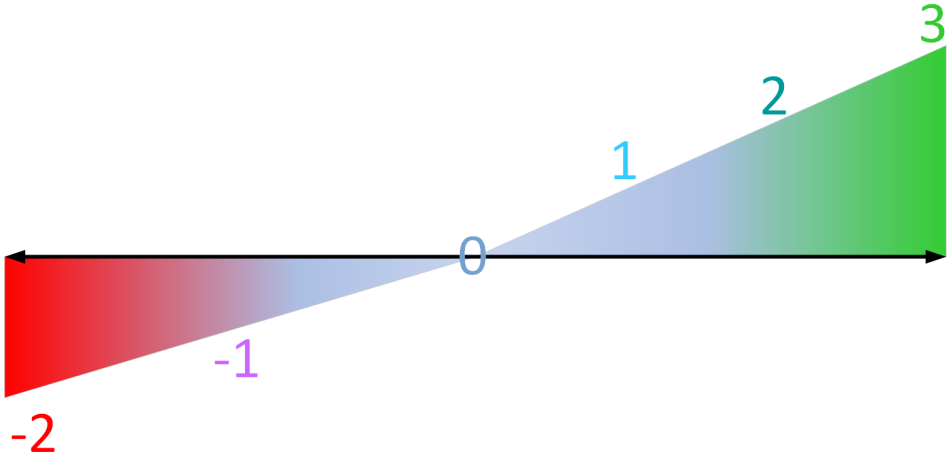
Balancing scoring Model is composed of two right-angled triangles sloping a center vanishing point which represents the value of zero.  At the left, the triangle dips below a black line 2 units into the negative.  At the right the triangle rises out of the line 3 units.  -1, 0, 1 and 2 value points are between these two extremes.
The +/- Scoring Metric
Continue reading

A Valid Validation Map

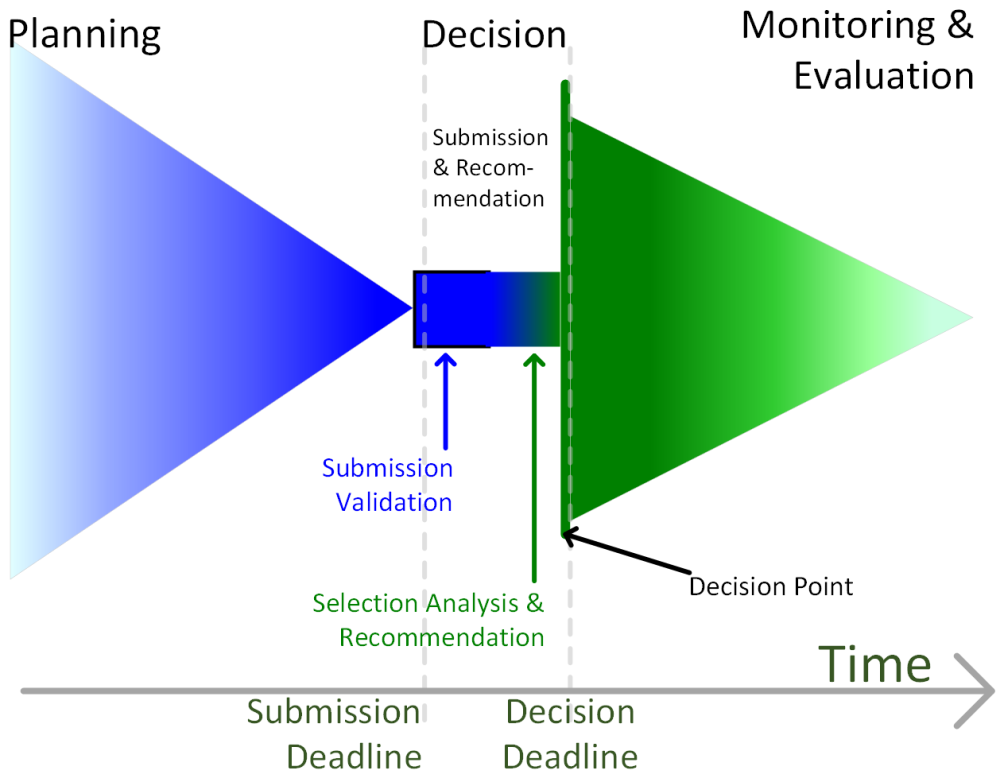
How does a ‘requester’ know that a ‘submitter’ has provide a correct, complete, accurate and relevant ‘submission’? A framework to evaluate the planning, receipt, and evaluation of submissions.

A blue triangle, with its apex on
Submission Validation/Decision model of the NOW-Event.
Continue reading

RBM – A 4-Letter Word: 1 of 4?

This is a blog continues the series, ‘The RBM Plan!‘ looking at the challenges and criticisms for RBM.  This topic allows an organization to design a RBM program tailored to their circumstances while hopefully escaping the mistakes and errors of other organizations.

Continue reading

An UN-Interlude on RBM

In the ‘The RBM Plan!‘, I detailed a number of blogs in a series, this is the third.  It is a brief visit to see how the United Nations are doing with their RBM implementation after nearly 20 years of effort and what other organizations can learn from this experience.  

Benchmark created by the United Nations. Composed of four vertical groupings and five horizontal layers.
United Nations Benchmark Framework for Results Based Management. Usage per UN Copyright restrictions for personal use.
Continue reading

A Brief History of RBM

The blog introduces Results-Based Management (RBM), emphasizing its significance in public sector reform as outlined in “Reinventing Government”. It discusses the historical context of RBM, its endorsement by key organizations, and the challenges of implementing standardized practices. The focus is on ensuring effectiveness and accountability in public expenditures for optimal results.

Continue reading

A Logical Framework

I am brushing up on a few concepts and processes that I have used in the past and may very well need to use in the future.  One concept concerned a business philosophy of Results Based Management (RBM) and a tool RBM uses for project design, the Logical Framework (LogFrame).

Matrices of the Logical Framework.  Rows are in ascending order: Goals, Purpose, Output and Activities.  Columns, left to right, are: Summary, Indicators, Verification and Assumptions.
Logical Framework Matrix – Overview of Columns and Rows
Continue reading